Daijiworld Media Network – Mumbai
Mumbai, Jun 24: A captive-bred Indian vulture released in Maharashtra's Melghat Tiger Reserve earlier this year has successfully travelled 3,334 kilometres across multiple states before reaching Rajasthan's Ranthambore Tiger Reserve, marking a major milestone in India's vulture conservation efforts.
Wildlife experts said the bird's remarkable journey demonstrates that captive-bred vultures can successfully adapt to life in the wild, locate food independently and undertake long-distance movements without human assistance.
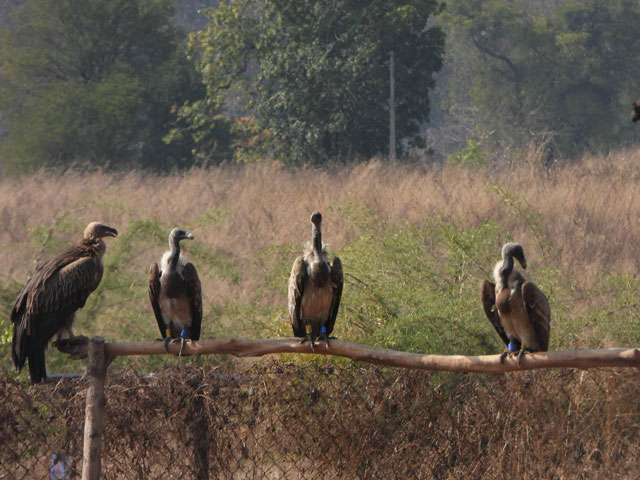
According to the Bombay Natural History Society (BNHS), the bird, a five-year-old female long-billed vulture (Gyps indicus) named X67, was among 15 captive-bred vultures released on January 2 from the Somthana range of the Akot Wildlife Division in Melghat Tiger Reserve.
The vultures were fitted with solar-powered tracking devices before being released into the wild as part of an ongoing conservation programme.
BNHS Director Kishor Rithe described the achievement as a significant breakthrough for vulture recovery initiatives in India.
"The bird survived without any supplementary feeding in the wild, demonstrating the ability of captive-bred vultures to adapt to natural environments and locate food independently," he said.
After its release, X67 remained in the vicinity of Melghat for nearly four months, gradually acclimatising to natural conditions and scavenging independently.
The bird began its long-distance journey on May 28, travelling through Maharashtra, Madhya Pradesh and Rajasthan before finally reaching Ranthambore Tiger Reserve on Tuesday.
During the 27-day journey, it made temporary stops at several protected areas, including Satpura Tiger Reserve, the Bhopal region and Kuno National Park, the site of India's cheetah reintroduction programme.
According to BNHS, the route taken by the bird offers valuable insights into vulture ecology and habitat use.
"The most important finding is that this route indicates vultures prefer tiger reserves and protected area networks where wild carrion remains available because of healthy carnivore populations," Rithe said.
All 15 vultures released from Melghat were fitted with blue-coloured identification rings. The blue colour signifies that the birds were ringed in India, while the letter "M" denotes Maharashtra as the release state.
The solar-powered tracking tags allow scientists to monitor the birds' movements, travel distances, survival rates and overall adaptation to life in the wild.
Conservationists believe the successful journey of X67 underscores the effectiveness of captive-breeding and release programmes and offers renewed hope for the recovery of India's vulture populations, which suffered drastic declines in recent decades.