Daijiworld Media Network – London
London, Jul 2: A 42-year-old woman from the United Kingdom has shared her ordeal after being diagnosed with 38 parasites in her brain following a rare tapeworm infection believed to have been contracted during a visit to India.
According to a BBC report, Lowri Denman first noticed something unusual in 2010 when she passed a nearly one-metre-long tapeworm while using a restroom at a restaurant. Although initial medical tests did not reveal any major concerns, her health deteriorated the following year when she suffered her first seizure.
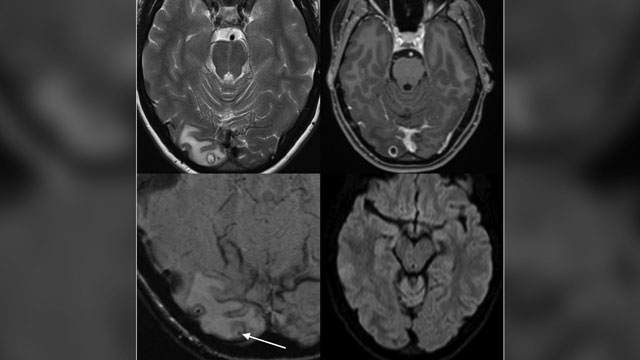
Further investigations led to a diagnosis of neurocysticercosis, a parasitic infection of the central nervous system caused by the pork tapeworm Taenia solium. Doctors found 38 parasites lodged in her brain.
Denman had travelled across India for three months in 2007. Although she avoided meat during the trip to reduce the risk of food poisoning, doctors believe she unknowingly consumed pork contaminated with microscopic tapeworm eggs.
Recalling the diagnosis, Denman told the BBC that she and her mother were left in shock after doctors revealed the presence of dozens of parasites in her brain.
Over the following years, she experienced severe headaches, seizures, confusion, numbness, paranoia, psychosis, anxiety and panic attacks. She underwent treatment with anti-parasitic medication and steroids, while brain scans showed swelling around the parasites. Her condition eventually forced her to quit her job, and she spent six months in a neuropsychiatric hospital before gradually recovering. She returned to work in 2022.
According to the World Health Organization (WHO), neurocysticercosis is a preventable parasitic disease caused by the pork tapeworm Taenia solium. The condition develops when tapeworm larvae enter the bloodstream and lodge in the brain, forming cysts that can trigger seizures and other neurological complications.
The WHO says infection can occur through consumption of undercooked pork or food and water contaminated with tapeworm eggs, as well as poor hygiene practices. Common symptoms include seizures, persistent headaches, cognitive impairment, neurological deficits and altered mental status.
Treatment varies depending on the severity of the disease and may include anti-seizure medicines, corticosteroids, anti-parasitic drugs and, in some cases, surgery.
In Denman's case, the parasites eventually calcified after treatment and did not require surgical removal. She has remained seizure-free since 2017 but continues to take epilepsy medication as part of her long-term treatment.