Daijiworld Media Network - New Delhi
New Delhi, Jul 3: The growing split within the Trinamool Congress (TMC) has taken a fresh turn, with members of the breakaway faction increasingly distancing themselves from party founder Mamata Banerjee, even as both rival camps continue to stake claim to the party's identity and election symbol.
In the initial phase of the rebellion following the Trinamool Congress' poor performance in this year's West Bengal Assembly elections, much of the criticism from dissidents was directed at the party's National General Secretary Abhishek Banerjee. Several rebel leaders had continued to acknowledge Mamata Banerjee as the party's founder and, at one stage, even suggested that she could serve as an "advisor" to the breakaway group.
The faction aligned with the party's Kalighat headquarters—named after Mamata Banerjee's residence, which also serves as the party's headquarters—has remained firmly loyal to her leadership.
However, recent developments suggest that the rebel camp is now moving away from that position.
Ritabrata Banerjee, one of the prominent faces of the dissident legislators, had earlier indicated that the rebels would welcome Mamata Banerjee in an advisory role. Similarly, senior leader Arup Roy, who was elected chairperson of the rebel faction during a special convention on June 22, had repeatedly described Mamata as the party's founder and leader. Some MPs who later joined the National Citizen Party of India (NCPI) had also echoed similar sentiments.
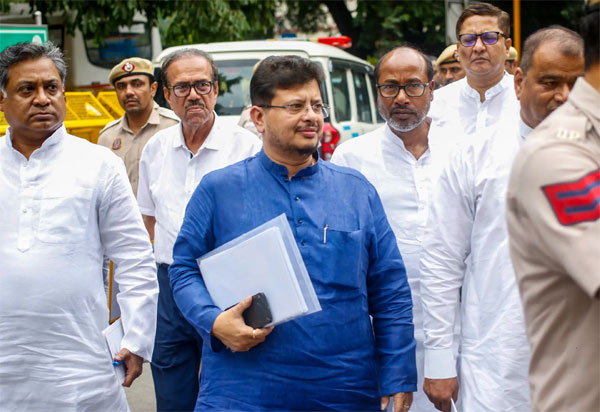
Speaking to reporters in New Delhi on Thursday after meeting the full bench of the Election Commission, Ritabrata Banerjee said the June 22 convention had constituted a new working committee in which neither Mamata Banerjee nor Abhishek Banerjee had been given any role.
He said the delegation had met the Election Commission to apprise it of the composition of the new organisational structure after previously seeking an appointment with the poll panel.
Both the Mamata Banerjee-led faction and the rebel group have approached the Election Commission seeking recognition as the legitimate All India Trinamool Congress and claiming the party's iconic twin-flower election symbol.
Ritabrata alleged that despite being named "Trinamool," meaning grassroots in Bengali, the party had gradually become centred around one family.
He said the dissidents aimed to restore the organisation to its grassroots character and asserted that their struggle was against "individuals and families" rather than the party's ideology.
In an apparent swipe at Abhishek Banerjee, though without naming him directly, Ritabrata remarked that the party was being run according to the wishes of someone travelling in chartered aircraft—a comment widely interpreted as a reference to the Trinamool general secretary's recent use of a chartered plane.
Later, when asked whether Mamata Banerjee continued to hold any position within the rebel camp, Ritabrata gave an unequivocal response.
"Our party's chairman is veteran leader Arup Roy, a multiple-time MLA and former minister in the West Bengal government. Loud and clear," he said, effectively ruling out any formal role for Mamata Banerjee in the breakaway organisation.
Arup Roy, who stood alongside Ritabrata during the media interaction, did not comment.
According to leaders close to the rebel camp, there had initially been a view that continuing to invoke Mamata Banerjee's name would make political sense and help attract support from traditional Trinamool workers. That thinking reportedly led to suggestions that she could be accommodated as an advisor, although never in an executive position.
However, the same leaders now argue that as the former Chief Minister and party supremo, Mamata Banerjee cannot be separated from allegations of corruption and irregularities involving several Trinamool leaders during her tenure in office.
They contend that the party leadership bore responsibility for ensuring accountability within the organisation and preventing alleged misconduct by those holding positions of power.
The latest statements indicate that the rebel faction is now seeking to establish an identity distinct not only from Abhishek Banerjee and the so-called "Kalighat camp" but also from Mamata Banerjee herself, as the battle over the future of the Trinamool Congress continues.