Daijiworld Media Network - Washington
Washington, Jul 8: India's leading business organisations have urged the United States Trade Representative (USTR) to withdraw its proposed 12.5 per cent tariff on Indian imports, arguing that Indian companies already adhere to robust labour and environmental standards and that blanket tariffs would hurt businesses and consumers in both countries.
Appearing before a USTR Section 301 hearing on Wednesday, representatives of the Federation of Indian Chambers of Commerce and Industry (FICCI) and the Confederation of Indian Industry (CII) said Indian industry strongly supports global efforts to eliminate forced labour but opposed the proposal to impose economy-wide duties on Indian exports.
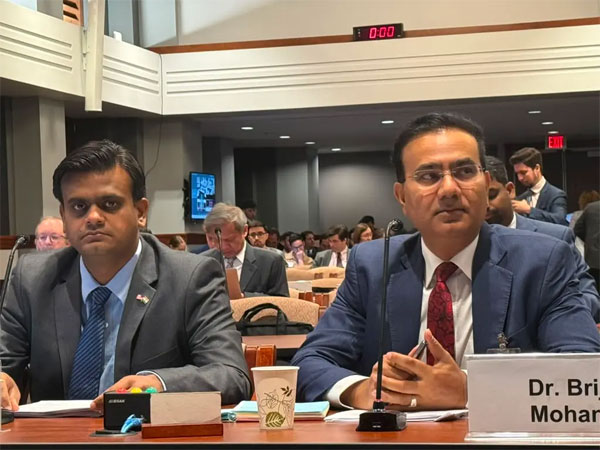
Presenting FICCI's submissions, Poornima Shenoy said Indian businesses have significantly strengthened responsible sourcing, supply chain monitoring, traceability and environmental, social and governance (ESG) practices, making ethical business conduct an integral part of their operations.
She argued that applying a uniform tariff across all products and sectors ignores the differing levels of compliance and risk across supply chains. Instead, she advocated a targeted, evidence-based approach that focuses on sectors where concerns genuinely exist.
Shenoy also pointed out that India's legal and regulatory framework already provides extensive safeguards for workers through labour laws, inspections, enforcement mechanisms and judicial remedies. She said exporters supplying the US market operate under strict compliance systems that include supplier audits, ethical sourcing standards, grievance redressal mechanisms, traceability measures and regular monitoring.
Warning of the economic consequences, she said the additional tariffs would increase costs not only for Indian exporters but also for American manufacturers, retailers and consumers that depend on reliable Indian suppliers.
Representing CII, Shuchita Sonalika echoed similar concerns, stating that the proposed 12.5 per cent duty would unfairly burden industries that already comply with international labour standards without effectively addressing the issue of forced labour.
She highlighted India's legal framework, including constitutional protections, the Bonded Labour System (Abolition) Act, updated labour codes, criminal penalties for violations and the country's ratification of the International Labour Organization's core conventions on forced labour.
Sonalika also noted that India's top 1,000 listed companies are required to submit Business Responsibility and Sustainability Reports, which include disclosures on human rights practices, forced labour complaints and supply chain assessments.
She said exporters across sectors such as aluminium, textiles, foundries, forgings and agricultural machinery already follow global compliance standards, supplier codes of conduct and ESG requirements mandated by international buyers.
Questioning the rationale behind the proposed measure, Sonalika argued that the USTR had not demonstrated how India's policy framework adversely affects US commerce.
During the hearing, committee members asked whether exempting Indian exports from additional duties would reduce the incentive to eliminate unfair labour practices.
In response, Sonalika said collaboration and compliance-driven mechanisms would deliver better results than punitive tariffs. She highlighted CII's partnerships with the International Labour Organization and the United Nations Development Programme to promote responsible business practices and said Indian companies maintain documented ethical standards and supplier compliance frameworks.
Both FICCI and CII urged the USTR to reconsider the proposed tariff, emphasising India's existing labour protections, strong compliance systems and the strategic importance of resilient India-US supply chains. They maintained that dialogue and cooperation would be more effective than broad trade restrictions in addressing concerns related to forced labour.