Daijiworld Media Network – Dharashiv
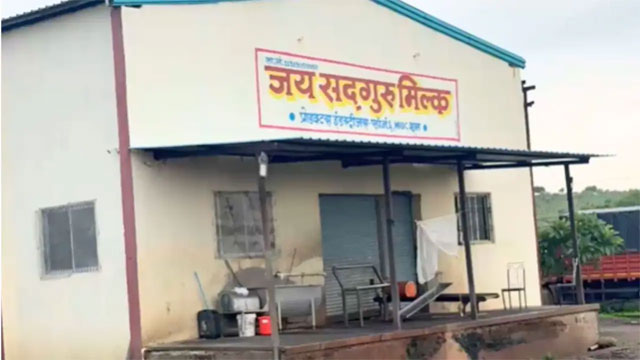
Dharashiv, Jul 14: A shocking milk adulteration racket has been unearthed following a joint investigation by the police and the Food and Drug Administration (FDA) in the Bhoom taluka of Dharashiv district, Maharashtra.
Examination of the seized sales registers revealed that approximately 2,30,470 kg of low-quality milk powder was used over the last six months to manufacture around 23,04,070 litres of synthetic milk, valued at Rs 9.21 crore.
The investigation exposed a highly alarming modus operandi where the accused mixed 10 litres of synthetic milk into every 100 litres of pure milk, maintaining a consistent 10% adulteration rate. Based on this ratio, officials suspect that more than 2.3 crore litres of adulterated milk was distributed across various parts of Maharashtra from collection centres operating in the Bhoom area.
To replicate the appearance and required fat levels of authentic milk, the perpetrators allegedly utilized detergent powder, palm oil, and hazardous, low-quality chemical powders.
The police have registered a case against seven individuals under stringent legal sections. However, all the accused remain at large eight days after the registration of the case.
A Special Investigation Team (SIT), led by a police inspector, has been constituted to track down the absconding individuals, and continuous raids are being conducted at suspected hideouts.
Medical experts have issued grave warnings regarding the health implications of the racket, stating that regular consumption of milk contaminated with detergent and palm oil can severely damage the liver, kidneys, and digestive system, posing life-threatening risks particularly to children, pregnant women, and the elderly.
Under the Food Safety Act, individuals found guilty of such hazardous food adulteration face strict penalties, including a fine of up to Rs 10 lac and life imprisonment.
Speaking to the media, Bhoom police inspector Shriganesh Kanagude said, "During the initial raid, officials seized 61 bags of adulterated milk powder. Preliminary investigations reveal that the prime accused, Balasaheb Godge, was supplying this adulterated powder to several dairy units in the Bhum region. The probe has also indicated the involvement of multiple milk collection centres. However, the exact beneficiaries who purchased thousands of litres of this synthetic milk are yet to be identified and arrested. The entire racket was being operated under the guise of a cattle feed business. Given that Bhum taluka exports lacs of litres of milk daily and produces nearly 70 to 80 tonnes of khoya, this case is being treated with utmost significance."