Daijiworld Media Network - New Delhi
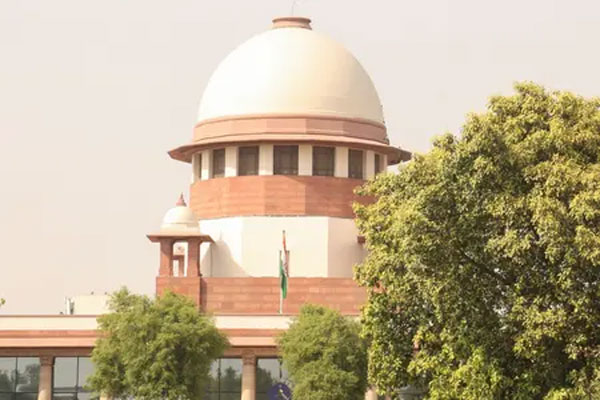
New Delhi, Jul 17: The Supreme Court on Friday held that the absence of a train ticket on the body of a deceased passenger cannot, by itself, be used to deny compensation under the Railways Act, emphasising that welfare legislation must be interpreted liberally to ensure justice for victims of railway accidents.
A Bench comprising Justices Sanjay Karol and N.K. Singh allowed an appeal filed by a woman whose claim for compensation had earlier been rejected by both the Railway Claims Tribunal and the Madhya Pradesh High Court following the death of her husband in an accidental fall from a moving train in 2015.
Overturning the earlier decisions, the apex court directed the Railways to pay Rs 8 lakh as compensation within four weeks. It also ruled that if the payment is delayed beyond the stipulated period, the amount would carry 8 per cent annual interest from the date the compensation claim was originally filed.
In its judgment, the Bench observed that liability under Section 124A of the Railways Act is based on the principle of no-fault liability, making it a beneficial piece of legislation that should be interpreted in a manner that advances its welfare objective rather than restricts it.
The court said beneficial laws must receive a purposive and liberal interpretation instead of a narrow or technical one. It added that procedural lapses or technical deficiencies should not defeat the purpose of legislation intended to provide relief to victims.
The case concerned the death of Chandrakant Thakkar, who was travelling on the Ahmedabad-Howrah Mail from Raipur to Ahmedabad on November 28, 2015, when he accidentally fell from the moving train. His wife maintained that his journey ticket had been kept inside a travel bag that went missing after the accident.
Although the Railway Claims Tribunal accepted that the death resulted from an "untoward incident," it denied compensation on the ground that the deceased had not been established as a bona fide passenger due to the absence of the ticket. The Madhya Pradesh High Court later upheld that decision.
Referring to earlier judicial precedents, the Supreme Court reiterated that the initial burden of proving that a person was a bona fide passenger can be discharged through an affidavit and that the non-recovery of a train ticket alone cannot invalidate such a claim.
The Bench observed that the mere absence of a ticket from the deceased's person does not automatically negate their status as a bona fide passenger, particularly when other evidence supports the claim.
In a notable observation, the Supreme Court also suggested that the Railways reconsider the use of the term "second class passenger" in its official manuals. The Bench recommended that the classification should instead refer to the coach rather than the passenger, noting that such terminology is inconsistent with the constitutional spirit of equality and may carry historical social connotations that are no longer appropriate.