Daijiworld Media Network – Panaji
Panaji, Jul 17: Goa has achieved a major milestone in bird conservation, crossing the 500-species mark for the first time, with the latest edition of the Goa Bird Checklist documenting a total of 502 bird species found across the state.
The eighth edition of the checklist, published as a scientifically peer-reviewed paper in the Indian BIRDS Journal, includes several new additions such as the greylag goose, spotted by birdwatcher Stephen Menezes at Santa Cruz, and the red-crested pochard, recorded by forest official Paresh Porob.
Other new species added to the checklist include the wedge-tailed shearwater (Ardenna pacifica), recorded by Rupali Pandit, and the Indian courser (Cursorius coromandelicus), documented by Qupeleio De Souza.
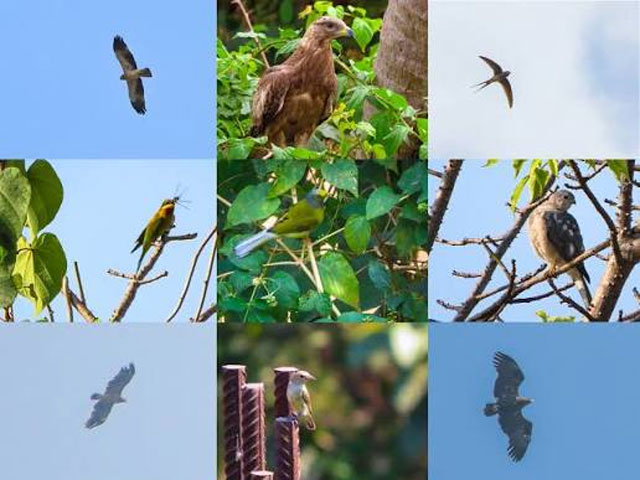
The checklist has been updated since 2018 and was prepared by Pronoy Baidya, head of research at Arannya Environment Research Organisation, along with Mandar Bhagat, treasurer of the Goa Bird Conservation Network.
Baidya said all bird records undergo verification through birdwatcher networks, with photographs and sightings cross-checked before being included in the official list.
With 502 recorded species, Goa now accounts for nearly 40% of India’s estimated 1,300 bird species, despite covering only around 3,702 square kilometres.
However, researchers said the achievement also reflects changing ecological patterns in the state. The presence of birds usually associated with dry habitats suggests possible shifts in Goa’s ecosystems.
Baidya pointed to the Indian courser, a species commonly found in low-rainfall regions such as Hampi, as an example of a bird whose appearance in Goa could indicate habitat changes. He also noted that the Indian grey hornbill, once considered uncommon in the state, is now frequently spotted in several locations.
The checklist authors also raised concerns over declining waterbird populations, particularly at Carambolim Lake. Northern pintail numbers, which once reached nearly 40,000, have dropped drastically to around 10–15 birds. Most remaining sightings are now reported from South Goa, though numbers have not recovered to previous levels.
According to Baidya, poor water management at Carambolim has affected the habitat, with excessive water levels reducing the shallow areas and vegetation required by ducks for feeding.
Another notable addition to the checklist is the black-bellied storm-petrel (Fregetta tropica), spotted by a sailor within Goa’s exclusive economic zone while travelling from Gujarat to South Africa.
Goa became the first state in India to introduce a dynamic bird checklist in 2018, with the model later adopted by other states. The checklist also served as the foundation for the Bird Atlas project, developed by a consortium of organisations, including the Goa Forest Department.
Baidya stressed that the growing number of recorded species comes with greater responsibility towards conservation.
“Greater species diversity brings greater responsibility towards wildlife and protecting their habitats. Systematic reporting, citizen science programmes, ecological studies and greater appreciation for Goa’s ecosystems are essential,” he said.