Daijiworld Media Network - Mumbai
Mumbai, Jul 18: India has taken its first formal step towards introducing polymer banknotes, with the Reserve Bank of India's (RBI) currency printing arm inviting global Expressions of Interest (EoIs) for the supply of polymer substrate sheets embedded with advanced security features.
According to The Economic Times, Bharatiya Reserve Bank Note Mudran Private Limited (BRBNMPL) has invited eligible domestic and international manufacturers to submit bids by August 18 for manufacturing opacified polymer substrate sheets to be used in banknote printing.
If implemented, the move would mark a major shift in India's currency production, which has relied on specialised paper banknotes for nearly a century. However, the EoI does not specify which denominations would be printed on polymer substrate or indicate a timeline for their introduction.
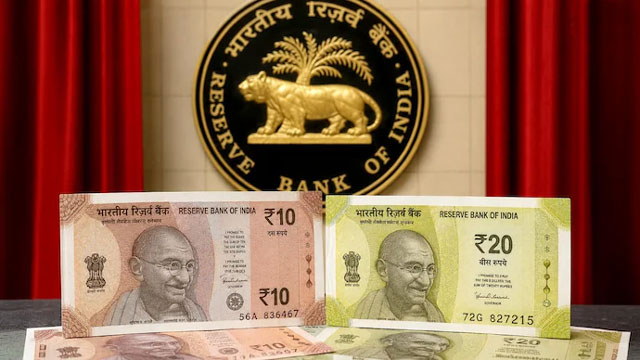
The tender lays down stringent national security conditions for prospective suppliers. Bidders must obtain security clearance from the Government of India, ensure that any operations in China or Pakistan are completely isolated from the India contract, refrain from sourcing raw materials for India's banknote substrate from either country, and undertake not to supply India-specific polymer substrate to any third country.
To qualify, manufacturers must have supplied polymer banknote substrate with embedded security features to central banks or banknote printing organisations for at least three years. They must also demonstrate the capacity to supply a minimum of 20,400 reams, equivalent to 30 per cent of the indicative requirement.
BRBNMPL has projected an initial requirement of 68,000 reams, with around 34,000 reams each for two denominations, while clarifying that the quantity represents only the immediate requirement. Procurement could be expanded following successful field trials.
The development comes weeks after RBI Governor Sanjay Malhotra said the central bank was exploring the possibility of introducing polymer banknotes, while stressing that discussions were still at a preliminary stage.
Polymer banknotes, made from durable plastic films, are widely used in several countries as they last significantly longer than paper notes and offer greater resistance to wear and tear, moisture and counterfeiting.
The move also comes at a time when the RBI's expenditure on printing currency has declined. According to the central bank's annual report, note printing costs fell by nearly 25 per cent to ?4,875 crore in 2025-26, reflecting lower printing requirements.
Despite the reduced printing costs, the value of currency in circulation increased 12 per cent year-on-year to ?41.23 trillion at the end of March 2026, indicating sustained demand for cash. The ?500 denomination continued to dominate, accounting for 86 per cent of the total value of currency in circulation and more than 7 billion notes, representing 41 per cent of the total volume.
The currency-to-GDP ratio also rose marginally to 12.1 per cent from 11.7 per cent a year earlier, suggesting that cash usage remains resilient despite the rapid growth of digital payment systems. However, it remains below the post-demonetisation peak of 14.4 per cent recorded in March 2021.