Daijiworld Media Network – New Delhi
New Delhi, Jul 27: India's victory in the 1999 Kargil War not only came at the cost of 527 soldiers' lives but also triggered the most comprehensive overhaul of the country's military and national security framework since Independence. While major strides have been made in modernising defence capabilities, several institutional reforms remain incomplete even after 27 years.
The Kargil conflict exposed critical shortcomings in India's defence preparedness, including inadequate artillery, limited precision strike capability in the Indian Air Force (IAF), fragmented intelligence coordination and the absence of a unified military command structure.
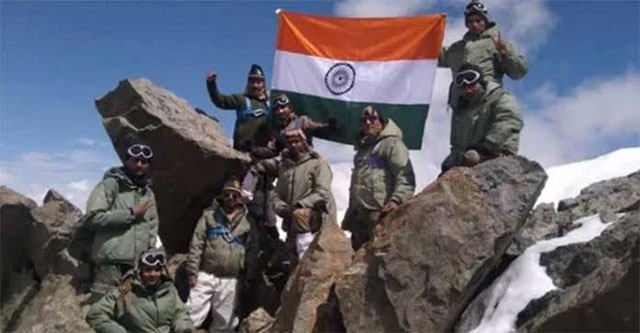
The 85-day conflict, fought between May and July 1999, saw Indian forces launch Operation Vijay to evict Pakistani troops and irregulars occupying strategic heights along the Line of Control overlooking the Srinagar-Leh highway. The IAF joined the campaign through Operation Safed Sagar on May 26, while the Indian Navy launched Operation Talwar in the Arabian Sea. India declared the mission successful on July 26 after recapturing key positions, including Tololing, Tiger Hill and Khalubar.
Soon after the war, the Vajpayee government appointed the Kargil Review Committee headed by strategic affairs expert K. Subrahmanyam to examine how the intrusion had gone undetected. The committee concluded that India's national security system had seen little change since Independence and warned that institutional resistance within the political, bureaucratic, military and intelligence establishments had slowed meaningful reforms.
Its recommendations were later taken forward by a Group of Ministers headed by then Home Minister L. K. Advani, whose 2001 report, Reforming the National Security System, laid the foundation for sweeping defence reforms.
One of the key lessons from Kargil was the decisive role of artillery in mountain warfare. The performance of the 155 mm Bofors guns prompted the Army to launch the Field Artillery Rationalisation Plan, aimed at replacing its artillery inventory with around 3,000 modern 155 mm guns by 2027. New acquisitions since 2017 have included the M777 ultra-light howitzers, K9 Vajra self-propelled guns and the indigenous Dhanush artillery system.
The IAF also significantly upgraded its strike capabilities. While Mirage 2000 aircraft were hastily modified to deploy laser-guided bombs during Kargil, the force now operates advanced systems such as BrahMos cruise missiles, SCALP stand-off weapons and loitering munitions.
India has also strengthened its surveillance and intelligence capabilities. The Defence Intelligence Agency was established in 2002 to integrate military intelligence, followed by the National Technical Research Organisation in 2004 to bolster technical intelligence and surveillance.
Reforms in higher defence management, however, have progressed more slowly. The Headquarters Integrated Defence Staff was created in 2001, along with the Andaman and Nicobar Command as India's first tri-service operational command. However, the proposal to appoint a Chief of Defence Staff (CDS) remained pending for nearly two decades before being implemented in 2020 with the appointment of General Bipin Rawat.
The next major reform involves creating integrated theatre commands to replace the existing 17 single-service commands. The proposed structure includes a Northern Theatre focused on China, a Western Theatre for Pakistan and a Maritime Theatre under the Navy. However, differences among the services over the command structure have delayed implementation.
The absence of a publicly articulated National Security Strategy has also been cited as a hurdle, with several defence experts arguing that such a framework should precede theatre command reforms.
India's defence budget for 2026-27 has reached a record Rs 7.85 lakh crore, reflecting increased investment in military modernisation. However, challenges remain, particularly in the IAF, which currently operates 29 fighter squadrons against an authorised strength of 42.5. Following Operation Sindoor, proposals are under consideration to increase force levels by 30–35% to prepare for the possibility of simultaneous military contingencies involving China and Pakistan.
The Kargil Review Committee had concluded that India's greatest challenge was not a lack of resources but institutional resistance to reform. More than two decades later, that observation continues to shape the debate on India's defence preparedness.