Daijiworld Media Network - Los Angeles
Los Angeles, Aug 1: The US government has released a final environmental review establishing a 10-year operational framework for the country's two largest reservoirs, paving the way for significant water cuts as disputes continue among the seven Colorado River basin states over sharing the shrinking water supply.
The Bureau of Reclamation on Friday unveiled updated operational guidelines for Lake Powell and Lake Mead, which will be revised every two years through 2036. The framework allows authorities to adjust water releases, conservation measures and supply reductions based on changing river conditions.
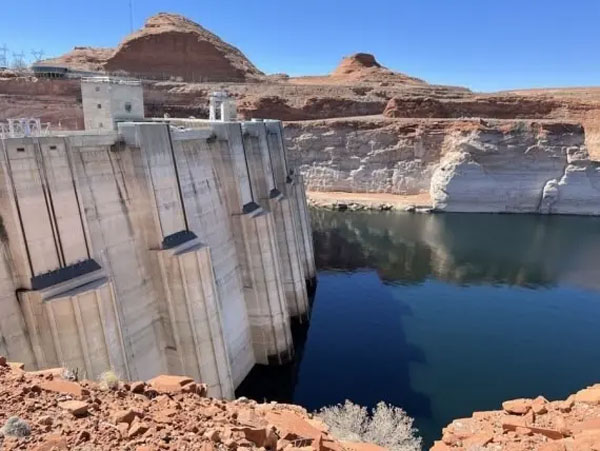
Under the plan, annual water deliveries to Arizona, California and Nevada could be reduced by as much as 3.7 billion cubic metres -- about 40 per cent of their combined allocation from the Colorado River and slightly more than Arizona's entire annual share.
The remaining basin states -- Colorado, New Mexico, Utah and Wyoming -- will contribute through voluntary conservation measures. The framework also allows federal authorities to release water from upstream reservoirs when necessary to protect storage levels at Lake Powell.
US Interior Secretary Doug Burgum said the framework is designed to maintain a "reliable and resilient" Colorado River system while preserving flexibility for future negotiations among the basin states.
Assistant Secretary for Water and Science Andrea Travnicek said the plan strikes a balance between flexibility and predictability for nearly 40 million people who depend on the river for water supplies.
The Bureau of Reclamation warned that the Colorado River basin has endured a 26-year drought and cautioned that 2026 could witness record-low snowpack levels.
It also noted that the combined storage in Lake Powell and Lake Mead has fallen to its lowest level since Lake Powell began filling in 1963.
The agency further warned that even unprecedented reductions in water deliveries may not be enough to stabilise reservoir storage under extreme drought conditions. The Colorado River remains a critical source of water for cities, agriculture, tribal communities, hydropower generation and ecosystems across the western United States and Mexico.