Media Release
Mangaluru, Sep 4: With screens becoming an integral part of everyday life, excessive screen exposure among young children is emerging as an alarming developmental and public-health concern, with more than 90% of children below five years reportedly exceeding recommended daily limits. Prolonged screen use can affect physical activity, sleep, attention, self-regulation and social interaction, while excessive passive exposure may displace the face-to-face conversations, play and shared experiences crucial for speech, language and communication development. The challenge, therefore, is not simply to eliminate screens, but to help families use digital media responsibly, purposefully and in ways that support rather than hinder healthy development.
Recognizing this pressing need, the department of audiology and speech-language pathology, Kasturba Medical College (KMC), Mangaluru, organized a two-day academic and stakeholder engagement programme aimed at moving the conversation from concern to practical solutions. The programme brought together professionals, educators, parents and other key stakeholders from across India to understand the science behind early childhood screen exposure, examine its developmental implications, and explore feasible strategies to help families navigate an increasingly digital childhood.
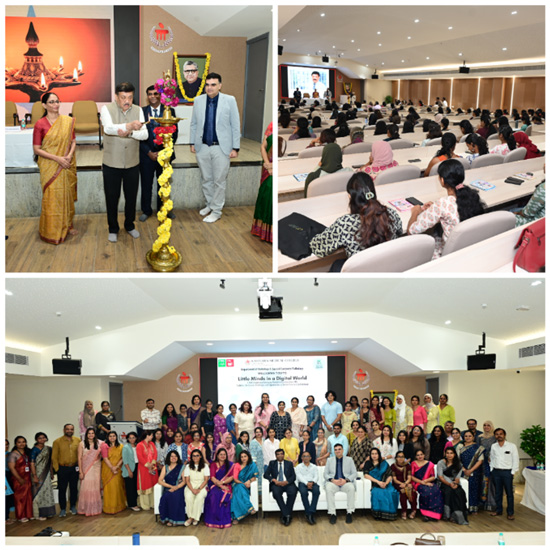
The programme commenced with the Rehabilitation Council of India (RCI) accredited conference, titled “Little minds in digital world – A multidisciplinary continuing Rehabilitation Education (CRE) exploring the science, challenges, and opportunities of screen time in early childhood,” held on September 2, at the Knowledge Block, KMC Mangaluru, Bejai Campus. The conference was inaugurated by Dr Dilip G Naik, pro vice-chancellor (Mangaluru Campus), Manipal Academy of Higher Education (MAHE), Manipal, as the chief guest, who highlighted the growing relevance of addressing screen exposure during early childhood and appreciated the department’s efforts in bringing this contemporary concern into multidisciplinary discussion. Dr Sheetal Ullal, associate dean, KMC Mangaluru, was the guest of honor and appreciated the initiative and the department’s continued efforts to address emerging issues in child development and rehabilitation. Dr Kaushlendra Kumar, organizing chairperson and head of the department of audiology and speech-language pathology, and Dr Gagan Bajaj, organizing secretary and additional professor, presided over the inaugural session.
The conference featured six plenary sessions and a panel discussion, bringing together experts from diverse fields including developmental psychology and early learning, speech-language pathology and audiology, neurodevelopment and inclusion, child psychiatry, and media and communication. Experts from leading institutions and organizations in India and the United States shared evidence and perspectives on the developmental impact of screen exposure, parent-child media engagement, communication and language development, mental health, and practical approaches to creating healthier digital environments. Delegates from across India, representing multiple disciplines and professional backgrounds, participated in the programme, with more than 350 professionals and students attending the conference.
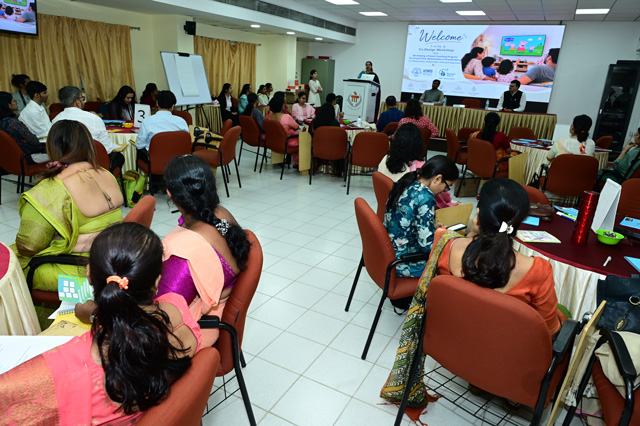
A key component of the two-day programme was a co-design workshop conducted as part of the Indian Council of Medical Research (ICMR)-funded nurture watch project, held at the MEU Hall, KMC Mangaluru, Light House Hill Road. The workshop was inaugurated by Dr Mangala Pai, associate dean, KMC Mangaluru, and adopted a participatory approach to bring together the people who are directly involved in understanding, managing and shaping children’s screen experiences.
The workshop brought together more than 50 participants representing six key stakeholder groups, including specialists from child psychiatry, paediatrics, community health, speech-language pathology, school principals and teachers, media content creators, and, most importantly, parents of young children. Bringing these diverse perspectives under one roof provided an opportunity to move beyond simply identifying the challenges associated with screen use and instead address a crucial question: How can parents be practically supported to develop healthier screen-time habits in the realities of everyday family life?
Through collaborative discussions and brainstorming, participants explored the challenges and concerns surrounding children’s screen use and generated practical, feasible and actionable strategies for reducing unnecessary screen exposure while helping families optimize screen use within recommended limits. One of the key ideas that emerged was the importance of joint media engagement encouraging parents to experience and engage with digital content alongside their children rather than leaving children to interact with screens in isolation. Such shared experiences can create opportunities for conversation, interaction and learning, while enabling parents to guide and scaffold their children’s media experiences in ways that support healthy development.
The insights and ideas generated through the workshop will be taken forward in the development of the nurture watch parent-coaching programme, with the aim of equipping parents with practical strategies to manage screen exposure while promoting healthy parent-child interactions and supporting children’s overall development, communication and language skills.
The two-day initiative highlighted an important shift in how screen time needs to be understood. Screens are here to stay; the goal is not necessarily to eliminate them, but to meaningfully steer their use. By combining scientific evidence with the lived experiences of parents, educators, healthcare professionals and media stakeholders, the Nurture Watch initiative holds the promise of offering a balanced and feasible approach to the digital realities of modern childhood helping families reduce unwanted screen exposure, make screen experiences more meaningful, and protect the developmental opportunities that young children need most.
The nurture watch project is led by principal investigator Dr Gagan Bajaj, department of audiology and speech-language pathology, KMC Mangaluru, with investigators Dr Jayashree S Bhat, Dr Jayashree K, and Dr Megha Mohan.