Daijiworld Media Network - New Delhi
New Delhi, Oct 1: Hair is one of the defining features of mammals. It helps keep the body warm, protects the skin from sunlight and, on the human scalp, grows longer and more densely than on most other parts of the body.
Yet hair loss is extremely common among men. As many as half of men show noticeable hair loss by the age of 50, according to a clinical review published in Endotext, with the proportion increasing further with age.
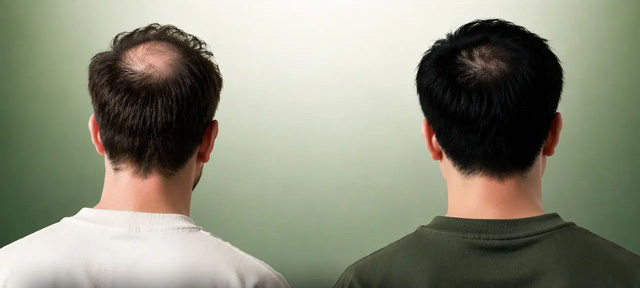
From a biological perspective, the widespread occurrence of male pattern baldness raises an interesting question. If hair loss had a major negative effect on survival or reproduction, natural selection might have reduced its prevalence over generations. Its persistence suggests that the condition may have little effect on reproductive success, could be linked to other biological traits, or may simply result from genetic and hormonal processes that have not been strongly selected against.
The medical term for male pattern baldness is androgenetic alopecia. The name reflects the two major factors involved — androgens, which are hormones such as testosterone, and genetics.
One of the key hormones involved is dihydrotestosterone (DHT), a more potent androgen produced when the body converts testosterone into DHT. In genetically susceptible men, certain scalp hair follicles are particularly sensitive to DHT.
Over time, this sensitivity causes the affected follicles to gradually shrink. The hairs they produce become thinner, shorter and less visible, a process known as miniaturisation. Eventually, some follicles may produce only very fine hairs.
Male pattern hair loss commonly begins around the temples and hairline or at the crown of the scalp. The follicles at the sides and back of the head are generally less sensitive to DHT, which is why these areas often retain their hair even when significant thinning occurs elsewhere.