Daijiworld Media Network - New Delhi
New Delhi, Oct 1: India is considering reducing import duties on some pulses to boost domestic supplies and contain food inflation after a patchy monsoon raised concerns over crop output, according to two government sources and an industry source.
Any reduction could be limited to lentils and yellow peas, while chickpeas may be excluded, the industry source said.
India currently imposes a 10% import duty on red lentils and chickpeas and 30% on yellow peas. Imports of pigeon peas and black gram have already been allowed duty-free until the end of the current financial year in March 2027.
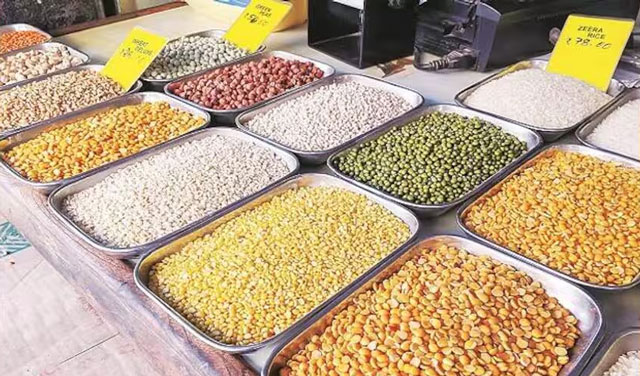
The government is considering the move as pulses prices remain under pressure ahead of the festive season and concerns grow over domestic production following uneven monsoon rainfall. Pulses are largely cultivated in rain-fed areas, and some major producing states received up to 30% less rainfall than average during the June-September monsoon season, according to the sources cited by Reuters.
India is the world's largest producer, consumer and importer of pulses and increasingly relies on overseas supplies to bridge the gap between domestic production and consumption. In 2024-25, the country produced 25.7 million tonnes of pulses and imported 7.3 million tonnes, with imports accounting for about 23% of consumption.
Major suppliers include Australia, Canada, Russia, Myanmar and several African countries.
The government could retain the import duty on chickpeas to encourage farmers to increase acreage under the crop, with chickpea sowing for the winter season expected to begin in October. Demand for chickpeas typically rises during the festive season as households, millers and food processors build stocks.
The government has already taken measures involving other food commodities to contain prices, including reducing import tariffs on vegetable oils and adjusting sugar exports.
Food inflation stood at 5.95% in August, according to the Reuters report. Inflation in pigeon peas was 5.6% year-on-year, while black gram prices rose 7.4%.
The possible tariff reduction comes as pulse prices have also risen in recent weeks. The Economic Times reported that prices of chana, moong, matar and tur increased by up to 10% over the past month, with a further 3-5% rise in the last week, amid festive demand and concerns over crop prospects.