Daijiworld Media Network - Mumbai
Mumbai, Oct 9: A high-level delegation from the Maharashtra government has concluded a two-day mission to London focused on quantum computing, artificial intelligence (AI) and investment, aimed at positioning the state as India's leading quantum and AI hub.
The mission, held on October 7 and 8, sought to lay the groundwork for a proposed “Quantum City” and a UK-Maharashtra “Quantum Corridor”.
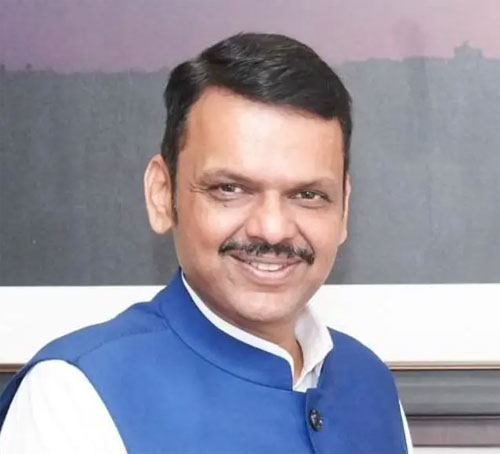
Organised and facilitated by the Global India Business Corridor (GIBC UK), the initiative provided Maharashtra a platform at The City Quantum & AI Summit to explore partnerships in advanced technology and attract global investments.
The state delegation comprised Industries Department Principal Secretary P. Anbalagan and Kaustubh Dhavse, Chief Investment Advisor to Chief Minister Devendra Fadnavis.
During the visit, the delegation held 13 bilateral meetings with global chief executives, investors and leaders of public institutions to explore opportunities for establishing advanced deep-tech operations and attracting capital to Maharashtra.
Key proposals discussed included setting up a quantum facility in Mumbai, developing research and AI infrastructure, deploying infrastructure and security solutions, exploring industrial and governance applications, and supporting workforce development and start-ups.
The proposed initiative envisages a dedicated quantum computing hub in Mumbai, an AI engineering and research base, and sustainable, energy-efficient data centres.
Other areas of focus include deploying quantum sensing technologies to improve safety during underground transport construction, introducing advanced cybersecurity systems to protect critical infrastructure, and using AI to streamline investor approvals.
The plans also include establishing advanced manufacturing centres to help micro, small and medium enterprises (MSMEs) integrate into global supply chains, alongside targeted workforce training programmes and incubation support for technology start-ups.
Discussions with representatives of the City of London Corporation also explored the possibility of creating an institutional financing channel between London and Mumbai to support large-scale infrastructure development in Maharashtra.
According to an illustrative planning scenario prepared by GIBC, the proposed initiative could generate approximately Rs 20,000 crore in cumulative economic activity over 10 years if the projects secure formal funding and reach operational maturity.
The estimate includes investments, operational expenditure and wider economic spillover effects, with the potential to generate up to 8,000 direct and supported jobs.
However, GIBC clarified that these figures are illustrative projections for planning purposes and do not represent committed investments or confirmed job creation.
If fully implemented, the proposed corridor could expand global opportunities for local engineers, researchers and entrepreneurs while strengthening Maharashtra's technological capabilities, administrative efficiency and critical infrastructure resilience, government sources said.