Daijiworld Media Network - New Delhi
New Delhi, Oct 10: Tesla and SpaceX chief Elon Musk has intensified his public criticism of Reliance Industries chairman Mukesh Ambani, sharing reports of Reliance-backed companies' donations to the Bharatiya Janata Party (BJP) amid an ongoing dispute over the proposed entry of Musk's Starlink satellite internet service into India.
Musk on Friday evening posted screenshots of news reports detailing donations made to the BJP by companies backed by Reliance, hours after sarcastically addressing Ambani as "Prime Minister Ambani" and accusing him of seeking to protect a monopoly in India's telecommunications market.
In his earlier post on social media platform X, Musk questioned whether Ambani would allow Starlink to compete in India, suggesting that the country's existing telecom players were seeking to prevent competition from the satellite internet service.
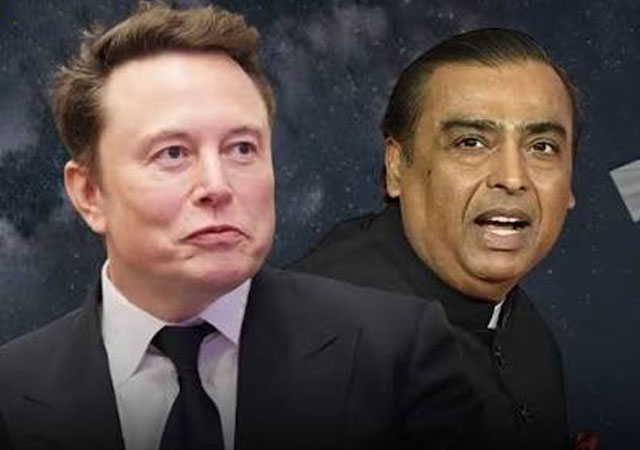
The latest posts came amid a growing public exchange between the two billionaires over the regulatory hurdles facing Starlink's commercial launch in India. Musk had previously accused unnamed business groups of obstructing the company's entry to protect their market dominance.
In a series of posts, Musk questioned why Starlink had not been allowed to begin commercial operations in India despite, as he claimed, spending years complying with Indian regulatory requirements. He also argued that satellite internet could improve connectivity in underserved areas, providing greater access to education and enabling small businesses to reach international markets.
The Indian government has rejected allegations that Starlink is being deliberately blocked to protect domestic companies. The Ministry of Communications has maintained that India's regulatory framework for satellite communication services is fair and non-discriminatory and that all licensed operators must fulfil the prescribed security requirements.
Communications Minister Jyotiraditya Scindia on Friday reiterated that India does not permit monopolies in any sector. He said three companies had received satellite communication licences and could begin operations after individually meeting the necessary security conditions and regulatory milestones.
The three licensed operators are Musk's Starlink, Reliance Jio's satellite communication venture Jio Satcom and Bharti Airtel-backed Eutelsat OneWeb. However, the companies still need to complete the required security assessments and obtain the necessary spectrum-related approvals before launching commercial services.
The government has said that security assessments are underway for all three operators and that they are broadly at the same regulatory stage. It has described suggestions of an unfair or discriminatory approval process as baseless.
The dispute comes as satellite-based internet services are expected to introduce another layer of competition into India's telecommunications market, which is currently dominated by established mobile operators, including Reliance Jio and Bharti Airtel.
Musk's latest posts have brought the role of corporate donations to political parties into the public discussion surrounding Starlink's entry into India. However, the sharing of reports about donations does not, by itself, establish that those contributions influenced the government's regulatory decisions.
The government has maintained that commercial operations will be permitted once the relevant security and regulatory requirements have been fulfilled.