Daijiworld Media Network - Washington
Washington, Oct 26: A US lawmaker has asked a federal judge to order President Donald Trump’s administration to release nearly 200 text messages and other records linked to the Kennedy Center in Washington, escalating a legal dispute over the institution’s planned closure for renovations, the Associated Press reported.
Democratic lawmaker Joyce Beatty has sought access to communications involving senior administration officials and the performing arts centre’s management, arguing that the records could shed light on Trump’s involvement in decisions concerning the institution.
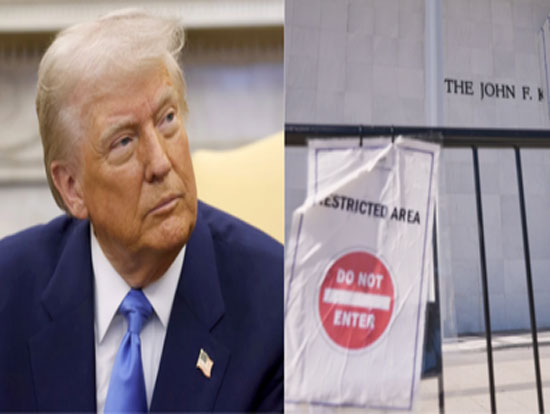
Beatty, an Ohio Democrat who serves as an ex officio member of the Kennedy Center’s board, submitted the request through her lawyers on Sunday. The move comes months after the same judge ruled that Trump’s name had been unlawfully added to the centre and ordered its removal.
The Trump administration has argued that the communications should remain confidential under executive privilege, a legal principle that allows presidents to withhold certain official communications.
Court filings identify two sets of text messages involving Matt Floca, the Kennedy Center’s executive director and chief executive officer.
The first set comprises 19 messages exchanged between Floca and Natalie Harp, Trump’s executive assistant. Eleven of those messages were exchanged on September 15, when the Kennedy Center’s board voted for the third time to close the facility.
The second set consists of approximately 180 text messages between Floca and Commerce Secretary Howard Lutnick.
Although the contents of the messages have not been disclosed, Beatty’s legal team argues that the records could help establish the extent of Trump’s involvement in decisions concerning the centre, either directly or through his associates.
“These communications directly bear on the issues before the Court, and the claim of privilege cannot stand,” Beatty’s lawyers wrote in their filing.
The Justice Department defended the administration’s position on the withheld communications earlier in October, according to ABC News’ *Good Morning America*. The administration argued that Trump has an official role in the Kennedy Center’s operations because federal law empowers him to appoint members of its board.
It maintained that this authority also allows the President to assess whether the institution is being properly managed.
Deputy White House Counsel Josh Hoyt addressed the confidentiality issue in a sworn declaration, extending the administration’s claim of executive privilege to discussions with outside advisers as well as government officials.
Beatty’s lawyers have challenged the broad application of the privilege, arguing that the administration has not provided sufficient grounds to withhold the requested material from the court proceedings.
The dispute over the messages follows an earlier legal battle concerning Trump’s name being added to the Kennedy Center. Trump became chairman of the institution last year after board members aligned with him selected him for the position. His name was subsequently added to the building.
In May, Judge Cooper ruled that the name had been added unlawfully and ordered its removal. The judge also blocked a two-year closure of the centre approved by the board in March, finding that members had not adequately considered the implications for its finances and programming.
The Justice Department later asked the judge to lift the restriction to allow renovation work to proceed. Trump has argued that the building was in a dangerous condition and required extensive repairs, even suggesting that it might need to be “ripped down”.
The legal dispute continued after the Kennedy Center’s board voted again on September 15 to close the facility. The following day, Floca ordered a temporary closure of the main building.
Judge Cooper subsequently directed the Kennedy Center to provide 30 days’ notice before undertaking major physical changes to the property.
Several of the messages between Floca and Harp were exchanged on the day of the board’s September vote, prompting Beatty’s lawyers to seek their disclosure as they challenge the administration’s handling of the institution and its planned closure.