Daijiworld Media Network - Mumbai
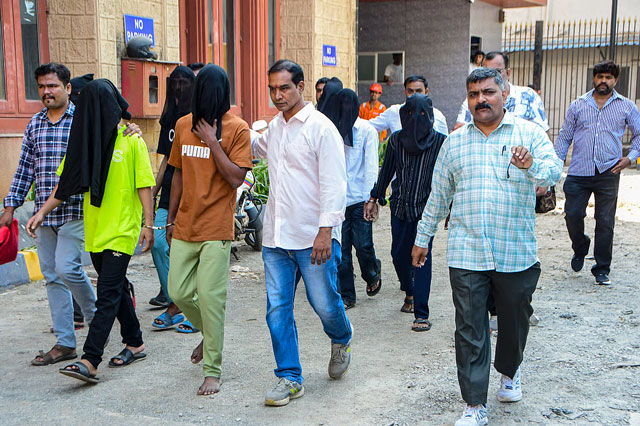
Mumbai, Oct 29: A special Maharashtra Control of Organised Crime Act (MCOCA) court in Mumbai on Thursday remanded all 11 accused in the firing case involving Bollywood actor Tiger Shroff to police custody till November 6.
The accused were produced before special judge Satyanarayan Navandar after being re-arrested under the stringent anti-organised crime law. The police had sought 10 days of custody, stating that detailed interrogation was necessary to uncover the alleged conspiracy behind the attack.
The police invoked MCOCA provisions on Tuesday against the 11 people arrested so far in connection with the October 18 firing incident in Mumbai's Juhu area.
According to the investigation, two shooters allegedly fired five rounds at Shroff's car as he was leaving a football ground. The 36-year-old actor, known for films such as Baaghi, escaped largely unhurt, while his driver and a bystander, identified as a vlogger, sustained injuries.
Members purportedly linked to the Lawrence Bishnoi gang claimed responsibility for the firing through social media posts. Police have also named Anil Pandit, an aide of jailed gangster Lawrence Bishnoi, as a wanted accused in the case.
Of the 11 accused arrested so far, three were apprehended in Kota, Rajasthan, while the remaining eight were arrested at different locations in Delhi and Haryana.
The invocation of MCOCA gives investigators additional powers to probe the alleged organised crime conspiracy. Under the law, a court can grant bail only if it is satisfied that there are reasonable grounds to believe the accused is not guilty of the alleged offence.
MCOCA also allows investigators up to 180 days to file a chargesheet, compared with 90 days under ordinary criminal law, and permits extended police custody in accordance with the law.
Another significant provision is that confessions recorded before a police officer of the rank of Deputy Commissioner of Police or above are admissible as evidence in MCOCA cases. Under ordinary criminal law, confessions are generally admissible only when recorded before a magistrate, subject to applicable legal requirements.
The investigation is continuing, with the police seeking to establish the alleged roles of the accused and determine the wider conspiracy behind the firing incident.