Daijiworld Media Network - Tehran
Tehran, Nov 1: Iranian missile and drone strikes have caused extensive damage to US military installations across the Middle East, targeting air defence systems, radar facilities, aircraft, warehouses and troop accommodation, according to an Associated Press analysis of satellite imagery and interviews with regional officials.
The analysis found that more than 115 Iranian or Iran-backed drone and missile strikes damaged or destroyed structures at 26 US military bases and other sites across the region through August. Hundreds of buildings and other structures were damaged or destroyed between April and June alone.
The attacks affected American military facilities in Kuwait, Bahrain, Iraq, Jordan, Oman, Qatar, Saudi Arabia and the United Arab Emirates, exposing the vulnerability of the US military's regional infrastructure to sustained drone and missile attacks.
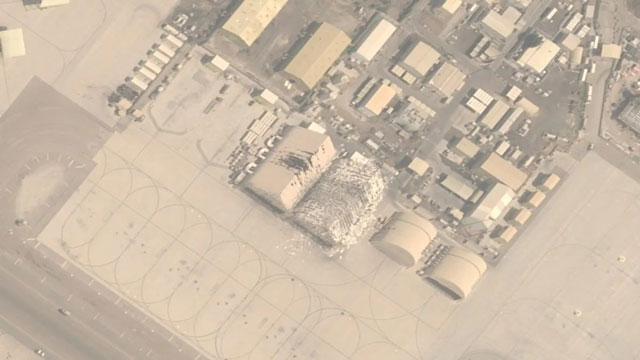
The strikes followed what appeared to be a two-stage strategy. Iranian forces initially targeted early-warning radars and air defence systems designed to detect and intercept incoming threats. Subsequent attacks focused on aircraft hangars, warehouses, fuel facilities, communications infrastructure and accommodation for military personnel.
Within the first two days of the conflict, Iranian strikes destroyed protective enclosures housing US radar systems at Camp Arifjan in Kuwait and Naval Support Activity Bahrain. Portable radar units were also targeted at Prince Sultan Air Base in Saudi Arabia and Muwaffaq Salti Air Base in Jordan.
The attacks also damaged costly surveillance and defence equipment. A US Army radar system in Jordan, reportedly one of only 13 operated by the Army worldwide and valued at around $500 million, was destroyed. A separate radar system in Qatar, valued at approximately $1.1 billion, also sustained significant damage.
Kuwait suffered some of the heaviest damage among the countries hosting American military installations.
Ali Al Salem Air Base was struck at least 30 times, damaging or destroying at least 15 aircraft hangars, several warehouses and 10 buildings near a residential area.
Camp Buehring also sustained extensive damage. More than 30 structures were damaged or destroyed between March and August. The affected facilities included a gym, a store serving military personnel, a dining facility and the base's main garage.
Kuwait was also the site of the deadliest known attack on US personnel during the conflict. A drone strike at Port Shuaiba on March 1 killed six American soldiers.
At Prince Sultan Air Base in Saudi Arabia, attacks struck barracks and dining facilities, hit two aerial refuelling tankers and damaged the rear section of a Boeing E-3 Sentry surveillance aircraft.
An Iranian strike also hit a CIA facility at the US Embassy in Riyadh. Reports have confirmed damage to at least 15 American aircraft at military bases across the region.
The scale of the destruction has forced the US military to relocate critical assets, including aircraft, air defence systems and communications equipment, from the Gulf region, according to officials familiar with the matter.
Defence analysts said the attacks demonstrated how relatively inexpensive drones could threaten sophisticated military infrastructure through sustained and coordinated strikes.
The campaign has also raised questions about the ability of permanent military installations to withstand attacks that first target surveillance and air defence capabilities before moving on to other facilities.
US Central Command declined to provide details about the damage to military bases, citing operational security. Pentagon spokespersons, meanwhile, maintained that American forces and installations remained well protected.
US officials also requested satellite imagery providers to delay the public release of images of affected sites, citing national security concerns. The restrictions made independent assessments more difficult.
Researchers consequently relied on alternative sources, including Airbus's OneAtlas satellite imagery platform, to examine and verify the extent of the destruction.
The findings underline the growing challenges facing US military installations in the region, particularly as modern warfare increasingly involves coordinated drone and missile attacks against fixed infrastructure.