Daijiworld Media Network - New Delhi
New Delhi, Nov 3: Sowing of rabi crops, including wheat, has fallen significantly behind last year's pace, with the total area covered declining by 46 per cent to 37.56 lakh hectares as of October 30, compared to 69.02 lakh hectares during the corresponding period last year, according to data released by the Union Agriculture Ministry.
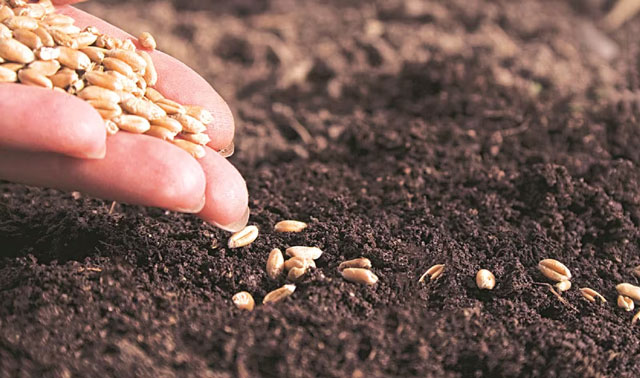
Wheat, the principal rabi crop, has been sown across only 19,000 hectares so far, against 3.34 lakh hectares during the same period last year. The delay has been attributed mainly to insufficient soil moisture. Wheat is generally sown during October and November and harvested in March and April. During the 2025-26 crop year, wheat was cultivated across 336 lakh hectares.
The area under pulses has also declined, with sowing covering 9.45 lakh hectares compared to 19.56 lakh hectares a year ago. Gram acreage fell to 5.90 lakh hectares from 14.35 lakh hectares.
Oilseeds were sown across 20.97 lakh hectares, against 38.62 lakh hectares last year. Rapeseed and mustard accounted for 20.50 lakh hectares, compared to 38.07 lakh hectares during the corresponding period.
Coarse cereals covered 3.78 lakh hectares, marginally lower than 4.22 lakh hectares a year ago, while winter-sown paddy acreage stood at 3.16 lakh hectares against 3.29 lakh hectares.
Experts have attributed the slowdown largely to the 13 per cent deficient southwest monsoon during June-September, which reduced residual soil moisture before the rabi sowing season. Limited irrigation availability has further affected planting, with reservoir and canal water levels remaining below normal in several key wheat-growing states. Wheat cultivation requires multiple rounds of irrigation after sowing.
Reviewing the situation on Monday, Union Agriculture Minister Shivraj Singh Chouhan directed officials to accelerate rabi sowing immediately after the kharif harvest and ensure optimal utilisation of available residual moisture.
He said farmers in areas facing water shortages should be encouraged to cultivate crops requiring less irrigation and lower input costs, including chickpea, mustard, lentil and millets.
Chouhan also instructed officials to ensure that climate-resilient and heat-tolerant seeds developed by agricultural scientists reach farmers, keeping in view the fluctuations in temperature.
The Agriculture Ministry said adequate stocks of urea, di-ammonium phosphate (DAP), muriate of potash (MOP) and NPK fertilisers were available for the rabi season. Certified seeds were also in stock, with supply chains being monitored in coordination with state governments down to the district level.
The ministry further stated that mandi prices of major agricultural commodities, including paddy, wheat, maize, gram, lentil, arhar, soybean and mustard, were significantly above their respective Minimum Support Prices (MSP), allowing farmers to secure better returns.