Daijiworld Media Network - Kochi
Kochi, Dec 12: Condensing 25 years of Malayalam cinema—from 2000 to 2025—is no easy task, as the industry’s journey has been both turbulent and transformative. Today, Malayalam cinema is celebrated for its diverse storytelling, technical finesse, and willingness to experiment, but this success is the result of decades of trials, errors, and gradual evolution. The victories are obvious, but the failures of the past, especially the early 2000s, played a crucial role in shaping its current creative renaissance.
The early 2000s were arguably the weakest decade for Malayalam cinema after its golden years in the 1970s and 1980s. The industry faced intellectual stagnation, with mainstream films often recycling old formulas. While blockbusters emerged sporadically, experimentation was rare, and the overall technical and creative quality of movies was low.
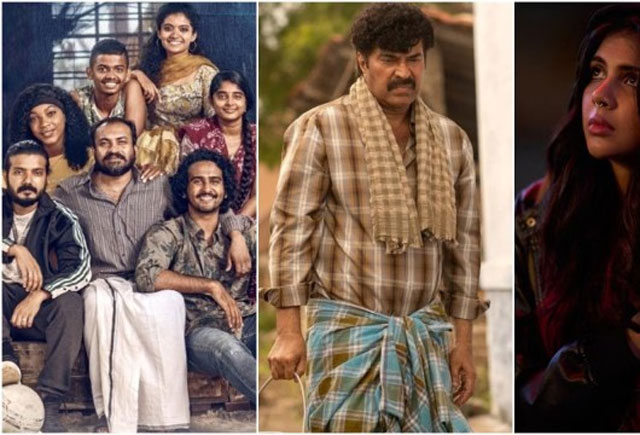
During this time, filmmakers like Joshiy, Fazil, and IV Sasi released underwhelming projects such as Praja, Dubai, Kaiyethum Doorath, and Sradha, while lighter family dramas by Sathyan Anthikkad, Kamal, and Lal Jose, comedies by Rafi–Mecartin, Johny Antony, and Shafi, and hard-hitting dramas by Blessy provided occasional relief. However, these films largely adhered to conventional storytelling and failed to break new ground.
Both Mohanlal and Mammootty, at the peak of their superstardom, seemed directionless. While they delivered hits like Narasimham, Ravanaprabhu, Balettan, Valliettan, and Sethurama Iyer CBI, their careers were also peppered with numerous flops. Mohanlal’s Onnaman, Chathurangam, Vamanapuram Bus Route and Mammootty’s Dubai, Thaskara Veeran, Phantom are examples of this era’s inconsistent output.
Actors like Jayaram and Suresh Gopi also faced career slumps, while Dileep rose to prominence with comedies like CID Moosa and Meesa Madhavan, despite being a mediocre actor, capitalizing on the lack of strong alternatives. Emerging talents like Kunchacko Boban, Prithviraj Sukumaran, Jayasurya, Meera Jasmine, Bhavana, Navya Nair, and Kavya Madhavan began making their mark during this period.
By 2005, the industry showed glimmers of revival. Anwar Rasheed’s Rajamanikyam revitalized commercial masala cinema, Urvashi returned with Achuvinte Amma, and films like Udayananu Tharam and Anandabhadram brought fresh narratives and aesthetics. Yet, this was not an immediate renaissance—the industry was cautious, hesitant to experiment, and often disconnected from its cultural and emotional roots.
While independent cinema flourished with critically acclaimed films like Shantham, Pulijanmam, Neythukaran, Naalu Pennungal, Kutty Srank, and Paadam Onnu: Oru Vilapam, this quality rarely translated to mainstream success. Consequently, audiences increasingly turned to Malayalam-dubbed films from other languages, enjoying lighter entertainment in films like Arya, Happy, and Happy Days.
The 2000–2005 era represents a low point that laid the groundwork for Malayalam cinema’s later resurgence. While the industry faced creative stagnation, poor script choices, and a disconnect from its roots, these challenges set the stage for the experimentation and innovation that would define the next phase. From the mid-2000s onwards, Malayalam cinema gradually transformed into the dynamic, content-driven powerhouse that garners national and international acclaim today.
If you want, I can continue this piece and create a full narrative covering 2005–2025, highlighting the rise of the new wave, experimental directors, and the current golden era of Malayalam cinema.