Daijiworld Media Network – Puttur
Puttur, Dec 21: Unseasonal weather patterns have cast a dark cloud over cashew cultivation along the coastal belt, with strong indications that this year’s harvest may witness a sharp decline. Cashew trees that should have flowered and set fruit by now are yet to show any signs of blossoming, triggering concern among farmers.
Under normal conditions, cashew trees begin flowering by mid-November and set nuts by December. However, this season has defied expectations, with no flowering reported so far. Farmers attribute the delay to persistent rainfall that continued until November. The extended wet spell has stalled the emergence of new shoots on cashew plants. Growers fear that even if flowering begins late, the prevailing climatic conditions may not remain favourable for healthy fruit development.
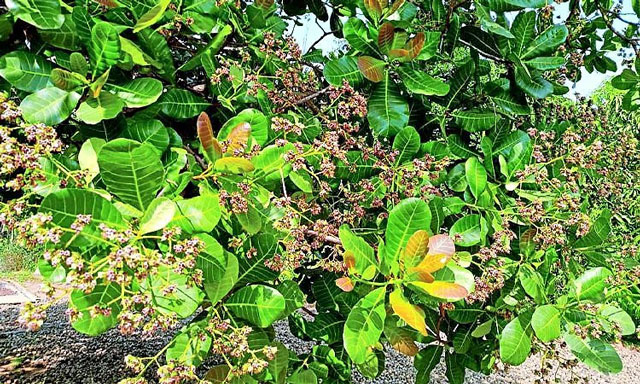
Adding to the anxiety is the risk of untimely summer showers coinciding with the harvest period if the crop cycle is delayed further. Farmers warn that rainfall during harvesting causes cashew nuts to turn black, drastically reducing their market value. As a result, cultivators who rely on cashew as a subsidiary crop are likely to suffer significant income losses this year.
At a time when coconut palms are succumbing to root wilt disease and areca nut plantations are battling multiple ailments, cashew cultivation has also come under threat. In several hilly regions, cashew plantations have begun showing signs of the dreaded ‘fire disease’. With crops across the board facing challenges, farmers say they are being pushed deeper into distress.
Ideally, cashew trees should have flowered as early as October. However, unusually cold weather coupled with untimely rains has severely disrupted the crop cycle. “If there is no rainfall in the coming days, cashew trees may begin flowering and setting fruit by the end of December. A reasonable yield is still possible if cloudy conditions do not persist and the cold weather continues,” said Dinakar Adiga, Director of the Puttur Cashew Development Corporation.
Cashew cultivation is highly climate-dependent, and the current season has once again exposed farmers to weather-related risks. With yields expected to be low due to climatic irregularities, farmers are urging the government to extend crop insurance coverage to cashew cultivation.
“Just as commercial crops are covered under crop insurance schemes, cashew—though classified as a food crop—must also be included. This will enable the government to provide much-needed relief to affected farmers,” demanded farmer Kayyappe Janardhana Gowda.
As uncertainty looms large over the season, coastal cashew growers are hoping for stable weather in the coming weeks to salvage whatever remains of this year’s crop.