Daijiworld Media Network - New Delhi
New Delhi, Dec 30: India’s road infrastructure has witnessed transformative growth over the past 11 years, propelling the country to become home to the world’s second-largest road network. National highways now stretch across 1,46,560 km, reflecting a major leap in connectivity and transport capacity, the government announced on Tuesday.
According to the Ministry of Road Transport and Highways (MoRTH), the national highway network has expanded by nearly 61 per cent, growing from 91,287 km in 2014 to its current length in 2025. This expansion has been driven by large-scale initiatives such as Bharatmala Pariyojana, SARDP-NE, the Left Wing Extremism (LWE) Road Development Programme, and multiple externally funded projects.
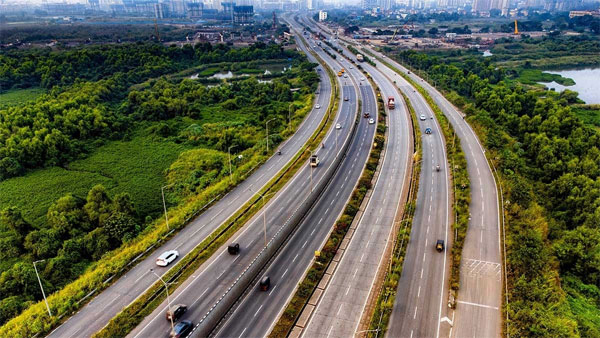
High-speed mobility has also seen dramatic improvement. Operational access-controlled expressways and high-speed corridors have grown from just 93 km in 2014 to 3,052 km this year. Similarly, the length of four-lane and wider national highways has more than doubled, increasing from 18,371 km to 43,512 km.
To support infrastructure financing, MoRTH has mobilised Rs 1.52 lakh crore through asset monetisation up to November 2025 and has set a target of Rs 30,000 crore for the 2025–26 financial year. Updated Model Concession Agreements and a revamped Build-Operate-Transfer framework are aimed at boosting private sector participation.
The Ministry is also preparing to widen its investment base through the launch of the Public InvIT, Raajmarg InvIT, for which regulatory approval is underway. Issuance is expected in January 2026. In line with the Union Budget 2025–26, a public-private partnership pipeline covering 13,400 km of highways, valued at approximately Rs 8.3 lac crore, has been identified for development over the next three years.
Logistics and freight efficiency are set to receive a boost with plans for 35 Multimodal Logistics Parks under Bharatmala Pariyojana. With an estimated investment of Rs 46,000 crore, these facilities are expected to handle nearly 700 million metric tonnes of cargo once operational.
User convenience is also a priority, with plans to develop modern wayside amenities every 40–60 km along national highways under the PPP model. In hilly and difficult terrain, the Parvatmala Pariyojana aims to improve connectivity through ropeway projects designed to reduce congestion and enhance last-mile access.
Among key milestones in 2025, the Prime Minister inaugurated the 12-km Sonamarg Tunnel in Jammu and Kashmir, built at a cost exceeding Rs 2,700 crore, along with several major road projects in Katra, including the Rafiabad–Kupwara highway widening. In Delhi, landmark urban decongestion projects such as the Dwarka Expressway and UER-II were also inaugurated.
Sustainability and safety featured prominently in the year’s initiatives. Trials of hydrogen-powered heavy-duty trucks were launched in New Delhi as part of the clean energy push. The Cashless Treatment of Road Accident Victims Scheme, 2025, was rolled out nationwide, offering medical coverage of up to Rs 1.5 lac per victim.
Vehicle safety measures were strengthened through mandatory High Security Registration Plates and expanded provisions for Advanced Driver Assistance Systems in new vehicles. The Ministry also operationalised 123 vehicle scrapping facilities and 160 automated testing stations across multiple states, with over 3.58 lakh vehicles scrapped so far.
To encourage public participation in road safety, incentives under the Rah-Veer Scheme were enhanced, raising rewards for Good Samaritans to Rs 25,000 per incident and introducing annual national awards.
Digital reforms were furthered through the BhoomiRashi portal for transparent land acquisition and compensation, while tolling systems saw innovation with the launch of FASTag-based annual passes and the introduction of barrier-free electronic toll collection using automatic number plate recognition on select highways.
Together, these initiatives underline India’s push toward a modern, efficient, and future-ready road transport ecosystem.