Daijiworld Media Network – New Delhi
New Delhi, Jan 25: Sir William Mark Tully, KBE, one of the most respected and influential voices in Indian journalism and broadcasting, passed away at a Delhi hospital on Sunday. He was 90.
Born on October 24, 1935, in Kolkata’s Tollygunge to British parents, Tully spent his early childhood in India before moving to England for his education at Marlborough College and Trinity Hall, Cambridge. Despite his British upbringing, India remained the centre of his personal and professional life.
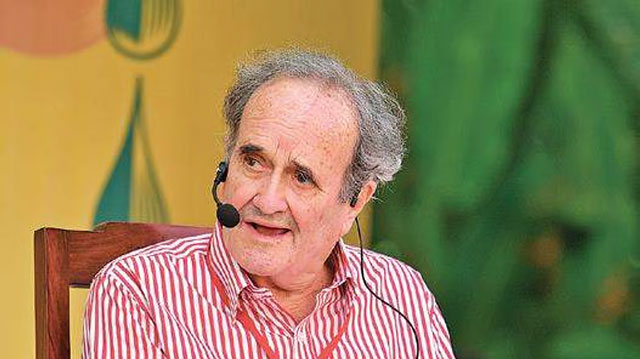
Tully returned to India in 1964 as the BBC’s India correspondent and later became the organisation’s Bureau Chief in New Delhi, a position he held for nearly three decades until his resignation in 1994. Over the years, he became synonymous with balanced, insightful and empathetic reporting on India, earning the trust of generations of listeners.
Known for his calm, measured voice and refusal to sensationalise events, Tully reported on some of the most defining moments in modern Indian history, including the 1975–77 Emergency, the assassination of Prime Minister Indira Gandhi and the subsequent anti-Sikh violence, Operation Blue Star, the 1992 Babri Masjid demolition, economic liberalisation, and multiple elections and social upheavals. His reports on the BBC World Service and the programme From Our Own Correspondent were widely followed.
During the Emergency, Tully was expelled from India but was later allowed to return. Though he faced criticism at various times from both Indian nationalists and sections of the British establishment, he remained steadfast in his commitment to fair and independent journalism.
In recognition of his contributions, Tully was knighted (KBE) in 2002 and was awarded the Padma Shri by the Government of India in 2005, a rare honour reflecting his unique position in the public life of both countries.
After leaving the BBC, Tully continued to write extensively on India. His notable works include No Full Stops in India (1988), The Heart of India (1995), India in Slow Motion (2002, co-authored with Gillian Wright), and India: The Road Ahead (2011). His books combined the rigour of a seasoned reporter with the warmth of someone who regarded India as home.
In his later years, Tully divided his time between New Delhi and McLeod Ganj, remaining deeply engaged with everyday life and maintaining a keen curiosity about India’s social and cultural complexities. A devout Anglican, he often reflected on the spiritual connections between his faith and India’s pluralistic traditions.
Sir Mark Tully’s passing marks the end of an era in international journalism, leaving behind a legacy of integrity, empathy and deep engagement with India.