Daijiworld Media Network - Cairo
Cairo, Feb 8: Iranian foreign minister Seyed Abbas Araghchi has said he expects a fresh round of talks with the United States to take place “soon,” describing the recent discussions as a constructive opening while cautioning that restoring mutual trust will require time.
In an interview aired on Saturday and later shared in Persian on his Telegram channel, Araghchi said Tehran would not abandon its uranium enrichment programme, calling it an “inalienable right.” However, he added that Iran remains open to an agreement that reassures the international community while safeguarding its enrichment activities, according to Xinhua news agency.
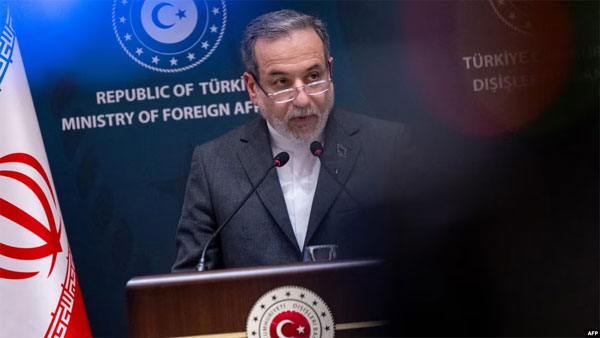
Araghchi also reiterated Iran’s opposition to transferring its enriched uranium abroad and stressed that the long-running nuclear dispute could only be resolved through negotiations. He firmly rejected US demands to limit Iran’s missile programme, describing missiles as a purely defensive capability that is “never negotiable.”
Clarifying reports around the Muscat talks, Araghchi confirmed that members of the Iranian and American delegations briefly shook hands, even though the negotiations were conducted indirectly. “Although the negotiations were indirect, an opportunity arose to shake hands with the American delegation,” he said, disputing US accounts that suggested a short direct exchange between the two sides.
Following his meeting with US President Donald Trump’s special envoy Steve Witkoff, Araghchi travelled to Doha, where he held talks with Qatar’s Prime Minister and Foreign Minister Sheikh Mohammed bin Abdulrahman bin Jassim Al-Thani, according to Qatari media.
Meanwhile, Iran’s Chief of Staff of the Armed Forces, Major General Abdolrahim Mousavi, adopted a sharper tone, warning that any attempt to impose war on Iran would destabilise the entire Middle East. While insisting Iran would not initiate conflict, he said the country would respond “decisively” to defend its sovereignty.
Trump, speaking to reporters aboard Air Force One while travelling to his Mar-a-Lago resort in Florida, described the Oman talks as “very good,” adding that Iran “looks like it wants to make a deal very badly.” He said the two sides were expected to meet again early next week.
On Friday, Trump also signed an executive order threatening additional tariffs on countries that continue trade with Iran. Although no specific tariff rate was set, the order cited 25 per cent as an example and said the measure could apply to imports from any country that “directly or indirectly” purchases goods or services from Iran.
The Muscat discussions marked a renewed diplomatic push amid escalating regional tensions. In recent weeks, the United States has increased its military footprint in the Middle East, while Iran has intensified its own preparations, heightening fears of a broader conflict.
Israel is closely monitoring the negotiations. Prime Minister Benjamin Netanyahu’s office said on Saturday that he would travel to Washington later this week to discuss the talks with Trump. Netanyahu believes any agreement must impose restrictions on Iran’s ballistic missile programme and halt its support for allied militant groups.
Ahead of the Muscat meeting, Witkoff visited Israel for consultations, during which Netanyahu said Iran had “repeatedly demonstrated it cannot be trusted to keep its promises.”
Regional responses have been cautiously positive. Egypt and the United Arab Emirates welcomed the talks as a step toward dialogue and de-escalation. Egypt’s Foreign Minister Badr Abdelatty praised Oman’s role in facilitating the negotiations and reaffirmed Cairo’s support for a diplomatic solution to the nuclear issue. The UAE’s Foreign Ministry said Omani mediation had helped create conditions conducive to dialogue and expressed hope for outcomes that would enhance regional security.
Saudi Foreign Minister Faisal bin Farhan Al Saud also welcomed the talks, saying he hoped they would pave the way for easing tensions and promoting regional stability. “The region is burdened by multiple crises, and finding a diplomatic solution between the United States and Iran is essential for peace and stability,” he said at a press conference on Friday.
Qatar’s Foreign Ministry said its foreign minister, during his meeting with Araghchi in Doha on Saturday, expressed hope that the negotiations would culminate in a comprehensive agreement that strengthens security and stability across the region.