Daijiworld Media Network - Jerusalem
Jerusalem, Feb 24: With speculation mounting over a possible United States strike on Iran, Israeli political leaders have begun sharpening their rhetoric against another regional power — Turkiye — signalling a potential shift in focus even as tensions with Tehran remain high.
Former Israeli Prime Minister Naftali Bennett, who is expected to contest upcoming elections, recently described Turkiye as a growing threat to Israel. Speaking at a conference last week, Bennett warned that Israel must not “turn a blind eye” to Ankara, alleging it was part of a regional axis “similar to the Iranian one”.
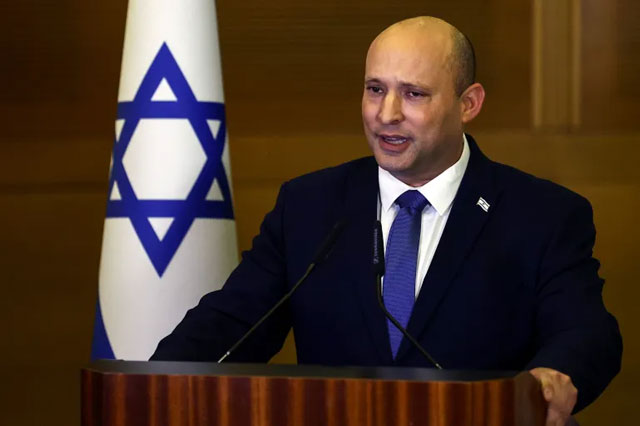
“A new Turkish threat is emerging,” Bennett said, adding that Israel must act simultaneously against “the threat from Tehran and the hostility from Ankara.”
His remarks come as Turkiye has emerged as one of the most vocal critics of Israel’s military campaign in Gaza and its policies toward Palestinians, while also strengthening ties with regional players such as Saudi Arabia and Egypt.
On Sunday, Israeli Prime Minister Benjamin Netanyahu, while announcing an upcoming visit by Indian Prime Minister Narendra Modi, outlined plans for a new “hexagon” of allied nations aimed at countering what he described as an “emerging radical Sunni axis”.
According to Netanyahu, the proposed bloc would include countries such as Greece and Cyprus, alongside India and other unnamed Arab, African and Asian states. The alliance, he said, would complement Israel’s long-standing strategic partnership with the United States.
Netanyahu stressed that the initiative was meant to reinforce Israel’s regional standing against both the “radical Shia axis” led by Iran and what he termed a new Sunni alignment.
However, analysts have questioned the framing of Turkiye as a parallel threat to Iran. Former Israeli ambassador Alon Pinkas told media outlets that Israeli politicians often rely on a “perpetual threat of war” narrative.
“If it wasn’t Turkiye, it would be Iraq. If it wasn’t Iraq, it would be Hezbollah. There just always needs to be a threat,” he said, suggesting the rhetoric may be politically motivated.
Relations between Israel and Turkiye have fluctuated over decades. While the two countries once maintained close strategic cooperation, ties deteriorated significantly after Israel’s 2010 raid on a Gaza-bound flotilla that resulted in the deaths of 10 Turkish activists.
Under President Recep Tayyip Erdogan, Ankara has adopted an increasingly critical stance toward Israel, particularly over Gaza and the occupied Palestinian territories. Nevertheless, analysts point out that Turkiye remains a NATO member and has never formally denied Israel’s right to exist — a key distinction from Tehran’s position since the 1979 Islamic Revolution.
Observers say both Netanyahu and Bennett, despite being rivals, share similar right-wing positions, particularly their opposition to the creation of a Palestinian state and their advocacy for strong Israeli regional dominance.
Political analyst Ori Goldberg noted that Bennett’s latest comments reflect a long-standing ideological position rather than a new departure. Meanwhile, Yossi Mekelberg of Chatham House suggested that the renewed focus on Turkiye may be “deflection”, arguing that Iran remains Israel’s primary strategic concern.
While rhetoric may remain largely political, experts warn that sustained escalation in language risks further straining already fragile ties between Israel and Turkiye.
As regional tensions simmer — particularly over Iran and Gaza — Israel’s recalibration of alliances and identification of new adversaries signals a potentially volatile phase in Middle Eastern geopolitics.