Daijiworld Media Network - Mumbai
Mumbai, Feb 25: Air pollution continues to grip Mumbai for the eighth consecutive day, with large parts of the city waking up to a blanket of grey haze and smog, prompting Maharashtra Environment Minister Pankaja Munde to call for collective action to tackle the crisis.
Speaking to NDTV, the BJP leader said air pollution is a global concern and not restricted to Mumbai alone. “We are all working on climate change. We are asking people to participate in this movement because we cannot do it ourselves alone. Everybody has to be very responsible about their carbon emissions,” she said.
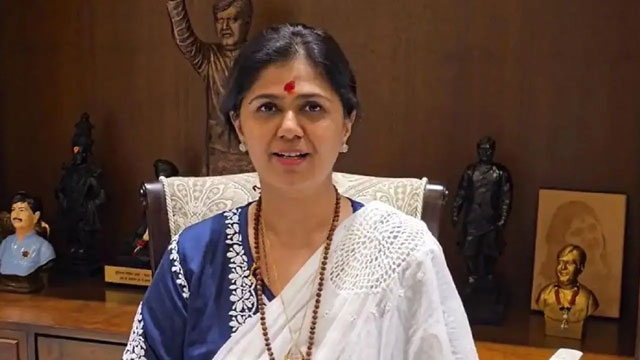
Munde pointed out that large-scale infrastructure development, including construction and metro projects, is underway in the city. She said that when rules are violated, authorities issue ‘stop work’ notices and claimed that over 1,100 such notices have been served so far.
She also questioned reports suggesting AQI levels of 600 to 700, stating such extreme pollution had never occurred in Mumbai. “My department works as a whistleblower, but it doesn’t stop pollution. People must follow rules laid down by authorities like the Brihanmumbai Municipal Corporation,” she said.
The minister added that the state government and city administration plan to use “maximum AI and technology” to reduce human interface and improve accuracy in monitoring pollution levels. She expressed hope that air quality would improve in the coming days if residents cooperate.
On Wednesday morning, Mumbai’s overall Air Quality Index remained in the ‘poor’ to ‘unhealthy’ range, hovering between 230 and 250 in several areas. Localities such as BKC, Ghatkopar and Mulund recorded readings above 290, nearing the ‘severe’ category, while Bandra, Worli and South Mumbai also reported poor air quality.
Experts said the deteriorating AQI is the result of multiple urban factors rather than a single cause. Dust from construction and roadworks contributes nearly 30 per cent of PM10 and a significant share of PM2.5 particles, while vehicular emissions account for around 16 per cent of fine particulate matter. Marine and secondary atmospheric aerosols also add to pollution levels, though human activities remain the dominant driver.