Daijiworld Media Network – New Delhi
New Delhi, Mar 26: The Union Cabinet has approved India’s updated climate commitments under the United Nations Framework Convention on Climate Change, outlining sharper emission reduction targets and a stronger push toward clean energy for the 2031–2035 period.
As part of its revised Nationally Determined Contribution (NDC) under the Paris Agreement, India has pledged to reduce the emissions intensity of its GDP by 47% from 2005 levels and increase non-fossil fuel-based power capacity to 60% by 2035. The submission marks the country’s third NDC update.
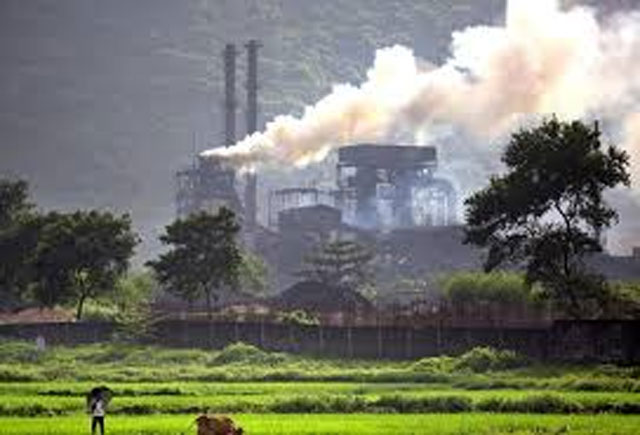
Officials described the revised targets as a significant step-up from earlier commitments, backed by India’s track record of early achievement. Government data shows that between 2005 and 2020, India reduced emissions intensity by 36%, surpassed 52% non-fossil capacity, and created a carbon sink of 2.3 billion tonnes.
The updated framework also includes a commitment to create an additional carbon sink of 3.5–4 billion tonnes of CO2 equivalent through enhanced forest and tree cover.
Experts say the move signals India’s intent to balance climate ambition with developmental priorities. Arunabha Ghosh of the Council on Energy, Environment and Water noted that the targets reflect a calibrated approach that prioritises both decarbonisation and energy security.
The government emphasised that the goals are grounded in performance rather than aspiration, pointing out that India had already met its earlier 2015 NDC targets—33–35% emissions intensity reduction and 40% non-fossil capacity—well ahead of schedule.
The Press Information Bureau stated that the updated commitments align with the principle of “Common but Differentiated Responsibilities,” while supporting the broader vision of Viksit Bharat 2047.
The announcement comes amid global uncertainties, including supply chain disruptions and energy market volatility linked to geopolitical tensions, reinforcing the need to reduce dependence on fossil fuels.
Analysts observe that while domestic projections indicate non-fossil capacity could approach 70% by 2035–36, the official target of 60% reflects a cautious yet credible stance in the international arena. With India chairing the BRICS grouping this year, the updated NDC is also seen as a signal of leadership from the Global South on climate action.
Implementation will be driven by ongoing initiatives such as renewable energy expansion, green hydrogen, battery storage, and cleaner industrial processes, alongside programmes under the National Action Plan on Climate Change and global collaborations like the International Solar Alliance.
The NDC also places strong emphasis on climate adaptation, including coastal protection, glacier monitoring, and disaster resilience, while promoting sustainable lifestyles through the “LiFE” initiative.
Experts, however, expressed mixed views. Vibhuti Garg of the Institute for Energy Economics and Financial Analysis said the 60% clean energy target may underestimate India’s potential, while Aarti Khosla highlighted the credibility of India’s trajectory given its current progress.
Meanwhile, Labanya Jena pointed out that coal is likely to remain a dominant energy source in the near term, reflecting a cautious approach amid global uncertainties.
The Cabinet termed the approval a “major milestone” in India’s climate roadmap, reaffirming its long-term commitment to achieving net-zero emissions by 2070.