Daijiworld Media Network - Hyderabad
Hyderabad, Apr 22: In a major breakthrough for kidney care, scientists at the Indian Institute of Chemical Technology (IICT) have developed two indigenous technologies that can significantly reduce dialysis costs and improve access to treatment, especially in rural and smaller healthcare centres.
The innovations target two key components of dialysis — haemodialyser filters and high-purity water systems — which together account for a large portion of treatment expenses. Researchers said the technologies could cut consumable costs by nearly 70%.
The first development involves ultra-thin hollow fibre membranes used in haemodialysers, which act as artificial kidneys by filtering toxins from the blood. Currently, India relies heavily on imported filters costing between Rs 700 and Rs 1,000. The indigenously developed filters, however, can be produced at just Rs 150 to Rs 200 while matching global performance standards.
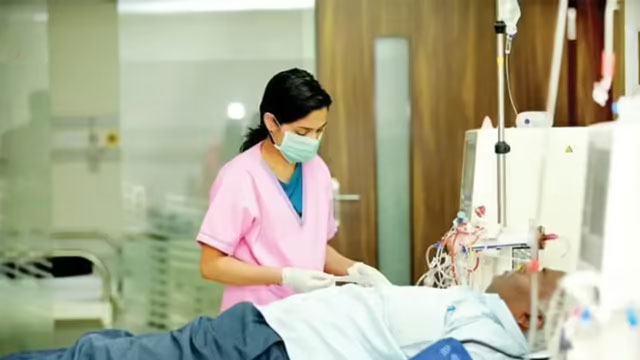
“This translates to nearly 70% cost savings, which can directly benefit patients undergoing regular dialysis,” a senior scientist said.
The second innovation focuses on high-purity water systems essential for dialysis. IICT researchers have developed advanced reverse osmosis (RO) and nanofiltration (NF) membrane technologies that ensure safe and efficient removal of contaminants while also reducing water and power consumption.
“Dialysis requires large volumes of ultrapure water. Our system ensures safety and reliability while improving efficiency,” the scientist added.
The technologies have already been tested in pilot projects in Kamareddy and Marredpally, benefiting nearly 20,000 patients with encouraging real-world results.
Scientists said efforts are now underway to transfer the technology to private healthcare providers for wider adoption. The innovations are expected to reduce India’s dependence on imported medical devices and make quality dialysis services more accessible.
With significantly lower costs and improved efficiency, the new systems could help expand life-saving dialysis treatment to remote areas, particularly for patients requiring long-term care.