Daijiworld Media Network - Panaji
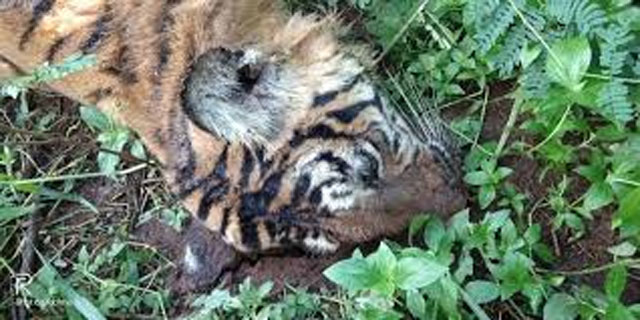
Panaji, May 4: The discovery of yet another dead tiger in Goa, this time in Dharbandora with its teeth and nails missing, has reignited serious concerns over wildlife protection in the coastal State, pointing to possible poaching and deeper systemic failures.
The latest incident is not an isolated case. Goa has witnessed multiple tiger deaths over the years, raising uncomfortable questions about the long-standing claim that the State is not a natural tiger habitat. Authorities have often maintained that tigers merely pass through Goa from neighbouring states like Karnataka and Maharashtra, with no resident population. However, repeated recoveries of tiger carcasses within Goa’s forests suggest otherwise.
The fresh case has once again exposed contradictions in the State’s conservation approach. While Goa continues to promote its rich biodiversity and forest cover, it has resisted granting stronger legal protection to critical habitats, particularly the long-pending proposal for a tiger reserve in the Mhadei Wildlife Sanctuary landscape.
The consequences of this hesitation have been evident in the past. In 2020, four tiger deaths were reported in quick succession in and around Mhadei, including a tigress and her cubs suspected to have been poisoned. The incident drew national attention, prompting intervention by the National Tiger Conservation Authority.
The authority’s findings were critical of the State’s preparedness, highlighting weak monitoring systems, lack of scientific management, inadequate protection mechanisms, and poor enforcement capacity within the forest department. It warned that without urgent corrective measures, Goa risked becoming increasingly unsafe for tigers.
Years later, little appears to have changed on the ground. Experts point out that the issue goes beyond poaching and reflects the absence of a clear and consistent conservation policy. Political hesitation over declaring a tiger reserve, driven by concerns around land rights, livelihoods, and development restrictions, has led to prolonged inaction.
Meanwhile, pressure on forests continues to grow. Infrastructure expansion, including highways, railway lines, transmission projects, mining activities, and tourism-related construction, has fragmented habitats across the Western Ghats region in Goa. These disruptions weaken wildlife corridors, making animals more vulnerable to poaching, human conflict, and ecological stress.
The condition of the latest carcass has further intensified suspicion. The removal of teeth and claws is often associated with illegal wildlife trade, indicating the possible presence of organised poaching networks operating in the region.
Conservationists warn that tigers, being apex predators, are key indicators of ecological health. Their unnatural deaths signal deeper environmental distress and systemic gaps in protection. Goa’s forests, which form a crucial link in the Western Ghats tiger corridor, hold national ecological importance and require robust safeguarding.
Repeated incidents of tiger deaths in suspicious circumstances have followed a familiar pattern — initial outrage, followed by slow investigations and fading accountability. The latest case, however, has renewed calls for urgent reforms, including stronger anti-poaching measures, enhanced surveillance, scientific monitoring, and faster wildlife crime investigations.
The State now faces a critical choice — to acknowledge the ecological reality and strengthen conservation efforts, or continue with a fragmented approach while such incidents persist. The death of a tiger under such circumstances is not merely a wildlife loss, but a stark indicator of institutional failure.