Daijiworld Media Network - Beirut
Beirut, Jun 23: Lebanon and Israel are set to begin a new round of direct talks in Washington on Tuesday, with Beirut pushing for progress towards ending the conflict while concerns grow over Iran’s involvement in negotiations with the United States.
Lebanese officials have maintained that direct talks with Israel remain the only path towards securing a lasting end to the war that began on March 2 after Hezbollah launched attacks on Israel in support of Iran, triggering Israeli air and ground operations that have killed more than 4,000 people in Lebanon.
However, four rounds of Lebanon-Israel talks since April have failed to produce a permanent ceasefire.
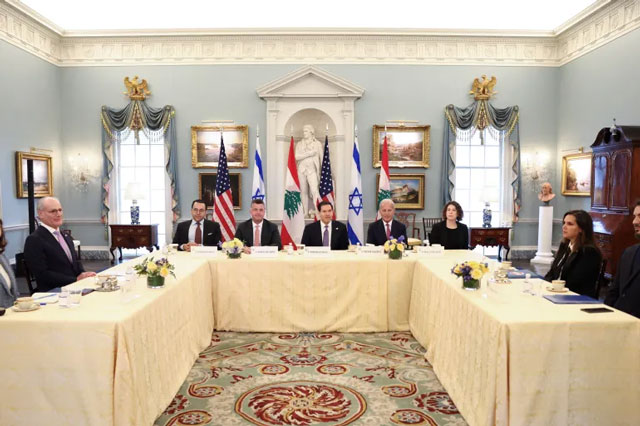
The latest developments have complicated the process after Iran and the US reached a memorandum of understanding that included a halt to fighting across all fronts, including Lebanon. The agreement has strengthened Iran-backed Hezbollah’s position while raising concerns among Lebanese leaders that Tehran is negotiating matters related to Lebanon.
Lebanese President Joseph Aoun and other officials have repeatedly stated that Iran cannot negotiate on behalf of Lebanon.
A Lebanese official and two foreign officials involved in Lebanon-related discussions said the Iran-US agreement had weakened the Lebanese government’s position and raised questions over the significance of the upcoming talks with Israel.
The three-day negotiations are not expected to bring immediate breakthroughs, with officials citing deep mistrust between the two sides.
"There remains a fundamental problem of trust between us and the Israelis in these talks. We cannot fulfil their demands, and they reject all of ours," a Lebanese official said.
Lebanon seeks Israeli withdrawal timeline
Lebanon is expected to push for a clear timeline for the withdrawal of Israeli forces from southern Lebanon.
While Beirut considers the withdrawal a key objective, senior Israeli officials have said their troops will remain in southern Lebanon indefinitely.
The Lebanese side will demand a "reasonable" withdrawal schedule during the talks, officials said, calling it a crucial step to create momentum in negotiations.
Israel, meanwhile, has said its priority is the disarmament of Hezbollah and reaching a genuine peace agreement with Lebanon.
Israeli government spokesperson David Mencer said Hezbollah remains the main obstacle to a deal and insisted that the group must be disarmed and dismantled.
The Lebanese government has been cautiously working since 2025 to address Hezbollah’s weapons, fearing direct confrontation could trigger internal conflict. Hezbollah has rejected complete disarmament and has opposed Lebanon’s direct negotiations with Israel.
Hezbollah looks towards Iran talks
Analysts warned that Israel could adopt a tougher position in Washington following the Iran-US agreement.
Karim Safieddine of the Washington-based Tahrir Institute for Middle East Policy said the agreement had reduced fighting but had not created any major shift in Lebanese or Israeli positions.
Lebanese President Joseph Aoun had proposed direct talks in March, but negotiations began only in mid-April after the US announced a ceasefire initiative aimed at opening a diplomatic path towards a wider peace agreement.
Although Israeli strikes on Beirut’s southern suburbs reduced, fighting continued in southern Lebanon as Israeli forces advanced deeper into villages.
Hezbollah has rejected previous ceasefire proposals and believes Iran’s negotiations with the US offer a better route to secure an Israeli withdrawal.
The group has urged the Lebanese government to rely on Iran’s diplomatic track instead of continuing direct negotiations with Israel.