April 5, 2026
The human mind is incredibly powerful, yet we sometimes act as feeble-minded, often demonstrating our weaknesses by falling prey to lies and fake news. Gullible people easily believe in lies, gossip, narratives, and conspiracy theories. Such lies are abundant in our societies, social media, and the internet. Unfounded claims are so profoundly misleading that, if left unchecked and not dismissed as illogical gibberish, they could lead to untold damage and consequences. New ideas, concepts, and beliefs get etched in the minds of people who become victims of such lies.
People change their perceptions and even their religion on the basis of lies they hear or read. People turn to atheism without painstakingly verifying facts. They easily become victims of digital arrest and lose large sums of money. The human mind is so powerful that people should strive to keep it healthy for their own good and for the good of others, being smart enough to ascertain the authenticity of what is seen, heard, or read.
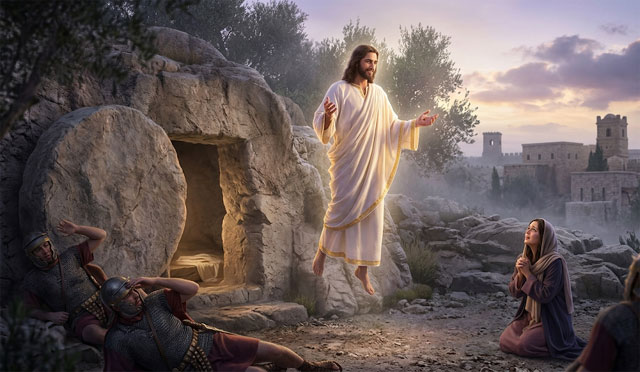
After 40 days of fasting in the Judean wilderness, Jesus was tempted by Satan three times. Satan failed miserably and left. Defeated, Satan did not stop there. He could not win over Jesus, but he could win over His people by tempting them. Throughout history, Satan has tried to put ideas into the minds of people, making them instruments of debunking Christianity and tempting them to spread lies about Jesus.
Easter is around the corner. This is the perfect time to revisit history and examine the conspiracy theorists of Jesus’ time. The Bible is full of them. Allow me to mention just two:
(1) The Pharisees accused Jesus of casting out demons by the power of “Beelzebul,” whom they described as the prince of demons (Matthew 10:25, 12:24–27; Mark 3:22; Luke 11:15–19).
(2) “While they were going, some of the guards (Roman soldiers) went into the city and told the chief priests all that had happened. They assembled with the elders and took counsel; then they gave a large sum of money to the soldiers, telling them, ‘You are to say, “His disciples came by night and stole him (his dead body) while we were asleep.” And if this gets to the ears of the governor, we will satisfy him and keep you out of trouble.’ The soldiers took the money and did as they were instructed. And this story has circulated among the Jews to the present day” (Matthew 11:15).
Their plans failed utterly with what happened next. According to the New Testament, Jesus appeared to His disciples and others multiple times over a 40-day period after His resurrection. There were appearances to individuals as well as groups of up to more than 500 people. The evidence of the resurrection, combined with other evidence about Jesus such as the virgin birth, teachings, and miracles, was further strengthened by Old Testament prophecies recorded centuries before His birth. This, in turn, led to the birth of Christianity.
There have been efforts since the very beginning of Christianity to subvert the truth with lies. Even in the New Testament, Paul warned against false gospels. Several notable skeptics, journalists, and scholars attempted to disprove the resurrection of Jesus and then converted to Christianity after finding the evidence compelling. Some of them are as follows:
Lee Strobel, an award-winning investigative journalist and author, was an avowed atheist who set out to disprove the resurrection of Jesus Christ. After his wife converted to Christianity, Strobel, who was the legal editor for the Chicago Tribune at the time, decided to use his legal and journalistic training to “rescue” her from what he viewed as a cult by disproving the historical evidence for the resurrection. During his two-year investigation (1979–1981), he researched historical records, interviewed scholars, and analyzed the evidence. Instead of finding evidence to debunk the resurrection, he found that the evidence, including the empty tomb, eyewitness accounts, and the rapid rise of the early church, was compelling, leading him to believe the resurrection was a historical fact. Confronted with a “torrent of evidence,” Strobel converted to Christianity.
Frank Morrison (1881–1950) was an English journalist and skeptic who set out to disprove the resurrection of Jesus Christ. His investigation, aimed at debunking the event, led to his conversion to Christianity and the 1930 publication of the influential Christian apologetics book ‘Who Moved the Stone’?
John McDowell traveled throughout the U.S., Europe, and the Middle East, studying historical documents and biblical manuscripts to build a case against Christianity. His research led to the conclusion that the evidence strongly supported the reliability of the New Testament and the resurrection of Jesus. He converted to Christianity.
Dr. Matthew Wilcoxen, Ph.D., says, “Resurrections have consequences. Indeed they do, which is why even today people try as hard as they can to deny that Jesus is risen.”
People who intend to harm Christianity create the most absurd conspiracies and write fiction to poison the minds of believers. Dan Brown’s novel The Da Vinci Code (which sold 80 million copies worldwide) sparked intense controversy and criticism. Despite presenting itself as a work of fiction, it works very hard to blur the line between fact and fiction. The book’s characters argue that the resurrection of Jesus is metaphorical rather than a historical event.
The book The Da Vinci Code raised questions in Christians’ minds. The consequences were profound. Christian teens and adults around the globe who read the book began to ask questions. The human mind is inherently designed to create an “edited” version of reality using new information, whether factual or false. A deceiving mind, or self-deception, is an evolutionary mechanism where the brain constructs false beliefs based on fabricated lies.
Where does fact end and fiction begin? Many come away from the book The Da Vinci Code or its movie adaptation with their beliefs shaken or wondering what is true and what is not. Among other things, they question whether Jesus really rose from the dead.
It begged the need to tell the truth. Printed lies had to be corrected with appropriate factual answers and clarifications. Therefore, in response to Brown’s most ludicrous claims, a slew of rebuttal books were written by Catholic and Christian scholars and theologians with the intention of setting the record straight by pointing out the historical inaccuracies, theological errors, and pseudo-history contained in the novel.
The following are some of the rebuttal books. The front and back covers of these books, in some cases, are as dark red as that of Dan Brown’s The Da Vinci Code:
(1) The Da Vinci Hoax: Exposing the Errors in The Da Vinci Code by Carl E. Olson and Sandra Miesel.
(2) Breaking the Da Vinci Code: Answers to the Questions Everyone’s Asking by Darrell L. Bock.
(3) The Truth Behind The Da Vinci Code: A Challenging Response to the Bestselling Novel by Richard Abanes.
(4) The Resurrection of the Son of God by N.T. Wright (700+ pages).
(5) The Da Vinci Code: A Quest for Answers by Josh McDowell.
These books present close analyses of biblical texts, early Christian documents, and other ancient sources, arguing that Jesus was bodily raised from the dead and disproving the claims made in The Da Vinci Code.
The book, however, did not cause widespread abandonment of faith, nor did it lead a significant portion of readers to become atheists. Interestingly, I once saw The Da Vinci Code being sold in a church thrift shop without giving any credence to the claims in the book. The attitude seemed to be that the book could not shake the foundation of the Church, and the money received would go to charity.
According to a 2006 Barna study, only 5 percent of the 45 million people who had read The Da Vinci Code said it changed their religious beliefs or perceptions. Studies suggested that very few people stopped going to church because of the novel. A poll conducted by Catholic Digest in 2006 found that 73 percent of readers said the book had no effect on their faith, while only 3 percent said it made them question their faith. It spurred curiosity, leading many to explore rather than abandon the topics it raised. The consensus among religious leaders and sociologists was that the book was a work of fiction that prompted discussion but did not drastically change the religious landscape. Some even argued that it strengthened religious dedication by encouraging deeper study of history and scripture.
Despite unfounded lies and conspiracy theories about Jesus and the persecution of His followers over two millennia, the Catholic Church is still alive and active in preaching the Gospel, celebrating the sacraments, and carrying out charity as a global, visible body of service. It was not a mere mortal who established the Church on Earth, but Jesus Christ, the Messiah and the Son of the living God, who conquered death. “You are Peter, and on this rock I will build my Church, and the gates of the netherworld shall not prevail against it” (Matthew 16:18).
A substantial number of Catholics who had left the Church are returning in large numbers. The worldwide Catholic population in 2006, three years after The Da Vinci Code was published, was 1.31 billion, which in 2026 stands at 1.406 billion.
Lies about Jesus’ resurrection continue even today, yet great miracles keep happening worldwide in Catholic churches and holy shrines. There are approximately 221,700 Catholic parishes worldwide, with people giving incredible testimonies of miracles they have experienced through divine, supernatural intervention that appears to defy the laws of nature, such as recovery from irreversible conditions or complete healing from near-death situations.
Catholics do not have to knock on the doors of nonbelievers. Nonbelievers see the face of Jesus in the works that Catholics do. They experience Jesus through His followers as they feed the poor, shelter the homeless, and visit the sick. These works, reflecting Jesus’ life and teachings, encourage others to convert. When skeptics witness miracles such as people recovering from deathbeds, returning to normal lives, or describing near-death experiences, they are moved.
Skeptics transform, saying, “I believe; help my unbelief” (Mark 9:24). Doctors and nurses have converted to Catholicism after witnessing patients recover from deathbeds through what they perceive as divine intervention. They see families and friends praying steadfastly as these recoveries unfold.
There are many claims on the internet that Jesus was a Buddhist monk who spent His “missing years” (ages 12–30) in India and Tibet in a monastery. This 19th-century myth gained popularity through Nicolas Notovich’s 1894 book. He was a Jewish adventurer who claimed to be a Russian aristocrat. Modern scholars, including biblical scholars and historians, almost unanimously reject this, noting that there is no historically reliable evidence of Jesus in Asia or of Him traveling to India or Tibet. Scholars such as Marcus Borg and Dan Fredriksen suggest such claims are baseless, as Jesus is firmly rooted in first-century Judaism. Notovich later admitted to fabricating evidence.
If Notovich’s claims were true, we would see monks performing the kinds of miracles Jesus performed. There are none.
The resurrection of Jesus Christ from the dead is by far the most important historical event ever recorded, for which there are many valid reasons presented by Christian scholars.
This Easter, may a miracle take place in your life with the conviction that Jesus Christ, the Messiah and the Son of the living God, truly rose from the dead. He is alive and present in His Church, and even today He performs great miracles. As you leave the church after the Easter Vigil, greet one another with joy: “Christ the Lord is risen today. Alleluia.”
Happy Easter!