June 8, 2026
“Jako aor chhor naahi, taso Orchha kahayo hai,
Ith Jamuna ut Narmada, ith Chambal ut Tonhs”
A traditional Bundeli folk verse describing the historical expanse of the Orchha Kingdom. The land Orchha has no bounds, encompassing the river Yamuna, Narmada, Chambal and Tonhs. This mesmerizing land 8 km away from Jhansi is well connected in all means of transport and is a must visit tourist place when in Madya Pradesh. Set on the banks of river Vetravati (Betwa) this region was once the prosperous land of the Bundela’s. The then capital of Bundelkand. Mythological reference of this land goes back to Rishi Tung, who had his spiritual settlement here; hence the place is also mentioned as Tungaranya in many ancient texts. Maharaj Rudra Pratap Simha of Varanasi who was in quest of a new capital for his territory found this place perfect and named it ‘ORCHHA’ as it was a region that was geographical hidden by the forest ranges. This city till today opens up as a surprise to the tourist due to its remote existence.

The second home of Lord Ram:
“Jag vyaapak raamraja ke dau niwas hai khaas
Diwas Orchha mein rahat, shayan Ayodhya vaas”
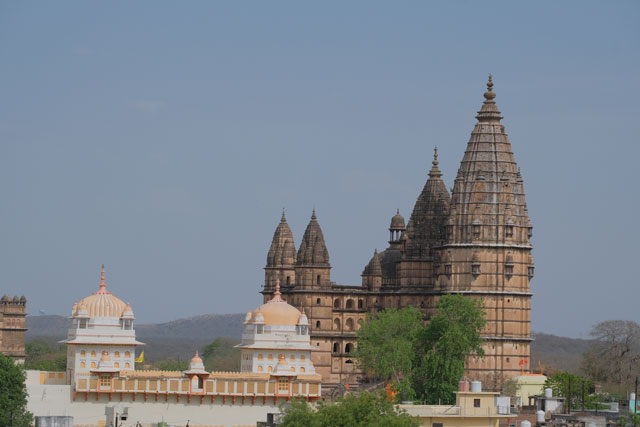
‘Ram Raja Temple’ in Orchha stands as a symbol of devotion of Maharani Kunwari Ganesh and Raja Madhukar Shah. Folk narrates that Lord Ram resides here, guarding the city and he is worshipped as the ultimate protector. Besides the Ram Raja Sarkar temple is this huge architectural marvel The ‘Chaturbhuj temple’ built by Madhukar Shah Ju. Temple is made of red stone, dedicated to Lord Krishna, and is noted for having the tallest Vimana among the temples in India. Both the temples adjacent to each other pays patronage to art and divinity.
A tapestry of art, music, faith and festivity:
Towards the north west of Orchha, one can site the Lakshmi Narayan temple situated on a hillock. Built by Vir Singh Dev Bundela in 1622 A.D. This temple can be considered as a treat for an aesthete. Dedicated to the deity Goddess Lakshmi, the temple is structured in the shape of an owl, giving the architectural reference to Mahalakshmi who is seated on an owl. The inner walls and ceilings are profusely decorated with paintings, narrating episodes of Ramayana, Mahabharata and Puranas. There are also paintings of British invasion and wrestling arenas. Artists have documented the dressing styles and hairstyles of the region through their paintings, creating a valuable visual record of the era’s customs and traditions. This style of painting depicts the passion of the region towards art between 17th to 19th century.
The legend of Lala Hardaul: Hero of Orchha
The city pays reverence to Lala Hardual, inside the Phool Bhag one can see the Bhaitak; in his memory. Appointed as Divan at a very young age and brought up by his brother, King Jujhur Shah. Under his commandance the boundaries of the Bhundela region stretched and strengthened. Unable to bare this political turmoil, it is believed that Mughal Emperor Shah Jahan who had alliance with the Orchha king sowed suspicion in the King’s mind, against his brother leading to a tragic chain of events that ultimately ended up in taking Hardaul’s life. Even today people of Orchha sing poems of his bravery and obedience and before every auspicious ceremony in Orchha, people invite him first, remembering his loyalty; giving him a place in their hearts and making his legendary tale immortal.
A walk through Orchha’s Heritage:
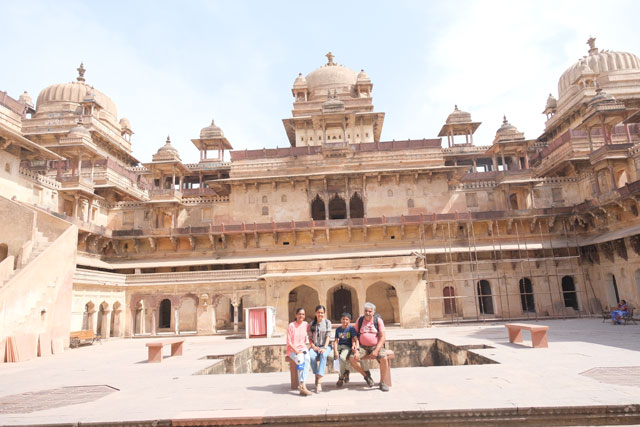
Tourist places in Orchha are at walkable distance and hence most of the monuments here are a part of the well known ‘Orchha Heritage Walk’. One such place is the enchanting fort of Orchha and the ‘Raj Mahal’; built in 17th century by Madhukar Shah Ju, the palace is an example of rich cultural heritage consisting large corridors and Darbar Halls. One can also witness the famous light and sound show here at the palace premises, which starts at 7.30 p.m. everyday.
The area behind the Orchha fort is well known as ‘Jahangir Mahal’. Constructed by Veer Singh Ju Dev in 1675 A.D. This palace stands as evidence for the alliance that existed between the Mughal emperors and the Bhundela kings. It is said that Mughal Emperor, Jahangir had a stay here during his visit to Orchha. It offers the breathtaking view of the densely surrounded forest areas and the scenic beauty the Betwa River.
Betwa: Soul of Orchha
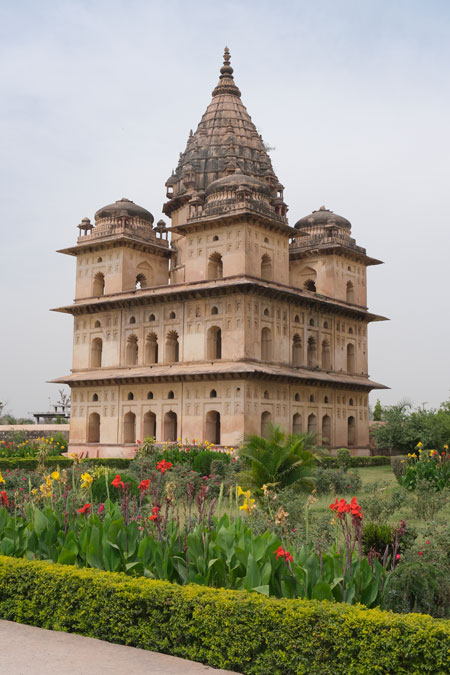
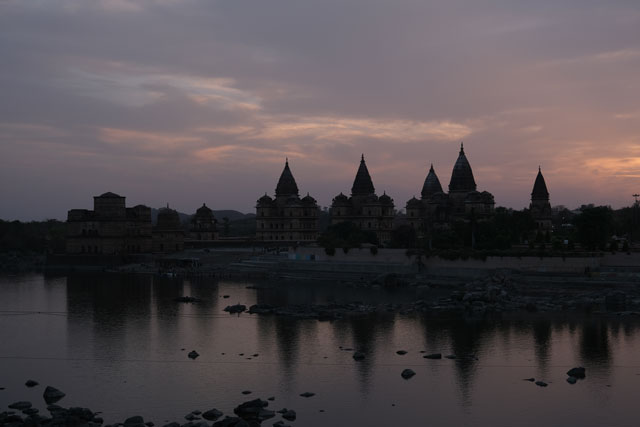
River Betwa, flows; flaunting the beauty and bravery the land once carried. An evening spent sitting on the banks of this river, one can easily get carried out to the past era of wealth and valour. The sunset on the river banks, with soothing folk music played by the locals in background makes up for a divine eve. Fifteen Cenotaphs or Chattris of the Bundela Kings grace the southern banks of Betwa. These include the Chattris of Maharaja Madhukar Shah Ju, Vir Singh Deo, Jaswant Singh and others. Most of the structure’s here are built on an elevated platform in Panchaytan style. The peak is designed in Nagar style of temple architecture. These centotaphs, depicting bravery and royalty, that adds up to the scenic beauty of Orchha.
Silence after the splendour: From prosperity to ruins
Orchha, that was centre for royalty and devotion, markets and trade establishments that would hustle with activities all day, streets that were once meant to have people dancing and singing, one fine day just turned deserted. Mentioning the destruction of the Bundela capital Orchha, not much is been told in history, but during the reign of Maharaja Vikram Jeet Singh Ju Dev, he just surprisingly shifted his capital overnight from Orchha to Tikamgarh. But the people could not accept the new capital as their hometown hence resettlement in Orchha was observed a century later after the capital was shifted. But the houses, human settlements fell silent and a void was left that could not be recovered even after centuries. In the late 70’s Area Developmental Corporation was formed by the Government and under this, construction of roads, maintenance of The Ram Raja Mandir, and reconstruction of many monuments of historical significance was made with a plan to make Orchha a tourist centre and revive its past glory and restore its economic stability.
Timeless charm of Orchha
Orchha for me opened up as a mystery box full of surprises, unravelling some of the most beautiful experiences that I had, when in Madhya Pradesh. People here are soft spoken and are well versed in whatever chores they have take up and are extremely passionate on showcasing their culture and introducing their town to the outsiders. Love for their land and the hunger for achieving excellence has kept them going even in one of the most isolated places like Orchha. My most important takeaway from this beautiful place that I visited is to always be connected to our roots; before conquering the world lets first try and understand the legacy that our homeland tries to convey to us. There are thousands of such places like Orchha in India that have remained silent through centuries. All that the abandoned beautiful fort walls, monuments and pieces of art and music need is a pair of amazed eyes and an enthusiastic group of listeners. Make sure the next time you visit a tourist spot, just not see it as a monument that can rejoice you, but try to feel the story the heritage wants to speak to you.