July 18, 2026
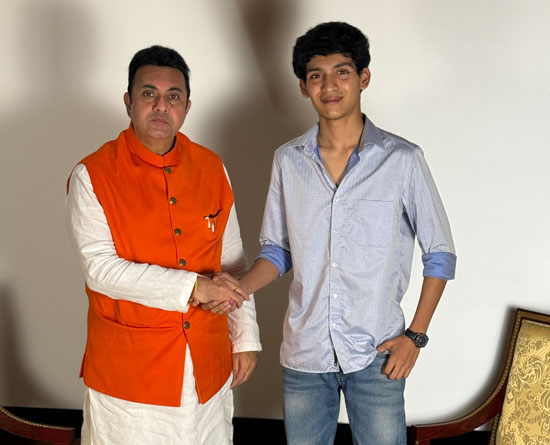
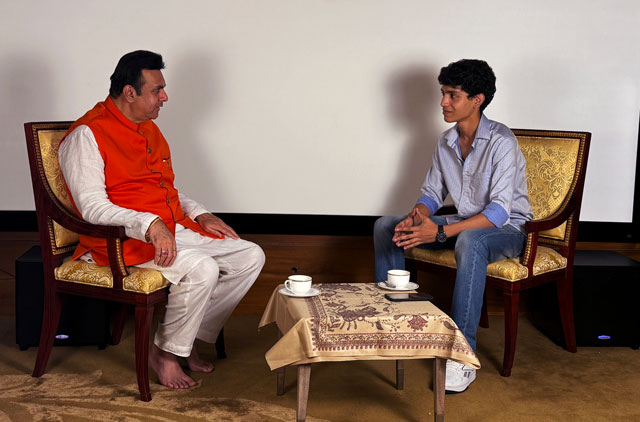
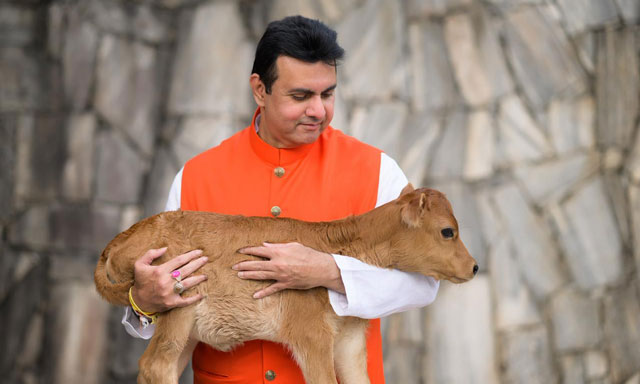
The road leading to Pramod Madhwaraj’s residence is lined with coconut groves and quiet villages, a setting that hardly prepares one for a conversation with a man whose journey has spanned boardrooms, factory floors and the corridors of Vidhana Soudha. Having followed his political career from a distance, I expected our conversation to revolve around elections, governance and public life. Instead, within minutes of settling into his living room, Madhwaraj surprised me by speaking about cows, a gaushala and a little boy who dreaded going to school.
That unexpected beginning set the tone for an afternoon that revealed not merely the story of a politician or an entrepreneur, but of a man who believes every success in public life is built on lessons learnt long before the first election campaign.
“My childhood was not of high academic performance,” he admitted with a smile. School, he confessed, was the one place he disliked the most. Most of his time was spent in the family’s gaushala or wandering around the neighbourhood. Yet his childhood was far from ordinary. Hundreds of people regularly came to his house seeking help from his parents. His mother served as an MLA and minister, while his father, the late Malpe Madhwaraj, was widely respected for his philanthropy. Watching people walk in with problems and leave with hope quietly shaped the young Pramod’s understanding of public service.
After joining Christian High School, he learnt about the institution’s strict headmaster, Karkada, who was known for personally punishing students who failed examinations. The mere thought of standing before him with poor marks transformed an otherwise carefree student into one of the best performers in class. From then until SSLC, he consistently secured a place among the top ranks.
Looking back, he believes that discipline, even when born out of fear, taught him a lesson that would later define both his entrepreneurial and political journeys: consistency matters more than talent.
Entrepreneurship, however, entered his life much earlier.
At just six years old, he began rearing country chickens and selling them to his own father. The negotiations were surprisingly serious. While his father expected discounts, the young Pramod stubbornly defended his prices, arguing that none of his siblings contributed financially towards the family’s meals. His father would eventually pay the full amount.
“It was probably my first business,” he recalled, laughing.
Years later, after leaving engineering midway, he deliberately stepped away from the comfort of his family’s influence to build something independently. In 1995, he started a poultry business on two acres of land in Ammunje. The venture failed. Many young entrepreneurs would have retreated to the safety of home. Madhwaraj chose to remain where he was.
He lived with his wife and daughter in a modest one-room house, determined to experience the realities of entrepreneurship rather than inherit comfort. “I wanted to experience success, failure, suffering and discomfort,” he told me. “Only then would I understand business.”
Those early failures became some of his greatest teachers. When he eventually took charge of the family’s fishmeal factory, he inherited an ageing factory running on outdated technology. Instead of accepting decline, he modernised the plant, introduced steam-drying technology and expanded operations. Today, the company has emerged as India’s largest fishmeal manufacturer.
Yet, as remarkable as his entrepreneurial journey has been, it was only one half of his story.
Politics, despite being ever-present during his childhood, refused to welcome him easily.
Unlike many leaders whose careers begin with electoral victories, Madhwaraj’s political journey began with disappointment. He lost Assembly elections in both 2004 and 2008. Consecutive defeats would have convinced many to walk away from politics altogether. Instead, they convinced him to reconnect with people long before another election was announced.
Rather than waiting for the next election to rebuild his image, Madhwaraj decided to rebuild relationships. For nearly two years before the 2013 Assembly election, he followed a routine few politicians would willingly embrace. Every morning at six, he set out to visit homes across the Udupi constituency. He knocked on thousands of doors with a single question: “Should I contest again?”
By his own estimate, he visited nearly 30,000 households, returning every evening to continue meeting more families. Those countless conversations became the foundation of one of the most remarkable political comebacks in coastal Karnataka.
The people responded.
In 2013, Pramod Madhwaraj won the Udupi Assembly constituency by a commanding margin of nearly 40,000 votes. What followed was an equally extraordinary rise. Within a single legislative term, he was successively appointed Parliamentary Secretary, Minister of State, and eventually Cabinet Minister—a progression rarely witnessed in Karnataka politics. His performance as an MLA was later recognised by Daksh, which rated him as Karnataka’s best-performing legislator. Securing the top rank out of 224 MLAs, he overtook seasoned politicians who had served six or seven terms, including former Chief Ministers and senior opposition leaders. In fact, no MLA in the history of Karnataka had ever received three promotions within a single term—a historic feat he humbly attributes to the grace of God.
Yet success in politics coincided with one of the most difficult periods of his business career.
For nearly a decade, his fishmeal business struggled under mounting financial pressure. There were moments, he admitted, when he questioned why such hardships had arrived despite choosing an honest path in both business and public life. Running industries, serving as an elected representative and carrying heavy financial liabilities simultaneously tested him in ways few would imagine. Yet, even while facing severe financial distress and watching his businesses struggle, he made a conscious choice to remain an entirely honest politician, refusing to bow to bribery or corruption to ease his personal burdens.
Relief eventually arrived after the pandemic, when Rather than attributing the turnaround solely to business strategy, Madhwaraj credits something far deeper.
He believes every act of kindness eventually finds its way back.
Throughout our conversation, he repeatedly returned to the importance of philanthropy, honesty and Gho seva—the service of cattle. According to him, whenever life presented seemingly impossible challenges, the blessings earned through helping others quietly became his greatest strength.
The conversation gradually shifted from his personal journey to advice for aspiring entrepreneurs, and here, his words carried the weight of lived experience rather than theory.
“Patience is the greatest asset,” he said without hesitation.
In an era obsessed with instant success, he believes young entrepreneurs often underestimate the value of persistence. Businesses take time to mature, and setbacks are inevitable. What separates successful entrepreneurs from unsuccessful ones, he argues, is not brilliance but the ability to remain focused despite disappointment.
Equally important is honesty.
Dishonest shortcuts may generate quick profits, he observed, but they permanently damage trust. Customers, business partners and society eventually recognise integrity—and reward it far longer than temporary gains.
Another lesson came from his own financial struggles.
He cautioned young founders against assuming that prosperous years will continue forever. During good times, many entrepreneurs spend excessively on luxuries, forgetting that business cycles inevitably change. His advice was simple: enjoy success, but always build a financial safety net before celebrating it.
For students, his message was equally direct.
Distractions have never been greater. Social media, endless scrolling and the pursuit of instant gratification quietly consume time that could otherwise build meaningful careers. Self-control, he believes, is one of the most underrated qualities among today’s youth. Temporary sacrifices made during one’s formative years eventually translate into lasting opportunities. As our conversation came to an end, I realised this was never merely a story about politics or entrepreneurship.
It was about resilience.
Pramod Madhwaraj’s journey demonstrates that public trust cannot be inherited, businesses cannot survive without perseverance, and leadership cannot exist without discipline. Electoral defeats, business failures and financial uncertainty could easily have defined his career. Instead, they became the experiences that strengthened it.
Whether one views him as an entrepreneur, an industrialist or a politician, one lesson stands above everything else: lasting success belongs not to those who never fail, but to those who refuse to stop after failure.