July 21, 2026
The first two paragraphs were written after the rest of the paragraphs for the justifiable reason that reading those paragraphs would turn the mind of any reader into a mood of sadness over human living conditions with no concern for others, and dawn an absolute helplessness that borders on unconscious ineffectiveness. More than both, it is possible that a common reader’s mind would wonder why anyone should write about such unbelievably cruel, and unacceptably inhuman, actions of the humans against fellow human beings to lead the reader to unredeemable despondency and undeserving defeatism.
As a precursor, it is necessary to look at the etymology of the title which is the vision statement of our institution. Seventy five professors from different parts of the country sat together for a day for four workshops; initially to suggest statements in one workshop, editing of the statements in the second workshop; acceptance of a possible vision statement in the third workshop and an editing process in the fourth workshop which ended in creating the vision statement which is the title of this article.
Both the above paragraphs were written after writing several paragraphs of this article and the reading of them sends a message that it could be too unkind to write the article by giving them at the beginning itself with stories that are being narrated hereafter. These three paragraphs, including this one, will work as forerunners to the narratives that are made available hereafter, descriptions of incidents which are highly objectionable for a kind mind, and, all the same, reasonably true all the same.

Children at a crèche
The incident at the day care centre of Capgemini, an international software company, in its branch at Bengaluru in June 2026, attracted international attention because of the treatment meted out to the crying children by five female babysitters in the crèche. The picture of two of them pushing a child into a closet and pumping water into its mouth, while a stout looking babysitter watching it from a little distance with an expression of appreciation on her face and the wailing of the children simultaneously would hit the head and heart of even the cruelest human in the world. The reports revealed that these babysitters were not only beating up three year old crying children but also keeping them in front loading washing machines, and sometimes locking them up in toilets. The report and the visuals would be numb the senses of even those who can face tragedies and death scenes with uncommon courage. After reading the report in the newspapers or watching the scenes in the television, one gets one’s own mind unimaginably and unexpectedly dead, and one buries one’s own head in shame and dismay.
A couple of days before what happened in Bengaluru in June 2026, newspapers reported and video clippings appeared on an incident from Lakshmipuram in Chittoor district, in Andhra Pradesh. What was shown on the television was the video clippings of a father beating up a ten year old girl; she was struggling with both her palms in the strong grip of the father’s hand and she was twirling around to free herself while crying loudly, begging and pleading with her father not to beat her. The spectacle was something that curdles one’s own blood and the mind refuses to accept a reality while absolute helplessness looms over. The fact that the video was shot from a hundred feet distance and that the child’s wail could be clearly heard pronounces the brutality of a man who cannot claim human living ever as a right.
One can only quote John Keats’s lines where the poet says that his heart aches and a drowsy numbness pains him. The poet wants to go to Lethe, the mythological river of forgetfulness and he also wants to fade away into a dim forest. There are a large number of poets who have sung for humanity to be kinder to the rest of the world and preserve the innocence of humans.
As the father from Lakshmipuram is alone, and therefore, his behaviour could be seen as a brutal onslaught on his own child by a mentally deranged or alcoholic or drug addicted man though his actions, of course, cannot be dismissed from an allegation of brutality. The day care women’s behaviour, however, can never be absolved in any way because they were a collective. At least one of them could have stopped other women from the brutal attacks. It only shows how the individual consciousness died out in front of possible good sense and the overwhelming presence of the collective consciousness as unkindness, coupled with lack of concern ruled supreme with no questions of challenge from within any one of them with a prick of conscience. One can only look at the second set of women; not that the first man attacking the child is exempted; as mentally deranged who needed collective psychiatric help, one cannot help but wonder whether such hardened criminals can be brought to normalcy even by psychologists or psychiatrists.
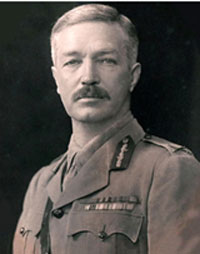
General Reginald Dyer
There is this story of Brigadier General Reginald Dyer, the brutal British of the infamous Jallianwala Bagh Massacre on 13 April 1919, where on official records, 379 common people who assembled for fighting for freedom of the country were killed and more than a thousand wounded. While travelling the next day to New Delhi, in the railway compartment, he spoke to some of his colleagues and stated that he was disappointed that he could not kill more. In an analysis, one would keep him next to the man from Meenakshipuram who beat up the ten year old daughter, and declare them equally mentally deranged. Therefore, these could be considered individual malevolent behaviour, and probably dismissed as rare representations of inhuman humans. However, the Bengaluru incident is a collective crime, and hence more unacceptable, precisely because at least one of them should have thought about their own children. Woe, betide! They may do the same to their own children or even to those of the neighbours, provided an opportunity is seen.

Alcatraz Prison
Disaster struck six decades after the closure of the American Alcatraz prison because of high operational costs. It struck in the form of an order from the president of the United States which owns this notorious federal jail based on a small island in California which used to house ruthless and violent offenders. In May 2025, the US President ordered the opening of the Alcatraz jail, after it was closed for sixty years, almost declaring to the world that such criminals who deserved a place like that are available in the United States. In the same May 2025, the US President ordered even the changing of the name boards that the name of the Department of Defence be changed to the Department of War. He justified it stating that the country has to show the supremacy of the United States by not only defending itself but also by attacking other countries. ‘Peace through Strength’ is the slogan that he declared for the country. Though the US Congress’s approval was needed, he ordered even the changes of the name boards of the rooms and the officials of the department. Many newspapers and periodicals wrote against the change stating that the change represents the US as a curse for the world. He proved the slogan by quickly following with, in January 2026. Operation Epic Fury against Venezuela and in June 2026, Operation Absolute Resolve against Iran. The world witnessed the violence inflicted on fellow humans by a powerful nation, both politically and economically, without any concern for the death and suffering of common humans, not to mention the destruction of material wealth. Collective violence against people by any organised collective is the most despicable.

Hernán Alberto Gil Flores and wife
Despite all this, one’s mind comes out of the numbness and the dementedness when one reads a story from Venezuela and the disastrous earthquake. Eight days later, rescuers; they were from Kongo, El Salvador, Chile and Costa Rica who rushed to help; discovered Hernán Alberto Gil Flores in the middle of debris of a twenty-six storied building and he was still alive. They reached out to him and gave him a tube through which they sent medicines and nourishing water. The unforgettable pleading from the man was not to tell his wife that he was still alive and that the rescuers were trying to save him; the rescuers were shocked with this request. Gil Flores pleaded with them that he did not want his wife to know that he had a chance to be saved and if the rescuers were not able to do it, it would be great harm to her to give hope and thereafter declare him dead which would devastate her. The whole world would bow its head in front of the great love of a man for his wife and the desire not to disappoint her. One decides to celebrate life of the relationships of Flores and his wife, Gusvimar Gonzales, in the middle of abject cruelties practised by the five women in Bengaluru, the man in Lakshmipuram, Col. Dyer of the British army and the brutes like the American President who orders the killing of the benevolent top man of a country and one hundred and sixty eight children along with twenty six teachers. One can only believe that the world will become better with greater understanding of people and their relationships. One’s mind goes to Shelley’s poem where he says ‘if winter comes, can spring be far behind’. Undoubtedly, hope is the best that consoles and searches for possibilities and chances.