August 15, 2026
Have you ever tasted Mexico’s lesser-known agave spirit?
Bacanora is a traditional Mexican agave spirit originating in the state of Sonora. It takes its name from the municipality of Bacanora, one of the areas historically associated with its production. The town of Bacanora sits at the foot of the Sierra Madre mountains, and there's even a statue there honouring the drink. The name comes from two words in the Ópata Indigenous language: "baca" means reed, and "nora" (short for "noraco") means hillside. Under Mexico's Denomination of Origin, Bacanora may be produced in designated municipalities of Sonora. Bacanora is produced from Agave angustifolia, known locally in Sonora as Pacifica or Yaquiana. Although Agave angustifolia is found in other parts of Mexico (in Oaxaca, it's known as espadín), the Sonoran populations have adapted to the region's distinctive hot and dry environment and contribute to the characteristic identity of Bacanora.
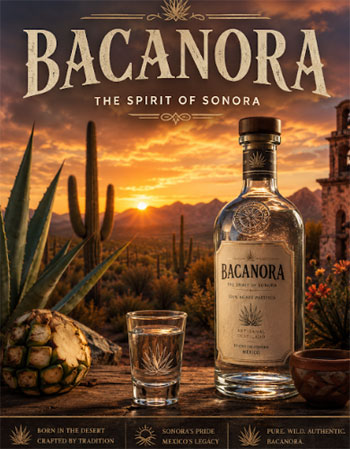
The alcoholic strength of this colourless spirit typically varies between 40-50% ABV. Though the sensory profile of this drink is between tequila and mezcal, it possesses earthy, peppery, mineral and light smoky characteristics due to the hot and dry terroir of Sonora. In 2006, a group called the Consejo Sonorense Regulador del Bacanora was created to oversee the quality and business side of bacanora production.
Manufacturing process
Harvesting: After being harvested, the agave is roasted, fermented, and then distilled. The pencas, or blade-shaped leaves, of the harvested agaves are hacked off with machetes or axes.
Roasting the Agave: While many artisanal producers still utilize cylindrical earthen ovens, which are different from the conical ovens that are frequently used in the South, some bacanora producers employ more contemporary and effective methods, such as autoclaves, to cook the agave. The mesquite wood used in some areas to cook the agaves gives much of the bacanora produced a distinctive barbecue-like flavour.
Crushing the cooked agave: In larger volumes, an automated mill is frequently used to help crush the cooked agave before fermentation. However, the cooked agave chunks and fibres are shredded and crushed by smaller, more artisanal manufacturers using axes. A few canoas, which are tree trunks hollowed out vertically to resemble canoes and filled with cooked agave before being crushed, are still in use today. But compared to a mechanized mill, this can be labour-intensive and less useful in various situations.
Fermentation: In the past, barrancos, or fermentation pits, were excavated and lined with caked mud and volcanic or river pebbles. However, contemporary distilleries frequently employ wooden vats, stainless steel, or big plastic vats.
Distillation: The fermented agave liquid is distilled in pot stills, traditionally copper or other permitted materials. Depending on the producer and production method, the spirit may undergo one or more distillations. The distiller selects the appropriate fraction of the distillate to achieve the desired quality and strength.
Notable Bacanora brands
Premium bacanora brands include Aguamiel, Kilinga, Bacanora 42°, Yoowe and Santo Pecado.
Service standards of Bacanora -Bacanora is typically served in copita/small tulip shaped glassware. It’s consumed neat at room temperature to savour its character, although there are other ways to enjoy it. During the region's bitterly cold seasons, Sonoran cowboys have been known to consume the liquor from a glass flask called a pachita to remain warm while herding livestock.
Bacanora cocktails
Its distinctive character and versatility as a mixer have contributed to Bacanora's growing popularity in modern mixology. Sonoran Paloma, Bacanora Margarita, Bacanora Old Fashioned, Bacanora Sour etc. have already captured the hearts of cocktail lovers.