September 10, 2026
The World Suicide Prevention Day, 10th September has arrived! It would be a practical exercise, to examine what we believe about suicide, because this can influence how we respond to someone in distress. Some commonly held beliefs are just myths and are not supported by facts. Such attitudes may prevent people from seeking or receiving help. Examining these myths and understanding the truth is an important step towards building a more informed, caring and supportive society.
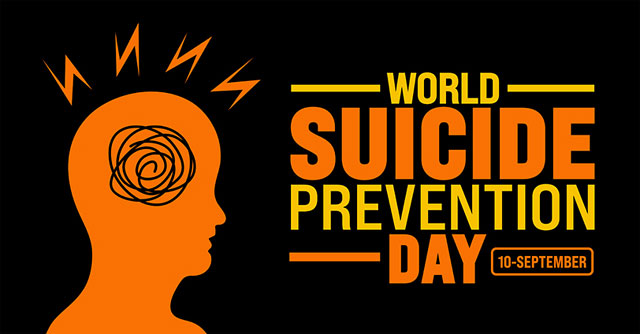
I would like to place before society, some common statements about suicide. Some are myths while others are facts.
1. Suicide is the fifth leading cause of death among young people, (ages 15-24).
Fact: Suicide is the third leading cause of death for adolescents, second only to homicides and accidents. And, in fact, for those of the age group 15 - 19, suicide is the second leading cause of death.
2. Talking about suicide puts the idea into a person’s mind.
Fact: Asking someone sensitively, as to whether they are thinking about suicide does not create the idea. In fact it can open the door to honest conversation as regards what the person is going through and can be of great help.
3. Among teenagers, more girls than boys try to kill themselves.
Fact: More females attempt suicide, but more makes complete suicide. Why, because females tend to use less lethal means such as pills or cutting which allow for the "rescue factor", while males tend to use more lethal means, such as guns or hanging which do not usually allow the person to be helped by the "rescue factor".
4. People who threaten to die by suicide rarely do so.
Fact: Surveys show that 80% of people who completed suicide told at least one other person that they were thinking about it.
5. Suicide happens without warning. All acts of suicide are done on the spur of the moment, with no previous planning.
Fact: Some acts of suicide are done impulsively, under the influence of drugs or alcohol, because at that time, a person's inhibitions decrease and impulsiveness increases this increasing a person's risk of suicide.
However, it should be remembered that the majority of suicides are attempted after planning and discussing their thoughts with others. In fact, often, there are warning signs, such as withdrawing from others, marked changes in behaviour or mood, hopelessness, or saying goodbye in unusual ways.
However, not everyone shows obvious signs.
6. A person who decides to die cannot be helped. There is no way to prevent the tragedy.
Fact: People do not usually want to die, but they don't see any other options. There seems to be no way out, no hope.It may seem to them that ending their life is the only option they have to make things better for themselves. But, suicidal thoughts can change. It is important to intervene, to tell someone what the person is going through and get help for the person. Compassion, timely support, counselling, and appropriate professional care can help a person move through a crisis.
7. Suicide is simply a selfish or cowardly act.
Fact: Suicide is a complex issue, often associated with overwhelming emotional pain and difficult circumstances. Judgement and condemnation can increase isolation; compassion can help.
8. Only people with mental illness think about suicide.
Fact: Mental-health difficulties can increase risk, but suicidal thoughts may occur in people facing many different kinds of crises or overwhelming situations.
9. Once someone feels suicidal, they will always feel that way.
Fact: Feelings can change, especially when a person receives support and the underlying problems are addressed.
10. People who attempt suicide but survive are just seeking attention; they seldom ever try it again.
Fact: With each attempt, a person's chances of attempting it again and completing the suicide, increases.
11. If someone seems happy, they cannot be at risk.
Fact: Outward appearance does not always reveal what someone is experiencing internally. It is important to listen without making assumptions.
12. We should avoid people who talk about suicide because we may not know what to say.
Fact: You do not need perfect words. Listening calmly, showing care, and helping the person connect with a trusted adult or professional can make an important difference.
13. Depression is the most important determinant of suicide.
Fact: While depression is a strong determinant of suicide, the highest determinants are helplessness and hopelessness. Helplessness is when people feel that no matter what they do, their situation does not improve Hopelessness is when people feel that there is no hope for improvement in their situation.
14. When a suicidal person's depression improves and spirits lift, he/she is out of danger.
Fact: Oftentimes, a person's depression decreases and spirits lift once the person has made up their mind to complete the suicide and they have worked out all the details. Their plan is in place and they feel as if a large burden has been lifted off from them.
15. Asking for help is a sign of weakness.
Fact: Seeking help is a sign of courage and self-care. No one should have to face overwhelming problems alone.
Conclusion: A message for everyone to remember
Listen. Take people's suicide threat, attempt, seriously. Show compassion. Connect the person with help.
When someone is struggling, we should avoid judgement, criticism, or dismissive statements such as “You should be stronger” or “Others have bigger problems.” Instead, we can say: “I am here to listen. You don't have to face this alone.”
If someone appears to be in immediate danger, involve a trusted adult, family member, teacher, counsellor, doctor, or emergency service promptly rather than trying to handle the situation alone. At this point, do not keep secrets!
An angry friend is better than a dead friend!