September 15, 2026
“The technologies have changed. The responsibility of the engineer has not.”-Every Engineers’ Day is more than a celebration of a profession. It is an occasion to reflect on the responsibility of engineers in shaping society, strengthening the economy and building the future of the nation. As India commemorates the 59th Engineers’ Day and the 165th birth anniversary of Bharat Ratna Sir M. Visvesvaraya, his life and legacy offer powerful lessons for an India aspiring to become sustainable, self-reliant and technologically sovereign. Sir M. Visvesvaraya was not merely an outstanding engineer; he was a visionary administrator, institution-builder and nation-builder. His contributions to irrigation, water management, industrial development and public administration demonstrated that engineering becomes truly meaningful when knowledge is translated into solutions that improve people's lives.
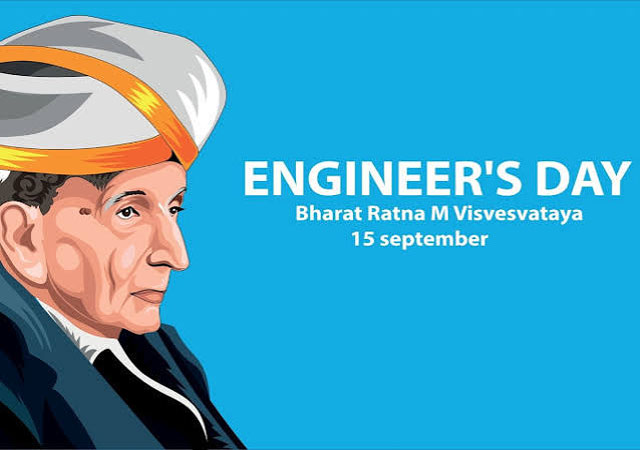

Today, India faces a new generation of challenges. Artificial Intelligence, quantum technologies, robotics, cybersecurity, semiconductors, renewable energy, advanced manufacturing and digital infrastructure are transforming the world at unprecedented speed. The fundamental question, however, remains unchanged: How can engineering and technology be harnessed for human progress and national development?
From Technology Consumption to Technology Creation
India has emerged as a global technology destination with a vast pool of engineers, scientists and entrepreneurs. Yet the next stage of development requires us to move beyond being consumers and implementers of technology. We must increasingly become creators, innovators, designers and owners of critical technologies. Technological sovereignty does not mean isolation. It means possessing the capability to understand, develop, manufacture, secure and continuously improve technologies that are strategically important to the nation. The transition must be: Import → Adapt → Innovate → Invent → Scale → Export. “Technological sovereignty begins not merely in factories, but in classrooms, laboratories and the minds of young engineers.”
Mangaluru: A Living Laboratory
Mangaluru offers a distinctive perspective on this national aspiration. Situated between the Arabian Sea and the Western Ghats, the city combines ecological richness with industry, maritime infrastructure, healthcare, education and entrepreneurship. Its coastline, rivers, port, urban landscape and surrounding natural environment provide a living laboratory for sustainable engineering. Coastal erosion, urban flooding, waste management, water conservation, traffic congestion, climate resilience, energy efficiency and marine pollution are not merely environmental concerns—they are engineering challenges requiring interdisciplinary solutions. Can Artificial Intelligence help predict flooding? Can IoT technologies enable real-time environmental monitoring? Can waste be converted into valuable resources? Can smart mobility reduce congestion and emissions? Can engineering help create climate-resilient coastal infrastructure? These real-world challenges should find their way into our engineering classrooms, laboratories and innovation centres.
Sustainability Must Begin at the Design Table
Sustainability cannot remain an afterthought in engineering. It must become part of the design philosophy itself. A civil engineer must consider lifecycle impact and resilience. A mechanical engineer must focus on energy and material efficiency. An electrical engineer must enable renewable integration. A computer scientist must recognise the energy footprint of data centres and AI. An electronics engineer must address e-waste and circularity. “Every engineer may not be an environmental engineer by designation, but every engineer must become an environmental engineer in responsibility.” Engineering excellence today must therefore combine performance with sustainability, innovation with ethics and efficiency with social responsibility.
Engineering Education as Nation-Building
As an educator, I believe the most important infrastructure an engineering institution creates is not its buildings or laboratories—it creates human capability. Engineering education must prepare students not merely for existing jobs but for emerging technologies and problems that have not yet been imagined. Along with technical foundations, students need creativity, communication, entrepreneurship, ethics and interdisciplinary thinking. The learning journey should increasingly become: Problem → Explore → Experiment → Prototype → Fail → Learn → Improve → Innovate → Impact. Our objective should not merely be employable graduates, but problem-solvers, entrepreneurs, researchers and nation-builders.
Engineering, Administration and Nation-Building
Sir M. Visvesvaraya's life also reminds us that engineering excellence requires effective administration. A technically brilliant project demands planning, financial discipline, coordination, quality assurance, risk management and accountability. Today’s engineers increasingly occupy leadership positions and must understand people, policy, finance and governance alongside technology. Similarly, administrators must become increasingly technology-aware. The future therefore requires a closer partnership between engineering and administration, ensuring that technology is both effectively implemented and responsibly governed.
A Mangaluru Vision for the Future
Mangaluru has the potential to emerge as a regional hub for sustainable technological innovation by bringing together: Coastal resilience and AI, Green energy and advanced engineering, Port infrastructure and automation, Blue economy and marine technology, Healthcare and digital innovation, Cybersecurity and digital governance, Waste management and circular economy. The opportunity is to create an ecosystem where knowledge becomes innovation, innovation becomes enterprise, and enterprise creates social impact.
On this Engineers’ Day, let us honour Sir M. Visvesvaraya not merely by remembering what he built, but by asking: “What does India need us to build next?” From the classrooms and laboratories of our institutions to the industries and innovation ecosystems of Mangaluru, the responsibility is ours.