September 27, 2026
There was a certain nervous energy inside the Lulua Hall at Radisson Blu Doha on Monday evening. It was September 21, and guests were arriving for the ICC One Toastmasters Club Open House. Some walked in confidently, dressed for a corporate evening. Others looked around with the quiet curiosity of first-time visitors.
They had come with a simple question: What actually happens at a Toastmasters meeting?
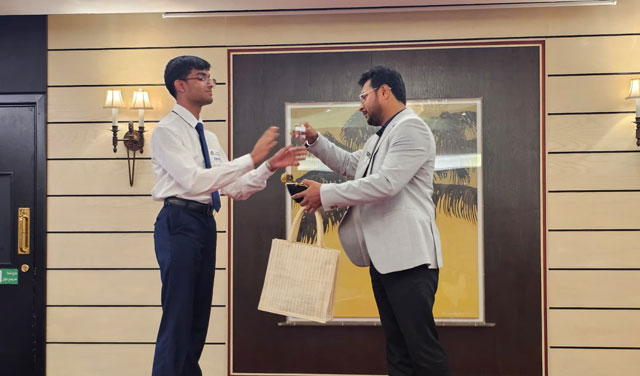
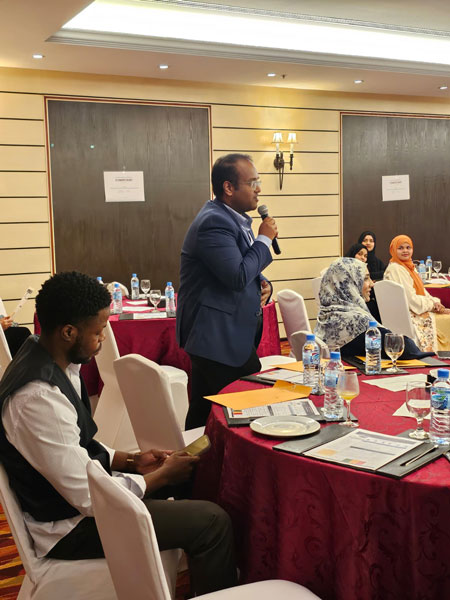
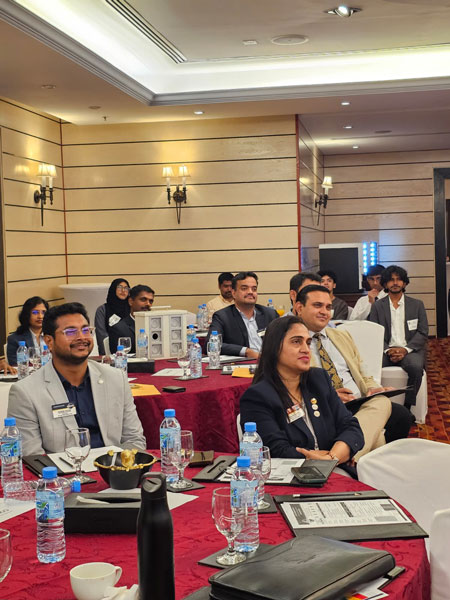
By the time the evening ended, many had found the answer—not by listening to an explanation, but by experiencing it themselves. Titled “All About Toastmasters,” the Open House brought together people of different nationalities, professions and experiences, connected by a common desire to communicate better, become more confident and grow personally and professionally. But the evening had, in many ways, begun before anyone entered the hall.
As Vice President Membership, Ashitosh Samudre had been engaging with prospective members through the club’s WhatsApp group, answering questions, sharing information and encouraging newcomers to take that first step through the door.
Inside the hall, that effort translated into something tangible. Strangers who had arrived only minutes earlier were soon exchanging names, conversations and smiles.
Club President Suhaim Khan formally opened the meeting before handing over the proceedings to Christopher Almeida, DTM, the Toastmaster of the Day.
And almost immediately, the evening revealed something important: Toastmasters is not simply about standing on a stage and delivering a speech.
The meeting itself becomes a lesson in leadership. There are people responsible for timekeeping. Others observe language and communication. Some coordinate the proceedings, while others evaluate performances. Every role matters, and members regularly step into different responsibilities.
The titles may change from one meeting to another. The learning does not. You do not simply learn to speak at Toastmasters. You learn to take responsibility.
Two prepared speeches brought the idea to life.
Balakrishnan Kary, with “Watering Flowers, Not Weeds,” and Deepthi Mary Mathew, with “The Gift Beyond the Feast,” demonstrated how a prepared speech can move beyond words on a page. Their presentations combined preparation, personal expression and audience connection—reminding everyone that effective communication is ultimately about making people feel something, think differently or see an idea from another perspective. The evening then moved to a keynote that captured the spirit of the gathering.
In “Find Your Voice… Change Your Life,” Manzoor Moideen, DTM, spoke to an idea that was particularly relevant to the newcomers sitting in the room. Finding your voice is not necessarily about becoming the loudest person in the room.
Sometimes, it is simply about finding the confidence to speak when your voice is still trembling. That became particularly evident during Table Topics. For many first-time visitors, this was where the evening became real.
Participants were given a topic without prior notice and asked to speak spontaneously. No prepared script. No rehearsal. Just a few moments to collect their thoughts and then stand up and speak.There were moments of humour. Moments of creativity. And, inevitably, a few nervous smiles. But that was precisely the beauty of the exercise.
It demonstrated that confidence does not have to arrive before the opportunity. Sometimes, confidence is created by stepping into the opportunity itself. The skill has relevance far beyond a Toastmasters meeting.
In professional life, an unexpected question from a senior manager, a client presentation, a project discussion or an impromptu meeting intervention can demand the same ability—to think clearly, organise a thought and communicate it with confidence.
Then came the evaluation session.
Speakers and role players received specific, constructive feedback—not simply on what they had done well, but on how they could improve. And perhaps this was where the deeper philosophy of Toastmasters became most visible. Members are not only learning how to speak. They are learning how to listen.
They observe. They analyse. They encourage. They offer feedback. They accept feedback.
In the process, communication becomes a two-way skill, and leadership becomes less about giving instructions and more about helping people grow.By this point, the larger picture was becoming difficult to miss.
What begins as a public-speaking club gradually becomes a training ground for a much broader set of abilities—communication, confidence, listening, teamwork, accountability and leadership.
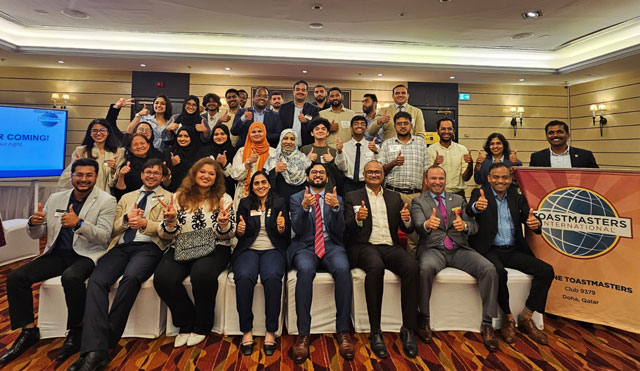
As the evening drew towards its close, guests were invited to share their impressions. The formal proceedings ended with a group photograph, but the conversations did not stop there.
The atmosphere was noticeably different from the one that had greeted the first arrivals.
The initial hesitation had given way to laughter, conversations and new connections.
And for some, there was already another question waiting:
“How do I join?” Perhaps that was the most telling moment of the evening. ICC One Toastmasters had not merely explained what Toastmasters is.
It had allowed newcomers to experience the journey—from the nervousness of speaking without preparation, to the encouragement of constructive feedback, to the simple satisfaction of standing up and being heard. A room that had begun with strangers from different backgrounds was ending with something resembling a community.
And perhaps that is what “Where Leaders Are Made” really means. Leadership does not always begin with a designation, a corner office or a position of authority.
Sometimes, it begins much earlier.
It begins with a small decision:
To step forward,
To find your voice,
To speak—and to be heard.