October 15, 2026
“The greatest risk to a student’s future is not a lack of opportunity, but the inability to recognise, pursue and remain committed to the right opportunity.”
One of the most important questions facing higher education today is whether students possess the attention, discipline, curiosity and commitment to make meaningful use of the knowledge, technology and opportunities available to them. Our campuses are filled with talented, ambitious young people capable of extraordinary achievements. Yet a concern remains: are some becoming disconnected from the academic pursuits that should shape their future?
From Learning to Merely Obtaining a Degree
University education should develop independent thinking, problem-solving, communication, collaboration and adaptability. However, students may be physically present in classrooms while mentally occupied with social media, online conversations or trending controversies. Assignments may be completed without understanding, examinations cleared through last-minute preparation, and projects submitted without developing genuine competence.
In engineering and other professional disciplines, this gap is particularly significant. Graduates lacking sound fundamentals, practical competence and analytical thinking may struggle to meet industry expectations. Education must do more than make students eligible for employment; it must prepare them to contribute, grow and lead.
Social Media: The Battle for Attention
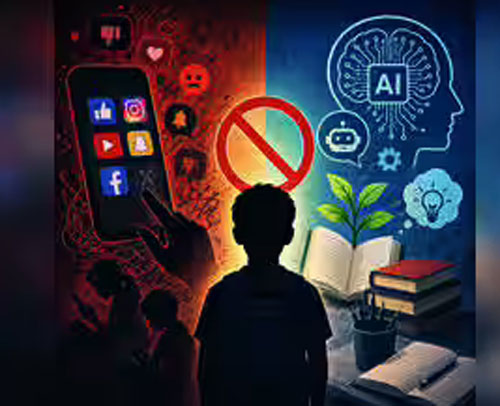
Social media offers valuable opportunities for networking, knowledge-sharing and skill development. The concern is its excessive consumption. Reels, endless scrolling, online arguments and the pursuit of likes and followers can fragment attention, making instant gratification more attractive than the sustained effort required for learning. OECD research has highlighted the association between digital distractions during lessons and weaker academic performance. Technology can enhance learning, but its misuse can undermine concentration and academic engagement. Students must manage their digital lives rather than allow platforms to control their time and attention. Are they using social media to expand their opportunities, or allowing it to consume the time needed to build their future?
Artificial Intelligence: A Learning Partner or a Substitute for Thinking?
Artificial intelligence enables students to obtain explanations, generate code, summarise documents and prepare presentations within seconds. Used thoughtfully, it can deepen understanding and improve productivity. However, there is a crucial distinction between using AI to learn and using it to avoid learning. When students rely on AI to produce assignments, laboratory reports or projects without understanding the underlying concepts, they risk developing an illusion of competence. A polished report may conceal an inability to defend its conclusions; code may run without the student understanding its logic. AI can also generate misleading information. Students therefore need strong fundamentals, critical thinking, information literacy and the confidence to question machine-generated answers. AI should accelerate learning, not eliminate the intellectual effort through which learning takes place.
When the Campus Becomes a Stage for Everything Except Learning
Universities must encourage students to express opinions, question authority and participate in peaceful democratic action. Critical thinking, constitutional values and respect for dissent are essential to higher education. However, campus agitations warrant reflection when they displace academic priorities or consume time without a clear connection to students’ educational welfare, rights or future prospects. Social media can amplify controversies, sometimes encouraging participation driven by emotion, peer pressure or online visibility rather than informed judgement.
The concern is not questioning authority, but reacting without understanding; not expressing dissent, but allowing confrontation to overshadow constructive engagement. Students must examine facts, understand the purpose of their participation and consider its consequences. Institutions, in turn, must address legitimate grievances through transparent mechanisms and meaningful dialogue. The answer is neither unquestioning obedience nor perpetual confrontation, but informed participation, responsible dissent and constructive resolution. Universities must teach students not only what to question, but how to question and turn their convictions into meaningful change.
The Invisible Cost of Losing Direction
The most serious consequence of persistent distraction may not be a poor semester result, but the gradual loss of direction. Students enter higher education aspiring to become engineers, entrepreneurs, researchers and leaders. These ambitions can become blurred when academic effort is repeatedly postponed in favour of immediate gratification. Career uncertainty grows, confidence weakens and opportunities pass by when students fail to develop the skills to recognise and seize them. In a competitive employment environment, a degree alone cannot guarantee success. Employers increasingly value demonstrable skills, adaptability, communication, teamwork and problem-solving.
The Future Belongs to the Focused Learner
As an academic leader with 25 years of experience in education, I remain optimistic about today’s generation. Young people have unprecedented access to knowledge, powerful digital tools and opportunities to innovate. But access is not achievement. Information is not understanding. Activity is not productivity. And a degree is not, by itself, a measure of capability. The world needs more than graduates who can use the latest technology. It needs individuals who think clearly, act responsibly, solve meaningful problems and remain committed to their purpose amid constant change.
Let our campuses be places where curiosity is stronger than distraction, knowledge is valued above appearances, dialogue is preferred to needless confrontation, and ambition is matched by disciplined action. “The real measure of a student’s success is not how loudly they command attention today, but how meaningfully they can contribute tomorrow.” The future is built not by those who react to every passing trend, but by those who recognise what matters, commit themselves to learning and have the courage to stay on track.