October 25, 2026
For over three centuries prior to the beginning of the twentieth century, Europeans dominated the affairs of the world, politically, socially and culturally. They started as global traders and made their onslaughts on the people of other countries, especially those of Asia, America and Africa by going beyond their needs in trade. They attacked the people and subdued their cultures and established their own kingdoms over the nations with which they were originally related only by trade and commerce. In these processes, apart from establishing unauthorised administrative measures, they started slave trade, one of the worst evils that had been introduced into the world, which never occurred in the past history of mankind even in the most brutal wars against the people of defeated nations. Once the slave trade was banned in the first quarter of the nineteenth century in both United States and European countries, some of them replaced the trade with procurement of indentured workers, in practice almost the same as slaves.
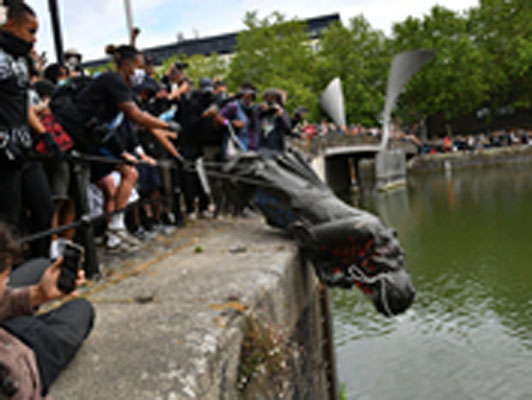
Statue of Edward Colston, slave trader, removed and thrown in the river at Bristol Harbour in June 2020
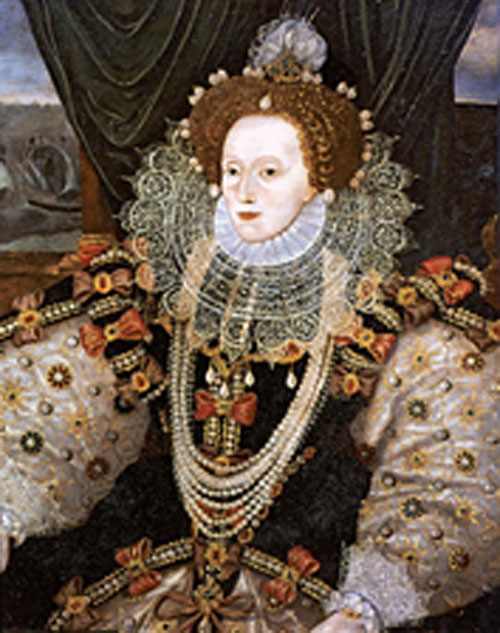
Queen Elizabeth I
1533 - 1603
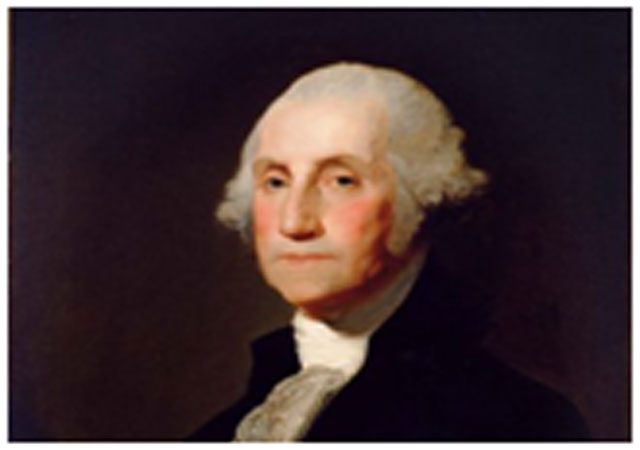
George Washington
1732 - 1799
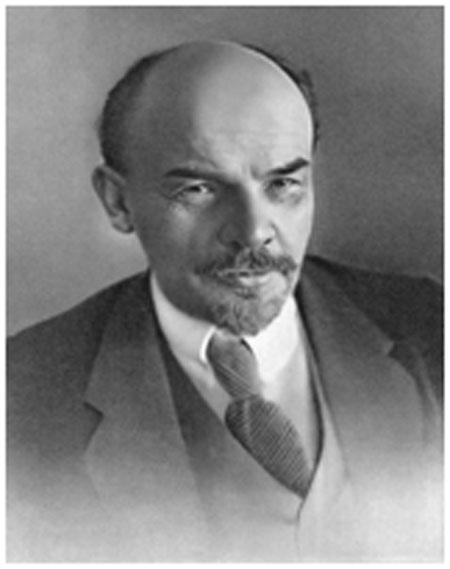
Vladimir Lenin
1870 - 1924
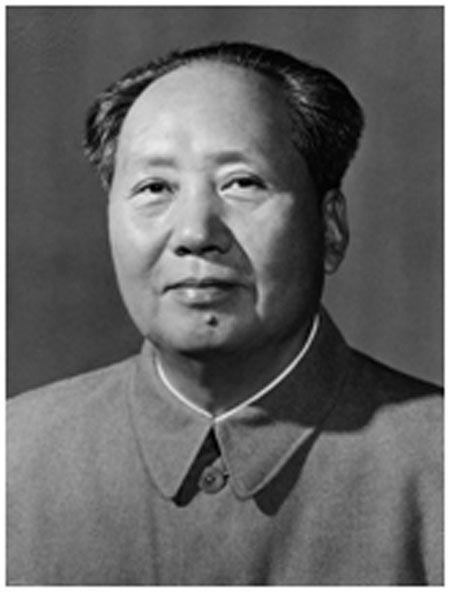
Mao Zedong
1893 - 1976
The European nations, particularly Spain, Portugal, Germany, France, Netherlands and England started with trade and fought with smaller kingdoms, defeated them and eventually established their direct rule over the vanquished nations. They treated the local people, including the aborigines, as slaves and enlarged the boundaries of their kingdoms. They deliberately destroyed the cultures and languages of the original inhabitants and introduced their culture and language to the local people wantonly and profitably. Instead of trade, they looted these countries in addition to ruling them, sometimes even stealing away the valuable assets of the kingdoms they subdued. The way European colonialists treated the people whom they subdued and developed several systems for the advantages of the rulers to make profits for the benefit of the colonialists are terrible examples of what happened to the weak and ordinary people of several countries in Asia, Africa and America. The fact that a country like Mexico has ninety nine percent of the population speaking Spanish is the best example of what Spain did to that country economically, politically and also culturally.
American civil war is traditionally recorded in history as a war between and among different units of settlers from Europe in North America. However, there are some historians who record that the civil war was fundamentally a fight for dominance between distinct settled cultures of people from different European nations. This dynamics worked as an undetectable undercurrent of cultural as well as economic differences as descended from European countries like Spain, England, France, The Netherlands and Sweden. The American Revolutionary War, under the leadership of George Washington, that broke out between 1775 and 1783 was between and among thirteen colonies which waged a war with their original coloniser, the Great Britain, to liberate themselves which led to the formation of the modern United States. However, it did not make any great impact on the status of other colonies of Great Britain or other European nations in Africa, Asia and Australia, though at present their status is far below the present United States; to some extent many of them have become economic and political satellite countries of the United States.
It is in the background of all these that one has to understand the two October revolutions of the last century. The one in Russia in October 1917 under the leadership of Vladimir Lenin and the Bolshevik Party and the other, in China, in October 1949 under the leadership of Mao Zedong and the Chinese Communist Party; both leading to origins of Marxism centric people’s republics which continuously flourished thereafter.
With the slogan, ‘Peace and the Bread’, armed Bolsheviks under the leadership of Vladimir Lenin and the Red Guards, alongside Baltic Fleet sailors attacked the Winter Palace at Petrograd, presently St. Petersburg, which was a seat of Alexander Kerensky’s provisional government and organised ‘The Second All-Russian Congress of Soviets of Workers’ and Soldiers' from October 25–26, 1917 (November 7–8, New Style). The reasons for the uprising, which ultimately led to the creation of the USSR, were the large casualties of the First World War, subsequent economic collapse, and lack of lands for peasants. The revolution unified several small kingdoms and made themselves into a single unit as a republic. They became a very powerful nation because of the Land Reforms Acts and the gradual logical and rational approach to science and technology. Despite the breakup of the USSR in the nineties of the last century under Perestroika, a restructuring initiated by the then Russian leader Mikhail Gorbachev, the USSR even now is a strong country, both economically and politically, with large amounts of contributions in science and technology. So, people all over the world remember the October Revolution 1917 of Soviet Russia.
The Chinese Communist Revolution on 01 October 1949 led by Mao Zedong brought China to the forefront of the world political scene and it started showing its signs of power equal to those of the USSR and USA. Today, China stands as one of the super powers with the most successful scientific advancement. Chinese goods are considered the cheapest in each category and available in plenty, not only in China but also in many other countries. The specific reason for the October Revolution of 1949 is considered the breakdown of the first United Front government which led to the Nanchang uprising on 01 August 1927 and the long Second Sino Japanese war from 1937 to 1945. China became more people centric than even the USSR though both the countries are established with Marxist ideologies. Today, the Chinese cities and villages are better equipped in comparison with those of several other countries. There is much less violence in the country, very different from many other countries in the world. China has also developed a very highly sophisticated agrarian and industrial society. However, there is a complaint against China that there is less political freedom and greater systems of punishment for even minor lapses or errors or practices of corruption.
The Russian and Chinese Revolutions created noticeable and remarkable changes in the world. Primarily and most importantly, both the countries became influential in creating leaders like Fidel Castro, Salvador Allende, Hugo Chavez; and many other political leaders and Che Guevara, Yasser Arafat and other revolutionaries though may not ever in power. One of the first things that can be noticed is the shift of importance from European countries and the United States to the USSR and China as models of scientific development and progress of the country from the perspectives of peaceful living of the people. Even when both are accused of curtailing the personal freedom of individuals, sociologists across the world appreciate both the countries for their collective progress even when individual freedom is reduced. Simultaneously, they praise both the countries for reduction of poverty although there are restrictions in collecting individual wealth as it is for the benefit of the common good of the people.
Additionally, both nations have shown countries in other parts of the world a new economic order, in which social progress is more important than individual progress. Doubtlessly, they have demonstrated to the world that scientific advancement through the freedom of individuals to think and work on progress is possible even when individual freedom is reduced for the sake of peace and comfort of the larger numbers of common people. The number of scientists that both countries created is very large in number and they have contributed to the scientific progress of the world. They presented the importance of social progress as community as far more important than freedom and progress for individuals. Visitors to Beijing or Shanghai pay rich tributes to the systems at work in the Chinese cities and the scientific coordination they have organised for the progress of people and the nation itself.
One of the salient features of both the countries is the absence of collective violence in different places in the country. Beyond the allegations of the freedom of the press to report, the fact remains that what happens in many European countries does not happen in Russia or China. The Netherlands, which is considered the happiest country in the world, had violence on the streets for a simple reason of closing establishments in the streets from 09.00 p.m. to 05.00 a.m. for a week during 2021. The most striking aspect was that many shops were looted during those days in the strikes and the associated violence. Similarly, in September 2026 itself, France had experienced violence on a large scale in congregations that assembled against a few causes. There are also other European nations which face violence in protests such as that which happened in Spain in July 2026 on the issue of migration.
Both Russia and China are a challenge to the western financial philosophy which promotes individual collection of financial assets. The challenge emerges from the collection of taxes by the state to the extent that the individual cannot amaze wealth and the justification of the collection of taxes is that they are for the common people. So, the economic policy is diametrically opposed to the economic policies of the western countries like the United States which indeed is a product of faith in the individual freedom to collect as much money as possible. Sociologists and philosophers argue that it is this philosophy of affluence which makes the United States crave for more and decide to attack other countries unlawfully and without any consideration for the stipulations and regulations of the United Nations Organisation.
Undoubtedly, the two major October Revolutions have led to the initiation of a new world order which gives credence to the disbelief in unreasonable provocations like what the United States keeps doing. No doubt, the war on Ukraine stands as an exception and the Russian justifications are against the European Union’s initiative to create an armed syndicate near the USSR through Ukraine which is a border country. The USSR is willing to accept a no war agreement provided Ukraine does not join the European Union which will provide them war support. A study of the two October Revolutions and their impact on the world at large is a pointer to the greatest contributions they would have made to the new world order.