November 20, 2026
Students of literature; whichever language they belong to and whatever may be the influences of such a language; are generally fascinated by the Romantic Period of English literature. The first half of the nineteenth century was dominated by the romanticists who produced their works with an eye on Mother Nature and her influence on people. Among the Verbal Arts, poetry has a greater importance because it is able to bring together both thoughts and emotions with abundance of their unity. The exquisite charms of lines composed with exceptional choice of words and their means to offer equally exceptional thoughts and feelings went deep into the minds of not only the intellectuals but also the ordinary people of the first half of the nineteenth century. The responses of reading such poetry are the same for the people of even the twenty first century.
Among the romanticists, the one who comes to the mind of anyone who has some connection with poetry in English literature is William Wordsworth.
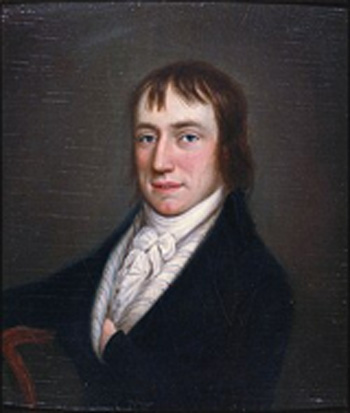
Though there are many of his poems that are remembered fairly well, the one that comes to the mind of any enthusiast is the ‘Lines Composed A Few Miles Above Tintern Abbey’; I taught this poem in graduate classes for three years, as a part of General English studies; and the first line that comes to mind is ‘On that Best Portion of a Good Man’s Life, His Little, Nameless, Unremembered, Acts of Kindness and of Love’. Rachael Norris, a modern poet, writer and literary critic comments that Wordsworth’s poem presents nature as a universal comfort. She adds that the poem details the memory of natural beauty which Wordsworth calls ‘Sensations Sweet’ and helps individuals deal with ‘weary weight of all this unintelligible world’. What is to be added is the issue of sharing grief which is commented by Wordsworth in the poem referring to what he calls ‘the still sad music of humanity’.
A few decades ago, while driving up Lighthouse Hill Road, a double way road then, from the then Jyothi Circle; during those days, the road did not have one way traffic; with unorganised batches of students walking up on either side, I saw an elderly man pushing up a cart with fairly large logs of wood and noted his struggle to push the cart up. It was all of a sudden that a couple of students; they emerged from those walking on his side of the road; placed their bags and notebooks on top of the logs of wood and started pushing the cart. A few others joined these too. They were all in smiles as they spoke to the confused yet smiling elderly man who walked along with them until the students brought the cart up to the higher flat level of the Hill. They took their books and bags and I saw a couple of them waving their hands at the smiling man who waved back with an equalling smile and then moved away with the push cart. The students did not even look back to see what happened to the push cart and its pusher.
‘Nameless, unremembered, acts of kindness and of love’, so said the poet.
This incident too took place a few decades ago. While walking up the same road, which was called Lighthouse Hill Road then, from Hampankatta, indeed in a hurry, I was not particularly attentive to anything. However, I looked around as I was not accustomed to walking up the road, any road for that matter, during those days. A little before the gate of Kasturba Medical College, there was a crippled man seated with a small piece of cloth in front of him. No doubt, these days one may have rarely a sight like this in any place in Mangalore. There, a few white coat clad medical students were walking in front of me, in fact rather fast, faster than I. Suddenly I noticed that one of the white coat clad ladies, bending down and keeping some coin on the cloth. While placing it; placing is the word that is important in this sentence, she did not throw the money as many people do; she looked at the man and gave him a broad smile before getting up and walking away. What impressed me most and made me specially notice was the act of the bending that the young lady did, going closer to the piece of cloth and placing the coin instead of dropping or throwing it and the broad smile that she offered to the man, while the man gave her a bewildered look in response, probably because he was not used to such a response.
‘Nameless, unremembered, acts of kindness and of love’, so said the poet.
This incident occurred more recently. The Kankanady Pumpwell Road downward was extremely busy as one side of it was being laid with concrete.
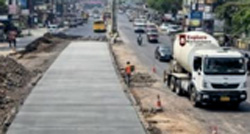
Pedestrians, more than vehicles, especially the older ones faced greater difficulty to cross the road. As I travelled downward, I saw a lady parking her scooter in a hurry. She kept her helmet on the seat and came near an elderly woman who was trying to cross the road and held her hand. I had noticed earlier that the woman was struggling to cross the road. As I watched this young lady who took the hand of the older woman; crossed the road with the older one on her side; at times showing her open palm, to some vehicles beckoning them to stop, so that both of them could cross over. In a minute, she almost ‘deposited’ the older one, left her hand, smiled at her, walked back faster, took the helmet, wore it, removed the stand of the scooter, sat on the seat and was gone as if she had done a regular routine work of everyday living.
‘Nameless, unremembered, acts of kindness and of love’, so said the poet.
Niyog Narayan, an eighth standard student from a rural school in Melparamba, Kasaragod district of Kerala, got into an auto rickshaw, to travel to school, and, to his surprise, he noticed a gold chain lying on the seat. He picked it up and handed it over to his class teacher who took him to the Melparamba police station and handed over the chain, weighing about ten grams, to the Station House Officer.
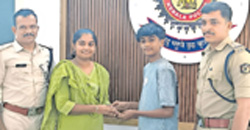
There was another surprise when a teacher of a nearby school, Ashwathy, came to the same police station with a complaint that she had lost her chain in travel. The SHO called the teacher and the student Niyog Narayan from their school and Niyog himself handed over the chain to Ashwathy teacher. The SHO Akhil’s decision, supported by the station writer Rajendran, led to a pleasant union of the officers and two teachers from two different schools and Niyog Narayan, the school boy, for an unimaginable uncommon uplifting activity.
‘Nameless, unremembered, acts of kindness and of love’, so said the poet.
In 2018, twenty three year old Gokulapriyan, a native of Salem from Tamil Nadu, had a serious injury when he came into contact with a high voltage power line while repairing the roof of family run poultry farm. The accident killed his father who was working with him and Gokulapriyan’s own hands were so severely burnt that they eventually had to be amputated.
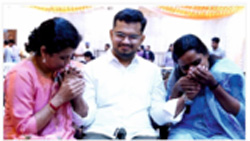
For the next seven years he lived with prosthetic limbs. Anish, Deputy Prison Officer of Poojappura Central Prison, Kerala went on a religious pilgrimage to Shabarimala on 22 October 2025. He met with an accident and had a serious head injury, was admitted to Government Medical College, Kottayam and was subsequently declared brain dead. His mother and sisters decided to donate the organs and the organs went to eight different people and one of them was Gokulapriyan who received both the hands of Anish which were transplanted by Dr Subramania Iyer of Amrita Hospital, Kochi. Some months later; Ambika, mother of Anish; Lakshmi and Anju, two sisters of Anish; met Gokulapriyan who came for a checkup at Amrita Hospital. The two sisters wept as they held their brother’s hands and kissed them which were stretched out by Gokulapriyan. Thereafter, they fastened their brother’s favourite wrist watch on the left hand of Gokulapriyan. Dr Iyer was a silent witness to this unforgettable and unusual event.
‘Nameless, unremembered, acts of kindness and of love’, so said the poet.
Marcus Aurelius was a Roman Emperor and a stoic philosopher. He continuously instructed his people to do at least a little good every day without looking out for any reward or benefit. The students on the Lighthouse Hill Road, the white coat clad young lady in front of the Kasturba Medical College gate, the lady on the scooter, the eighth standard students at Melparamba and the two sisters of Anish are all paragons of exemplary examples of Aurelius’ advocacy during the Roman times; practised by present day people too; still happening in the otherwise fast moving world which is too full; a sentiment reflected in the lines of William Wordsworth, ‘Nameless, unremembered, acts of kindness and of love’.