Daijiworld Media Network – New Delhi
New Delhi, Dec 5: In a landmark move aimed at strengthening gender representation in legal governance, the Supreme Court on Thursday directed that a minimum of 30 percent seats in every State Bar Council must be reserved for women.
A Bench comprising Chief Justice of India Surya Kant and Justice Joymalya Bagchi said the directive reflects the values of the Constitution and aligns with India’s recent push toward gender equality. The Court also instructed that the same reservation must be implemented for the posts of office-bearers within the Bar Councils.
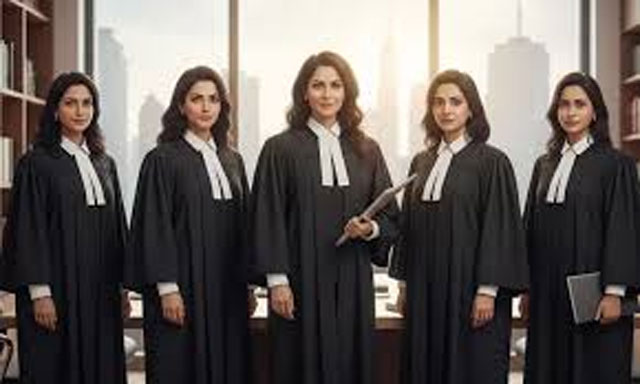
“Thirty percent seats in each State Bar Council must be occupied by women members. Such an initiative shall also include some of the posts of the office bearers,” the Bench stated, asserting that the relevant rules shall be deemed amended to include this reservation.
The Court asked the Bar Council of India (BCI) to submit details of compliance by December 8.
The order came while hearing public interest petitions filed by Supreme Court lawyers Yogamaya M.G. and Shehla Chaudhary, who pointed to the severe underrepresentation of women in Bar Councils.
Despite the growing number of women in the legal profession, the petition stated that women remain “almost invisible” in decision-making roles.
According to data cited:
• Out of 441 elected representatives across 18 State Bar Councils — only 9 are women (just 2.04%)
• 11 State Bar Councils have zero women members
• No woman has ever been part of the 20-member Bar Council of India since its formation in 1961
The petitioners argued that excluding women from legal governance violates Articles 14, 15, and 16 of the Constitution.
Senior Advocate Shobha Gupta, appearing for the petitioners, submitted that structural reforms were essential and gender-inclusive representation must be recognized under the Advocates Act.
The petition also flagged that the five-phase Bar Council elections scheduled between January and April 2026, starting with Uttar Pradesh and Telangana, are being held without any provision for women’s representation — which would extend their exclusion for another five-year term if not corrected urgently.
The Supreme Court will review compliance measures in the next hearing on December 8.