Daijiworld Media Network - Srinagar
Srinagar, Feb 4: Jammu and Kashmir recorded a remarkable recovery in tourism in 2025, welcoming more than 1.78 crore visitors despite the severe blow dealt to the sector by last year’s terror attack in Pahalgam that claimed 26 lives, including 25 tourists and a local pony owner. The surge in tourist arrivals has been seen as a strong rejection of violence and a testament to the resilience of the region and the trust visitors continue to place in its people.
Lieutenant governor Manoj Sinha said on Wednesday that tourism remains the backbone of the Union Territory’s economy, even in the face of security challenges and natural disasters. Addressing the Legislative Assembly, he noted that the region overcame major setbacks such as the Pahalgam terror attack, floods in 2025 and Operation Sindoor, yet continued to attract record numbers of tourists.
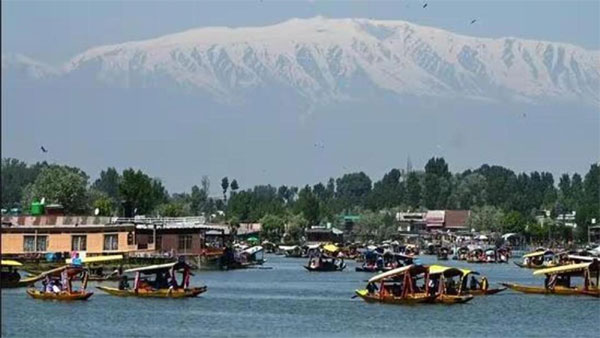
Highlighting the economic importance of the sector, the lieutenant governor said tourism has been accorded formal industry status in Jammu and Kashmir to encourage investment and create employment opportunities. He credited this approach with strengthening the sector’s ability to withstand disruptions and contribute to long-term growth.
Sinha also praised the launch of Srinagar’s chrysanthemum garden, ‘Bagh-e-Gul-Dawood’, which debuted last year as a major autumn attraction. Featuring more than 50 varieties of chrysanthemums, the garden has been positioned as a key initiative in Kashmir’s shift towards becoming a year-round tourist destination.
The lieutenant governor said tourism development is being pursued in a region-specific manner, with a focus on pilgrim tourism in Jammu, adventure tourism in Kashmir and eco-friendly tourism in border areas to ensure balanced growth across the Union Territory. He added that the Union government is planning sustainable tourism projects in emerging destinations through public-private partnerships.
Touching upon infrastructure development, Sinha said the power sector has undergone a significant transformation with the launch of major hydropower projects such as Pakal Dul, Kiru, Ratle and Kwar, together accounting for a capacity of 3,014 megawatts. Over the past five years, 5,708 MVA has been added to the power distribution system and 4,239 MVA to the transmission network.
He noted that power losses have been reduced by nine per cent, while revenue realisation has improved by 16 per cent. Renewable energy adoption has also gained momentum through the PM Surya Ghar Muft Bijli Yojana, under which 6,700 government buildings and 16,800 private homes have been solarised so far.
The lieutenant governor also described the completion of the railway link connecting the Kashmir Valley with the rest of the country as a historic achievement. He referred to the modernisation of Jammu Tawi railway station and the creation of a dedicated railway division for Jammu and Kashmir as major steps towards improving connectivity and supporting economic growth.