Daijiworld Media Network - Panaji
Panaji, Mar 16: Coastal waters along several major beaches in Goa have been found polluted and unfit for bathing, water sports, and commercial fishing after failing to meet standards set by the Central Pollution Control Board (CPCB).
According to a reply tabled during the ongoing Goa Assembly session by Chief Minister Pramod Sawant, who also holds the environment portfolio, water samples from multiple coastal locations consistently showed faecal coliform levels far exceeding permissible limits.
Under CPCB guidelines, coastal waters must meet SW-II classification standards to be considered suitable for bathing, contact water sports, and commercial fishing. However, testing revealed that waters near beaches such as Miramar Beach, Calangute Beach, Baga Beach, Morjim Beach, Vagator Beach, Arambol Beach, Colva Beach, Benaulim Beach and Palolem Beach frequently exceeded the permissible faecal contamination levels during 2024–25.
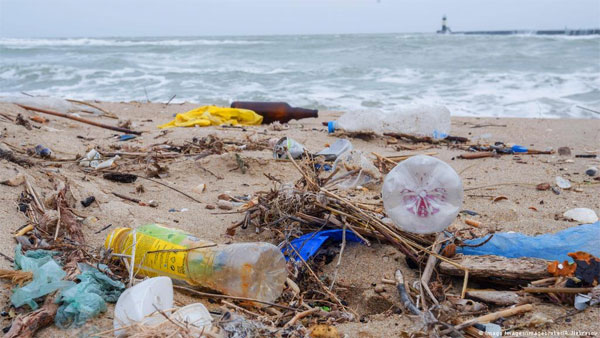
Even relatively remote locations like Rajbagh Beach were found polluted in tests conducted by the Goa State Pollution Control Board under a national water quality monitoring programme.
The issue is not limited to coastal waters. Several rivers across the state — including the Mandovi River, Sal River, Chapora River and Zuari River — also recorded faecal coliform levels up to 300 per cent higher than the prescribed limit in some months.
Tests conducted at multiple locations along the Zuari River — including Panchawadi, Cortalim, Madkai Jetty and Borim Bridge — similarly showed contamination levels beyond safe limits. In October 2024, high faecal coliform levels were even recorded in the Khandepar River at Opa, a source used for drinking water supply after treatment.
The contamination was also observed at three of Goa’s four notified olive ridley turtle nesting sites — Olive Ridley Sea Turtle habitats located at Morjim, Galgibaga Beach and Agonda Beach.
The permissible limit for faecal coliform in water is 100 Most Probable Number (MPN) per 100 ml, a statistical measure used to estimate the concentration of microorganisms such as E. coli. However, some readings were significantly higher — for instance, in July 2024, the level in Tiracol waters reached 3,300 MPN per 100 ml, far exceeding the acceptable limit.
In response to the findings, Sawant said the state’s Water Resources Department has been directed to take measures to stop sewage discharge into rivers and improve water quality across the state.