Daijiworld Media Network - Panaji
Panaji, Mar 20: Beaches in Goa have emerged among the most contaminated along India’s western coastline, with significantly high levels of toxic hydrocarbons detected on microplastics, according to a study by the National Institute of Oceanography (NIO).
The study analysed samples from 14 beaches along the eastern Arabian Sea coast across Maharashtra, Goa and Karnataka. It found that concentrations of 16 Polycyclic Aromatic Hydrocarbons (PAHs) in plastic pellets ranged from 1.9 to 29,500 ng/g in Goa — the highest among all regions studied.
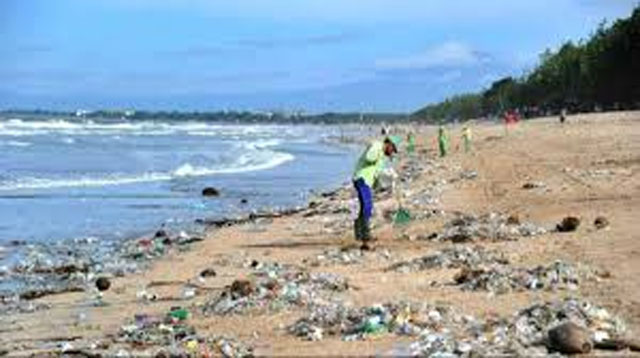
In comparison, PAH levels ranged between 0.6–22,900 ng/g in Mumbai and 0.8–21,400 ng/g in Karnataka, placing Goa at the upper end of contamination.
The research, conducted by scientists including P Gupta, M Saha, C Rathore, V Suneel, J de Boer and A Garg, noted that plastic pellets showed consistently higher PAH loads. This was attributed to their smaller size, larger surface area, and prolonged environmental exposure, making them effective carriers of toxic pollutants.
For microplastic fragments, Goa recorded moderate contamination levels, with PAH concentrations ranging from 1 to 1,500 ng/g—lower than Karnataka but higher than Mumbai—indicating varying pollution patterns across microplastic types.
The study observed that 4–6 ring PAHs dominated, pointing towards high-temperature processes such as combustion. Diagnostic analysis suggested a mix of pollution sources, including:
• Pyrolytic processes
• Petroleum spills
• Combustion-related activities
These findings indicate multiple human-induced contributors to coastal pollution.
Researchers flagged potential ecological risks, noting that PAH levels exceeded Threshold Effect Level (TEL) and Effects Range Low (ERL), suggesting possible occasional biological impact.
However, the study clarified that levels remain below Probable Effect Level (PEL) and Effects Range Median (ERM), indicating no significant immediate threat to marine life or human health.
Despite the current assessment, scientists warned of emerging long-term risks. Microplastics act as “effective sorbents for hydrophobic compounds,” enabling the transport of pollutants across marine ecosystems.
With Goa recording some of the highest contamination levels, the findings raise concerns for the state’s coastal health—particularly given its dependence on tourism and fisheries.
The study concludes with a cautionary note, calling for closer monitoring and stronger pollution control measures, while raising critical questions about the long-term impact of these “invisible threats” on coastal ecosystems and public health.