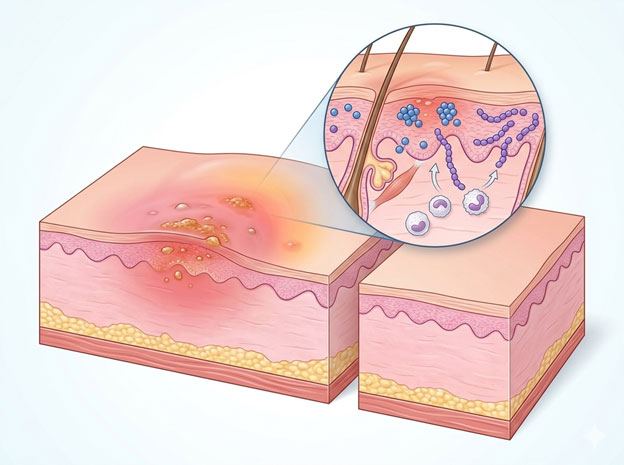
Manage skin infections and relieve itching, redness, and irritation with medications like Clobeta GM and Panderm NM. Combine this with proper hygiene, timely treatment, and simple skin care practices.
Skin infection is a health problem that can occur in people of different ages. It is characterised by the entry of organisms like bacteria and fungi into the skin, which causes infection as evidenced by manifestations like redness, itching, irritation, and discomfort in the affected area. Various elements like poor hygiene, excessive sweating, low resistance in the body, and exposure to infected surfaces may contribute to skin infection. Normally, the skin is a protective organ; however, when it is compromised by cuts and exposure to moisture, infection can occur in the area as a result of entry of organisms into the skin. Although some skin infections may not be serious and can be managed by simple care measures, delayed management can cause worsening of infection in some cases. Early management of skin infection can be achieved by maintaining good hygiene and using medications like Clobeta GM and Panderm NM.
Understanding Skin Infections
Infections of the skin occur when bacteria, fungi, or other microorganisms penetrate the skin layer and start multiplying. Infections can occur on different layers of the skin. The severity of the infections also varies depending on the type of microorganism that invades the skin and the state of the individual's health. In bacterial infections such as impetigo and folliculitis, the infected skin is often associated with symptoms such as redness, swelling, pus, or the formation of crust on the skin. In the case of fungal infections such as ringworm and athlete's foot, the infected skin is often associated with symptoms such as itching, scaling, and the formation of well-defined rashes that often progress with time. The infections can be spread through direct skin-to-skin contact with an infected person, through the sharing of personal items with an infected person, or through exposure to unhygienic environments. The knowledge of the process through which the infections occur is important in the prevention of the infections.
Common Causes and Risk Factors
Skin infections may arise due to a combination of environmental exposure, hygiene practices, and individual health factors. Common contributors include:
- Poor Hygiene: Lack of regular cleaning of the skin may result in a build-up of bacteria and fungi, which may increase the risk of a skin infection.
- Excessive Sweating: Perspiration, especially in a hot and humid atmosphere, may provide a fertile ground for bacteria and fungi to multiply.
- Sharing of Personal Belongings: Sharing personal belongings, such as towels, clothing, and personal hygiene equipment, may spread infectious agents.
- Skin Injuries: Skin injuries, such as cuts, scratches, and bites, may weaken the skin, allowing infectious agents to penetrate.
- Damp or Unclean Environments: Exposure to a damp or unclean environment may increase susceptibility to a skin infection.
- Tight or Non-Breathable Clothing: Wearing clothing that is not breathable may provide a fertile ground for infectious agents to multiply.
Symptoms of Skin Infections Include
Symptoms may vary depending on the type and severity of the infection but often cause noticeable discomfort:
- Redness or inflamed skin in the affected area
- Persistent itching or irritation
- Swelling or tenderness
- Rashes or patches that may spread over time
- Pus-filled lesions or blisters
- Scaling, peeling, or dryness of the skin
- Burning sensation or pain in the affected area
Recognising these symptoms early may help in seeking timely treatment and preventing the infection from worsening.
Using Medications for Treatment
Medications such as Clobeta GM and Panderm NM are commonly used to manage bacterial and fungal skin infections. These formulations help reduce inflammation, control microbial growth, and relieve symptoms such as itching, redness, and irritation.
They are typically applied directly to the affected area and may provide targeted relief when used as directed. These medications are often part of a broader treatment plan that includes proper hygiene and skin care practices.
- Consult Your Doctor: A healthcare professional can assess the type of infection and recommend the most suitable medication and duration of treatment
- Apply as Prescribed: Use the medication on clean and dry skin as directed, ensuring consistent application for effective results
- Monitor Your Skin: Observe improvements such as reduced redness, itching, and irritation, and seek medical advice if symptoms persist or worsen
Preventive Tips for Healthy Skin
Taking preventive measures may help reduce the risk of developing skin infections and support long-term skin health:
- Maintain regular bathing habits and keep skin clean
- Dry the body thoroughly after bathing, especially in areas prone to moisture
- Avoid prolonged exposure to damp environments
- Use personal hygiene products and avoid sharing them
- Wear appropriate footwear in public areas such as gyms or swimming pools
- Keep nails trimmed to prevent skin damage from scratching
Adopting these simple habits may help protect the skin and reduce the likelihood of infections.
When to Seek Professional Help?
While mild skin infections may improve with basic care, certain symptoms require medical attention:
- Spreading Infection: If the infected area has spread to other parts of the body or has increased in size
- Persistent Symptoms: If the signs of redness, itching, or irritation have not shown improvement in a few days of treatment
- Increasing Pain or Swelling: If the infected area has shown signs of increased pain, discomfort, or swelling
- Pus or Discharge: If there is pus, oozing, or crusting on the infected area that does not heal
- Fever or General Symptoms: If there are signs of fever, general body weakness, or other general body symptoms in addition to the infected area
- Recurring Infection: If there are recurring signs of infection in the same or different areas of the body
- Pre-existing Health Conditions: If you have health problems such as diabetes or weakened immunity, which could increase your risk of infection.
Seeking timely medical advice may help ensure accurate diagnosis, appropriate treatment, and prevention of complications.
Conclusion
Skin infections can be uncomfortable and sometimes distressing, but with early recognition and appropriate care, they can often be managed effectively. Maintaining good hygiene, recognising symptoms early, and following proper treatment are key to recovery. Medications such as Clobeta GM and Panderm NM, when used correctly, may help control infection, reduce inflammation, and relieve symptoms such as itching and redness. By combining medical treatment with proper skin care practices and preventive measures, individuals may support faster healing and reduce the risk of recurrence. If symptoms persist or worsen, seeking timely medical advice remains essential for effective and safe care.