Daijiworld Media Network - Srinagar
Srinagar, May 16: Police in Jammu and Kashmir’s Sopore sub-division carried out searches at more than 15 locations on Saturday as part of investigations into cases registered under the Unlawful Activities (Prevention) Act (UAPA) linked to the banned Jamaat-e-Islami Jammu and Kashmir organisation.
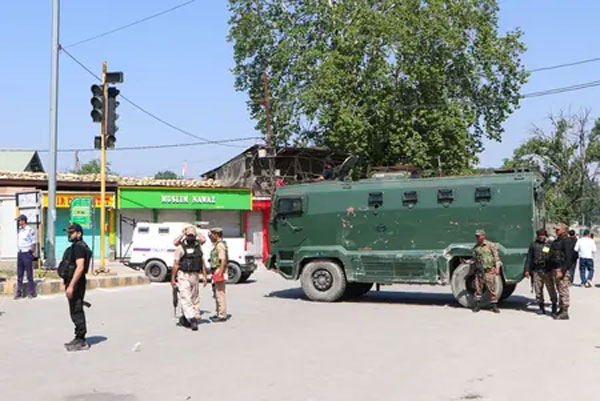
According to police officials, the searches were conducted across Bomai, Warpora, Sopore and Tarzoo areas in north Kashmir in connection with alleged networks associated with the outlawed group.
The Government of India extended the ban on Jamaat-e-Islami for another five years beginning February 2024, declaring it an “unlawful association” under the UAPA. The organisation was initially banned in 2019 over allegations related to terrorism, separatist activities and threats to national security.
Authorities have accused the group of promoting militancy, spreading anti-India propaganda and encouraging separatist ideology in Jammu and Kashmir.
As part of the ongoing crackdown, the administration has also moved against properties and institutions allegedly linked to the organisation. By April 2026, the Jammu and Kashmir administration had reportedly taken control of several schools associated with the Falah-e-Aam Trust, which authorities say is connected to Jamaat-e-Islami.
Police and security agencies have continued conducting raids and search operations across north Kashmir in recent months to identify and dismantle networks suspected to be operating under the banned organisation.
Despite the ban, sections of individuals formerly associated with Jamaat-e-Islami have shown interest in participating in electoral politics. Some former members reportedly contested the 2024 Assembly elections under different political platforms, reflecting internal divisions within the organisation over future political engagement.
The Ministry of Home Affairs has maintained that Jamaat-e-Islami played a role in supporting militancy and activities aimed at undermining the country’s unity and integrity.
The organisation was originally established to promote Islamic revival and socio-religious activities in the region, but later came under scrutiny for alleged links to separatist and militant movements.
Authorities have also linked the rise of the militant outfit Hizbul Mujahideen to former Jamaat activists and leaders.
Syed Salahuddin, also known as Syed Yusuf Shah and currently believed to be based in Pakistan-Occupied Kashmir, was earlier associated with Jamaat-e-Islami and had contested the 1987 Assembly elections as the party’s candidate.
Several senior figures associated with Hizbul Mujahideen were also reportedly linked to Jamaat-e-Islami during the early years of militancy in Kashmir.