Daijiworld Media Network - New Delhi
Hyderabad, May 16: AIMIM president Asaduddin Owaisi on Friday strongly criticised the Madhya Pradesh High Court’s recent order in the Bhojshala-Kamal Maula mosque dispute, calling it “erroneous” and arguing that it mirrors the Supreme Court’s verdict in the Babri Masjid case.
Addressing a press conference in Hyderabad, Owaisi said the judgment appeared to have been delivered on the basis of “aastha” (faith), similar to the reasoning he claimed was used in the Babri Masjid–Ram Janmabhoomi verdict.
He alleged that the court overlooked key historical and legal documents, including the 1935 Dhar State Gazette, Waqf records from 1985, and provisions of the Places of Worship (Special Provisions) Act, 1991.
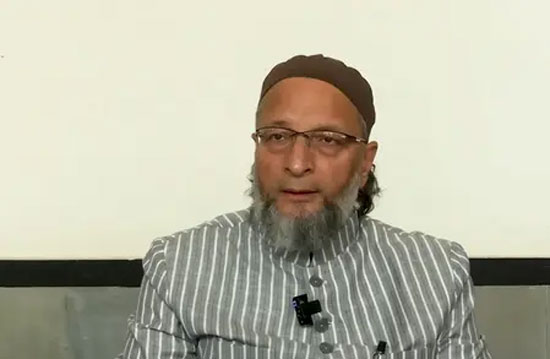
Owaisi argued that Muslims had been offering namaz at the Bhojshala site for centuries and described it as a “waqf by dedication,” stating that the erstwhile Dhar princely state had recognised the space for Muslim worship.
He further said that even after the Supreme Court’s Babri Masjid judgment, similar legal reasoning was being applied in other religious property disputes, warning that it could set a wider precedent.
According to him, the High Court order ignored earlier administrative and archival records, including references from the Archaeological Survey of India (ASI) dating back to the 1950s, which he claimed supported the mosque’s historical usage for namaz.
He also contended that inscriptions at the site suggested it functioned as a gurukul linked to Raja Bhoj and Sanskrit learning, and not exclusively as a temple, drawing a comparison that academic institutions should not be equated with places of worship.
Citing legal provisions, Owaisi said Section 4 of the Places of Worship Act, 1991 prohibits altering the religious character of any structure as it existed on August 15, 1947. He argued that the verdict undermines this legal protection.
He also alleged procedural bias, claiming coordination between the central government and the Archaeological Survey of India with the petitioners, and said this raises constitutional concerns.
Referring to historical arrangements, Owaisi noted that in 1995, an understanding had allowed limited Hindu rituals at the site, including on specific days such as Basant Panchami.
He added that the matter should ultimately be resolved by the Supreme Court, expressing hope that the apex court would consider all historical and legal aspects before delivering a final judgment.