Daijiworld Media Network - New Delhi
New Delhi, May 22: Abhijeet Dipke, founder of the satirical online platform Cockroach Janta Party, has claimed that he is receiving death threats following a signature campaign demanding the resignation of Union Education Minister Dharmendra Pradhan over the alleged NEET paper leak controversy.
Sharing screenshots of threatening WhatsApp messages on social media platform X, Dipke wrote that he was “receiving death threats now.”
One of the messages allegedly warned him that he could be “killed even in America” if he did not shut down the account, while another claimed the senders could trace his residence.
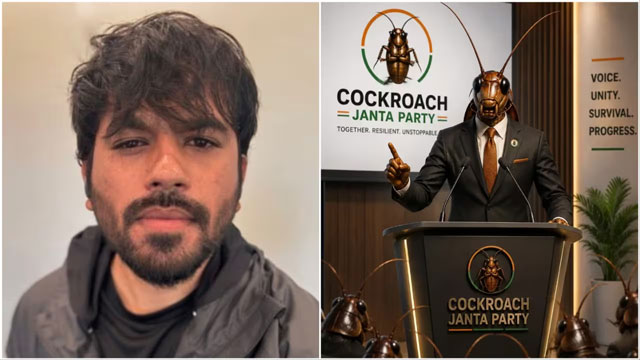
Dipke launched the signature campaign after raising questions over the alleged NEET-UG 2026 paper leak issue. According to him, the campaign had gathered more than 2.79 lakh signatures at the time of publication.
The “Cockroach Janta Party” emerged online after remarks made by Chief Justice Surya Kant during a hearing on May 15 triggered widespread controversy.
While hearing a plea related to the designation of a senior advocate in the Delhi High Court, the Chief Justice criticised certain individuals allegedly attacking institutions and used the term “cockroaches” while referring to unemployed activists and social media users.
The remarks sparked backlash online, prompting the Chief Justice to later clarify that his criticism was directed at people allegedly entering professions using fake qualifications and not at the youth of the country. He stated that India’s young people continued to inspire him.
Soon after the controversy erupted, Dipke criticised the statement on X and later floated the idea of the “Cockroach Janta Party,” launching an online membership form that quickly gained traction on social media.
The campaign later received support from opposition leaders including Akhilesh Yadav and Mahua Moitra, while critics dismissed it as a temporary viral trend.
On Thursday, the X account of the Cockroach Janta Party was withheld in India following directions issued by the Central government based on inputs from the Intelligence Bureau, according to reports.
Officials reportedly invoked Section 69(A) of the Information Technology Act, 2000, directing X to block access to the account in India over alleged concerns related to inflammatory content and national security.
The provision empowers the government to restrict access to online content in matters concerning sovereignty, security, public order or prevention of incitement to offences.