Daijiworld Media Network – Mumbai
Mumbai, May 28: In the wake of the NEET UG 2026 paper leak controversy and the subsequent cancellation of the examination, coaching class associations in Maharashtra have demanded strict regulation of integrated coaching institutes operating across the state.
The demand was raised during a protest held at Azad Maidan on Wednesday by the State Consortium of Coaching Teachers & Institutes (SCCTI), an apex body representing nine coaching class associations.
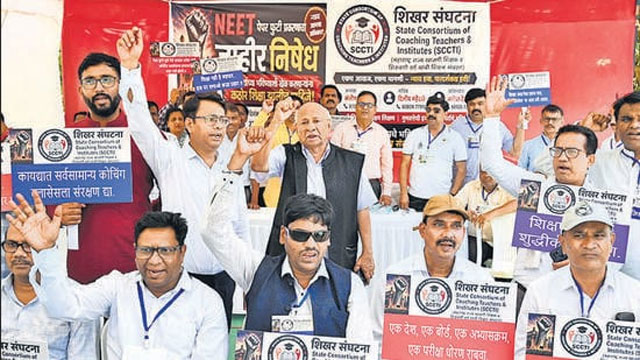
The organisation also urged the Maharashtra government to establish a dedicated Coaching Classes Council on the lines of the Bar Council of India to regulate and monitor private coaching institutes.
The protest was organised following public outrage over the NEET paper leak, which affected more than 22 lakh students across the country.
Office-bearers of the organisation alleged that several private coaching centres had turned education into a commercial business through integrated coaching programmes that combine junior college education with preparation for competitive exams such as NEET and JEE.
They claimed that many students formally enrol in junior colleges only for attendance purposes while relying entirely on coaching centres for academic preparation.
The issue gained further attention after key accused arrested in the NEET paper leak case were reportedly linked to coaching institutes in Latur and Pune.
SCCTI secretary Dilip Mehendale demanded strict action against coaching institutes operating from the premises of schools and junior colleges while charging separate fees from students.
“Heavy penalties should be imposed on institutes violating rules,” he said.
The organisation also called for stricter monitoring of student attendance to restore the importance of colleges and reduce misuse of the integrated coaching model.
SCCTI vice-president Bandopant Bhuyar said the government should consult coaching institute representatives before framing any new policy for the sector.
He pointed out that the issue of regulating coaching classes in Maharashtra has remained unresolved for over two decades despite repeated court directives and committee recommendations.
According to the organisation, the proposed Coaching Classes Council could regulate permissions for opening institutes and ensure accountability, transparency and compliance with standards in the rapidly expanding private coaching sector.
The organisation also urged the State government to strengthen regular school and junior college education systems so that preparation for competitive exams becomes part of mainstream academics, reducing students’ dependence on private coaching centres.